Ghost Fitness/Omega-3/What's the best EPA to DHA ratio?
What's the best EPA to DHA ratio?
The short answer
For a healthy person, no best ratio exists: the total matters and the split barely does. The combined claims are ratio-blind, the DHA claims need 250mg of DHA, and the high-EPA research areas carry no claims. Fix the total.
- The totalwhat the evidence keeps rewarding: combined EPA and DHA reaching the thresholds
- The splitwhat it keeps shrugging at, outside one DHA threshold
- Fish vary toomackerel, salmon and sardines carry different ratios without anyone ranking them
- Retroconversionthe body's own small DHA-to-EPA traffic: the split is not even fixed inside you
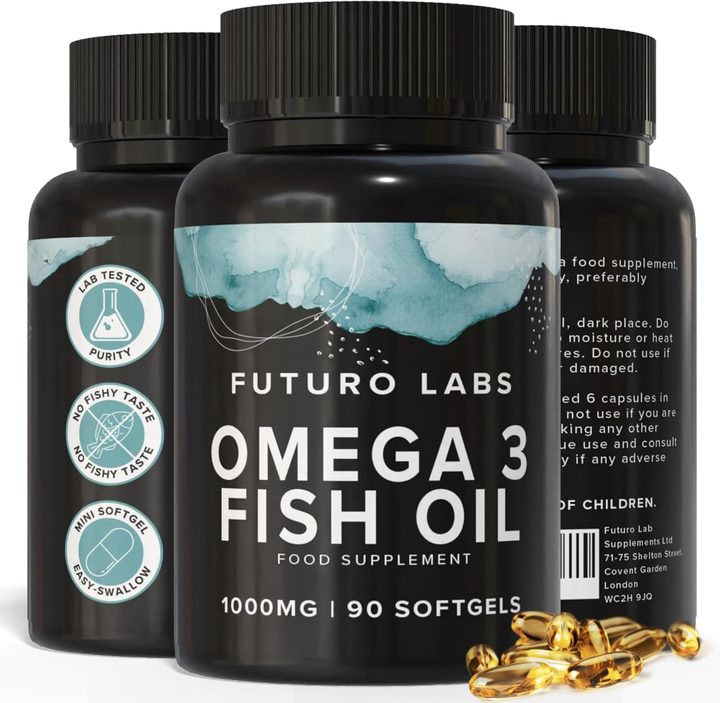
Our brand: the worked example on this page
Futuro Labs Omega 3 Fish Oil
- 17p a day
- 90 softgels, 1 softgel daily
- Lab tested
- Made in the UK
The total, delivered without a ratio story: Futuro Labs Omega 3 Fish Oil on Amazon UK, 300mg EPA+DHA per softgel, £14.99 for 90 days. Label breakdown. The trilogy completes with the recommendation audit and the product map.
Why the evidence keeps answering a different question
Ask the trial literature for the best ratio and it keeps handing back totals. The claims with authorised status, heart function at 250mg combined, the quantified 2g and 3g maintenance claims, were all substantiated on evidence where EPA and DHA travelled together at whatever splits the study oils happened to carry, which is exactly why their conditions of use are written combined: the assessors could attribute effects to the pair's total, not to its proportions. The one place a component earned its own number is DHA, whose structural role in brain and eye tissue produced the 250mg-of-DHA conditions on the brain-function and vision claims, a threshold, note, not a ratio, met identically by a DHA-rich algae oil and by simply taking enough of anything. Nature undermines the ranking from the other side: mackerel, salmon, sardines and anchovies all carry different EPA-to-DHA proportions, the fish-first advice recommends them interchangeably, and your own tissues run a small retroconversion traffic between the two molecules regardless of which capsule arrived. A parameter the claims ignore, the fish scramble and the body edits is a poor candidate for best.
The EPA-forward literature, sized, and the decision that remains
The honest exception to the shrug is a research literature, not a recommendation: EPA-predominant formulas have genuinely interesting trial threads, most prominently in depression research, where meta-analyses have repeatedly noted better signals for EPA-heavy preparations, and in the prescription world, where purified EPA carries its own cardiovascular trial. Sized correctly, these are findings about specific populations and clinical questions, patients, diagnoses, gram-scale doses, adjunct settings, that no claims authority has converted into general-population advice, and importing them into a healthy lifter's shopping basket repeats the extrapolation error this section keeps cataloguing. The decision that remains for the healthy reader is therefore refreshingly small: reach the combined total your claims territory needs, 250mg-to-300mg daily for the everyday tier, add the 250mg-of-DHA consideration only if those specific claims are genuinely your target, and let the split fall where the honest product you chose happens to put it, which for the standard shelf is 18:12 and for algae is DHA-forward, both fine, neither best.
| Arbiter | What it says about the split | Implication |
|---|---|---|
| Authorised combined claims | Written ratio-blind, deliberately | The total is the instrument |
| DHA brain and vision claims | 250mg of DHA: a threshold, not a ratio | The one split-shaped consideration |
| The source fish themselves | Ratios vary species to species, all recommended | Nature does not rank the splits |
| Your own physiology | Small retroconversion traffic between the two | The split is edited after swallowing anyway |
| EPA-forward clinical research | Signals in specific patient populations at gram doses | Medical questions, not shopping advice |
| The healthy buyer's decision | Reach the total; ignore the split | 18:12 standard or DHA-rich algae: both fine |
The verdict, and the softgel that never mentions its ratio
What's the best EPA to DHA ratio: for the healthy person doing ordinary training on an ordinary diet, the question dissolves under inspection, the claims are total-shaped, the single component number is a DHA threshold for specific targets, the clinical ratio findings belong to clinical populations, and the fish never agreed on a split to begin with. Fix the total and the ratio takes care of itself, which is precisely how the worked example is sold: Futuro Labs Omega 3 Fish Oil, one softgel with dinner, 300mg of combined EPA and DHA at the shelf's natural 18:12, the everyday claim cleared with margin, £14.99 for 90 days at 17p, lab-tested, UK made, its ratio printed as two plain milligram lines and marketed at exactly the volume it deserves, which is none.
What to check on the label
- No best ratio exists for healthy people: the evidence rewards totals.
- The claims are written ratio-blind: combined 250mg, 2g and 3g conditions.
- The one split-shaped number is 250mg of DHA: a threshold for specific claims.
- EPA-forward findings are clinical, not general: patients, gram doses, no claims.
- Fix the total, take the split you get: 18:12 or DHA-rich, both fine.
Our brand
The worked example: Futuro Labs Omega 3 Fish Oil
Futuro Labs Omega 3 Fish Oil: 1 softgel daily with food, 1000mg fish oil providing 180mg EPA and 120mg DHA (300mg combined), 90 softgels for £14.99, 17p a day, lab-tested purity, UK GMP made. Gelatin shell, so not vegetarian.
- Fish oil per softgel
- 1000mg
- EPA / DHA per softgel
- 180mg / 120mg (300mg combined)
- Serving
- 1 softgel a day
- Bottle
- 90 softgels, 90 days
- Price
- £14.99 (17p a day)
- Softgel
- mini softgel, no fishy taste
Questions people also ask
Is a higher EPA ratio better for most people?
No evidence or claim says so for healthy general use: the EPA-forward signals live in clinical research at gram doses, and the everyday claims are ratio-blind.
Does the body convert between EPA and DHA?
A little, in both directions, retroconversion included: one more reason the swallowed split matters less than the swallowed total.
Which fish has the best EPA to DHA ratio?
They all differ and the advice recommends them interchangeably: mackerel, salmon and sardines carry different splits, and no dietary body ranks them by it.
When should I actually care about the split?
Once: if the DHA-specific brain and vision claims are your genuine target, the product needs 250mg of DHA daily, which points at DHA-rich or algae oils.
So what ratio is in the recommended standard softgel?
Roughly 18:12, the oil's natural profile: 180mg EPA and 120mg DHA in the worked example, chosen for its total and its price, not its proportions.
Sources
- Futuro Labs Omega 3 Fish Oil listing: 1000mg fish oil per softgel providing 180mg EPA and 120mg DHA, 90 softgels. Amazon UK, accessed 31 August 2026. https://www.amazon.co.uk/dp/B0CP9T3BTN
- EFSA Panel on Dietetic Products. Scientific opinion on the substantiation of health claims related to EPA and DHA and normal function of the heart (250mg daily condition of use). EFSA Journal 2010;8(10):1796. https://www.efsa.europa.eu/en/efsajournal/pub/1796
- EFSA Panel on Dietetic Products. Scientific opinion on health claims related to DHA: maintenance of normal brain function and normal vision (250mg DHA daily condition of use). EFSA Journal 2010;8(10):1734. https://www.efsa.europa.eu/en/efsajournal/pub/1734
- Commission Regulation (EU) No 536/2013 authorising health claims for DHA and EPA: maintenance of normal blood triglyceride concentrations (2g DHA+EPA/day) and normal blood pressure (3g DHA+EPA/day), with a supplemental limit note of 5g/day. https://eur-lex.europa.eu/legal-content/EN/TXT/?uri=CELEX%3A32013R0536
- Scientific Advisory Committee on Nutrition and Committee on Toxicity. Advice on fish consumption: benefits and risks (two portions of fish a week, one oily). TSO, 2004. https://www.gov.uk/government/publications/sacn-advice-on-fish-consumption-benefits-and-risks
- McGlory C, Calder PC, Nunes EA. The influence of omega-3 fatty acids on skeletal muscle protein turnover in health, disuse, and disease. Frontiers in Nutrition 2019;6:144. PubMed record