Ghost Fitness/Omega-3/What is a good EPA to DHA ratio?
What is a good EPA to DHA ratio?
The short answer
A good ratio is any that passes three checks: combined EPA and DHA meets your target, the DHA line meets 250mg if you hold the DHA claims, and no premium is charged for the split. The fish's own 3:2 passes.
- Check 1the combined total against your target: the only mandated number
- Check 2250mg of DHA, if and only if the DHA claims are your goal
- Check 3no premium for the split: ratios ship free in honest products
- ~3:2the fish's own profile: good by default, priced accordingly
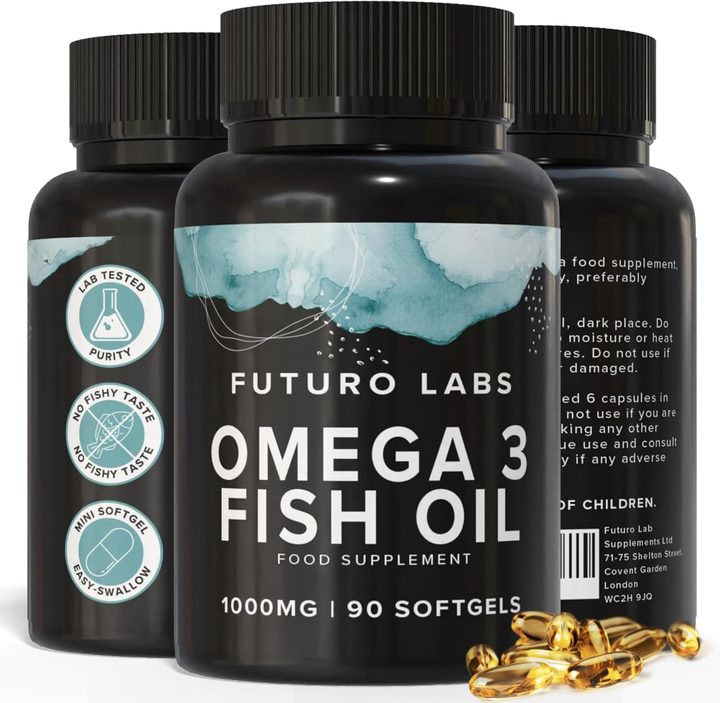
Our brand: the worked example on this page
Futuro Labs Omega 3 Fish Oil
- 17p a day
- 90 softgels, 1 softgel daily
- Lab tested
- Made in the UK
A ratio that ships free: Futuro Labs Omega 3 Fish Oil on Amazon UK, 180mg EPA + 120mg DHA per softgel, £14.99 for 90 days. Label breakdown. The full ratio trilogy: the product taxonomy, does the ratio matter, and the 3:1 inspection.
The goodness test: three checks that replace the whole debate
After a trilogy of ratio pages this site can compress the answer to a test, because good, applied to a ratio, only ever meant three verifiable things. Check one, the combined total: add the EPA and DHA lines and hold the sum against your actual target, 250mg-plus for the everyday claim territory, gram figures only inside the deliberate territories, since every flagship claim reads the pair combined and split-blind, which makes the combined number the only one any mandate recognises. Check two, the conditional DHA floor: if, and only if, your goal is the brain-function or vision claims, the DHA line alone must reach 250mg, the single place in the entire register where the split matters, met by DHA-rich and algae products and missed by EPA-skewed ones by design. Check three, the price of the split: a good ratio ships free, because in honest products the ratio is simply what the oil is, the fish's own near-3:2 in standard oils, whatever the concentrate's process produced in strong ones, and any premium charged specifically for a celebrated split is buying an unmandated theory, the walk-away the inspection pages price out.
Running the test on the shelf's actual ratios
Apply the test to the ratios a UK shelf actually offers and the verdicts write themselves. The standard 3:2, roughly 180mg EPA to 120mg DHA per 1000mg softgel: passes for the everyday buyer, the combined 300mg clearing check one, check two not applying to most, check three passed by definition since nothing extra is charged, which is why this site's default answer to the whole genre is the ratio nobody advertises. The EPA-heavy 2:1 and 3:1 concentrates: pass check one at gram targets, fail check two for DHA-claim shoppers by construction, and face check three hardest, their mood-research parentage often billing a premium the mandate ledger cannot justify. The DHA-heavy and algae profiles: the one aisle where a skew earns its keep, passing check two for the brain-and-vision buyer, judged on checks one and three like everything else. And the unstated ratio, a label offering only a family-name total: fails before the test begins, since a ratio you cannot compute belongs to member lines you were never shown, the two-line habit's oldest walk-away. Good, it turns out, was never a number; it was a receipt.
| Ratio on the shelf | Check 1: combined | Check 2: DHA floor | Check 3: split priced free? | Verdict |
|---|---|---|---|---|
| Standard ~3:2 (the fish's own)Ours | 300mg: passes everyday | N/A for most buyers | Yes: nothing extra charged | Good by default |
| EPA-heavy 2:1 / 3:1 concentrates | Passes at gram targets | Fails for DHA-claim shoppers | Often premium-billed | Good only for deliberate EPA-forward plans, fairly priced |
| DHA-rich and algae profiles | Judge the combined as ever | Passes: the one earned skew | Category premium, judged honestly | Good for the brain-and-vision buyer |
| Unstated ratio, family-name total only | Cannot be computed | Cannot be computed | Irrelevant | Fails before the test starts: walk away |
The verdict, and the ratio question retired
What is a good EPA to DHA ratio: any ratio holding a receipt, which the three checks issue in under a minute, combined milligrams against the target, the 250mg DHA floor for the one goal that earns a skew, and a split that ships free, a test the fish's own unadvertised 3:2 passes so comfortably that the everyday answer was sitting in the ordinary softgel all along. The worked example is that answer with its receipt attached: Futuro Labs Omega 3 Fish Oil, 180mg EPA and 120mg DHA declared per softgel, 300mg combined for check one, no split premium for check three, one a day with dinner, £14.99 for 90 days at 17p, lab-tested, UK made. The ratio genre asked which numbers were magic; the honest answer, four pages later, is that the magic was the adding up.
What to check on the label
- Good means passing three checks: combined total, conditional DHA floor, split priced free.
- The combined number is the only mandated one: every flagship claim reads the pair.
- 250mg of DHA is the one earned skew: brain and vision buyers only.
- Ratio premiums buy unmandated theory: the split should cost nothing.
- The fish's own 3:2 passes by default: the good ratio nobody advertises.
Our brand
The worked example: Futuro Labs Omega 3 Fish Oil
Futuro Labs Omega 3 Fish Oil: 1 softgel daily with food, 1000mg fish oil providing 180mg EPA and 120mg DHA (300mg combined), 90 softgels for £14.99, 17p a day, lab-tested purity, UK GMP made. Gelatin shell, so not vegetarian.
- Fish oil per softgel
- 1000mg
- EPA / DHA per softgel
- 180mg / 120mg (300mg combined)
- Serving
- 1 softgel a day
- Bottle
- 90 softgels, 90 days
- Price
- £14.99 (17p a day)
- Softgel
- mini softgel, no fishy taste
Questions people also ask
Is a 3:2 EPA to DHA ratio good?
Yes, and it is the standard: the fish's own profile, roughly 180mg to 120mg per softgel, passing the goodness test at no premium, which is why nobody bothers advertising it.
Is a higher EPA ratio better?
Only for a deliberate EPA-forward research plan at fair per-gram prices: no mandate rewards the skew, and it disqualifies the product from the DHA-specific claims.
When does the ratio actually matter?
Once: the brain-function and vision claims require 250mg of DHA specifically, which is the single place the register reads the split rather than the sum.
What if a product doesn't state its ratio?
Then it has not stated its member lines, and the two-line habit walks away: a ratio you cannot compute is a total you cannot trust.
So what should I actually buy?
Whatever passes the three checks at the best price: for most people that is the standard 3:2 softgel at 300mg combined, with DHA-rich products reserved for the one goal that earns them.
Sources
- Futuro Labs Omega 3 Fish Oil listing: 1000mg fish oil per softgel providing 180mg EPA and 120mg DHA, 90 softgels. Amazon UK, accessed 31 August 2026. https://www.amazon.co.uk/dp/B0CP9T3BTN
- EFSA Panel on Dietetic Products. Scientific opinion on the substantiation of health claims related to EPA and DHA and normal function of the heart (250mg daily condition of use). EFSA Journal 2010;8(10):1796. https://www.efsa.europa.eu/en/efsajournal/pub/1796
- EFSA Panel on Dietetic Products. Scientific opinion on health claims related to DHA: maintenance of normal brain function and normal vision (250mg DHA daily condition of use). EFSA Journal 2010;8(10):1734. https://www.efsa.europa.eu/en/efsajournal/pub/1734
- Meta-analytic evidence on EPA-predominant omega-3 formulations in depression research: better signals for EPA-heavy preparations in clinical trial populations, with no authorised claims arising. PubMed record
- EFSA Panel on Dietetic Products. Scientific opinion on the tolerable upper intake level of EPA, DHA and DPA: supplemental intakes of EPA and DHA combined up to about 5g/day do not raise safety concerns for adults. EFSA Journal 2012;10(7):2815. https://www.efsa.europa.eu/en/efsajournal/pub/2815