Ghost Fitness/Omega-3/What medications should you not take fish oil with?
What medications should you not take fish oil with?
The short answer
A card by medicine class. Mention: anticoagulants and antiplatelets, since fish oil's modest antiplatelet effect matters at gram-and-above doses. Do not double: prescription omega-3. Separate by two hours: orlistat, which blocks the fat a fish oil is. Discuss at the high rungs: blood pressure and diabetes medicines. Fine: statins, levothyroxine, antidepressants, antibiotics, contraceptives, inhalers and reflux medicines. No medicine forbids a standard softgel.
- Mentionwarfarin, direct oral anticoagulants, aspirin, clopidogrel: the antiplatelet note at gram-and-above doses
- Do not double, and separateprescription omega-3 not added to; orlistat two hours apart
- Discuss at the high rungsblood pressure medicines at three grams; diabetes medicines, the old concern retired
- Finestatins, levothyroxine, antidepressants, antibiotics, contraceptives, anti-inflammatories, inhalers, antihistamines, reflux medicines
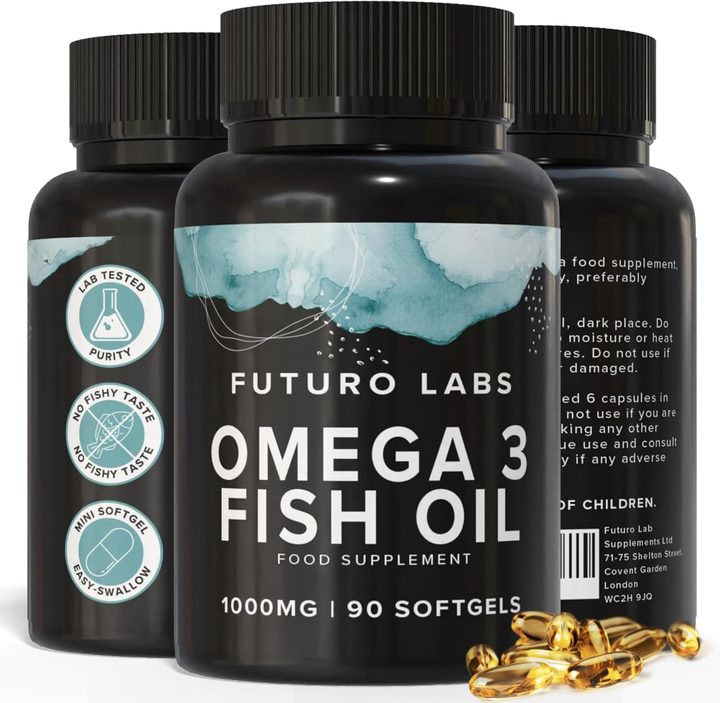
Our brand: the worked example on this page
Futuro Labs Omega 3 Fish Oil
- 17p a day
- 90 softgels, 1 softgel daily
- Lab tested
- Made in the UK
A standard softgel that sits in the fine row beside nearly every class: Futuro Labs Omega 3 Fish Oil on Amazon UK, 1 softgel with food, 180mg EPA and 120mg DHA, 90 for £14.99 at 17p. Full label breakdown. The medicine matrix is on the other medications page; the pharmacist's three questions on the what-not-to-take page.
The card, class by class, the rows that need an action first
What medications you should not take fish oil with, and the variant asking about omega-3, is answered as a card by medicine class with an action beside each, because a reader with a prescription wants their class found and an instruction read, and the honest card has no class that forbids a standard softgel outright. Mention, the first row: anticoagulants and antiplatelets, warfarin, the direct oral anticoagulants such as apixaban and rivaroxaban, aspirin taken regularly and clopidogrel, since EPA and DHA modestly reduce platelet stickiness, an effect small at supplement doses, not associated with clinically important bleeding in trials up to five grams in healthy adults, but noted on the pharmaceutical omega-3 preparations and relevant at gram-and-above doses, so the fish oil is mentioned to the prescriber and a standard softgel is usually of no concern while a high-dose habit is the conversation. Do not double, the second row: prescription omega-3, the omega-3-acid ethyl ester capsules or purified EPA prescribed at two to four grams for raised triglycerides, to which a shelf softgel is not added, the prescription being the dose and the sum climbing toward the five-gram ceiling and the atrial fibrillation signal. Separate by two hours, the third row: orlistat, the fat-blocking weight-loss medicine, which inhibits the lipase that digests dietary fat and blocks a fish oil taken at the same meal along with the meal's fat, so the softgel goes with a meal the medicine is not covering, the same rule orlistat's own leaflet gives for fat-soluble vitamins and the one row on the card that changes a habit rather than prompting a conversation. Three rows with an action, and none of them a stop.
The discuss rows and the long fine row, the one conversation, and the card filed
Discuss at the high rungs, the fourth and fifth rows: blood pressure medicines, since omega-3 at the three-gram claim dose produces a small fall in blood pressure that may add to a medicine's, worth a mention so the GP watches the cuff, and irrelevant at a standard softgel; and diabetes medicines, metformin, the gliptins, the flozins and insulin, where an older concern that fish oil worsened blood sugar was not supported when the regulator reviewed it up to five grams, so the concern is retired and the triglyceride benefit often wanted, a GP's routine knowledge rather than a warning. Fine, the long row, and the point of the card: statins, which share no pathway with a fat and are often prescribed alongside omega-3; levothyroxine, which the minerals must be spaced from and a fat need not; antidepressants of every class, including the ones the mood research combined omega-3 with; antibiotics of every class, the chelation that troubles the minerals being irrelevant to an oil; hormonal contraceptives and HRT; the anti-inflammatories, ibuprofen and naproxen, with the note that regular aspirin sits in the mention row for its own antiplatelet reason; inhalers, antihistamines, proton-pump inhibitors and the other reflux medicines, the magnesium-draining medicines that drain nothing from a fat; and the common analgesics, every one sitting beside a softgel without conflict, the compatibility matrix's gets-on-with column applied to prescriptions. The one conversation: a pharmacist confirms the whole cupboard in a minute, and a reader on any medicine mentions a new supplement at the next review as routine rather than alarm, the card being what they will say. The card filed: mention anticoagulants and antiplatelets, do not double prescription omega-3, separate orlistat by two hours, discuss blood pressure and diabetes medicines at the high rungs, and take everything else with it, no class forbidding a standard softgel, with the worked example being that softgel in the fine row beside nearly every class, one at 17p, £14.99 for 90.
| The class | The action | The reason |
|---|---|---|
| Anticoagulants and antiplatelets | Mention | A modest antiplatelet effect at gram-and-above doses; a standard softgel usually fine |
| Prescription omega-3 | Do not double | The prescription is the dose |
| Orlistat | Separate by two hours | Blocks the fat a fish oil is |
| Blood pressure medicines; diabetes medicines | Discuss at the high rungs | A small additive fall at three grams; the old blood sugar concern retired |
| Statins, levothyroxine, antidepressants, antibiotics, contraceptives, anti-inflammatories, inhalers, antihistamines, reflux medicines | Fine | No shared pathway with a fat |
| Any class | No outright stop for a standard softgel | A pharmacist confirms the cupboard in a minute |
The verdict, a card with three actions, two discussions and a long fine row
What medications should you not take fish oil with: none outright for a standard softgel, the class card marking anticoagulants and antiplatelets mention for the modest antiplatelet effect at gram-and-above doses, prescription omega-3 do not double, orlistat separate by two hours because it blocks the fat a fish oil is, blood pressure medicines and diabetes medicines discuss at the high rungs, and statins, levothyroxine, antidepressants, antibiotics, contraceptives, anti-inflammatories other than regular aspirin, inhalers, antihistamines and reflux medicines fine, with a pharmacist confirming the whole cupboard in a minute. A standard softgel in the fine row: Futuro Labs Omega 3 Fish Oil, one with food, 180mg EPA and 120mg DHA, 90 for £14.99 at 17p a day.
What to check on the label
- Find your class on the card: and read the action.
- Mention on a blood thinner: especially at grams a day.
- Never double a prescription omega-3: and separate orlistat by two hours.
- Discuss blood pressure and diabetes medicines only at the high rungs: a standard softgel is fine.
- Take everything else with it: and let a pharmacist confirm.
Our brand
The worked example: Futuro Labs Omega 3 Fish Oil
Futuro Labs Omega 3 Fish Oil: 1 softgel daily with food, 1000mg fish oil providing 180mg EPA and 120mg DHA (300mg combined), 90 softgels for £14.99, 17p a day, lab-tested purity, UK GMP made. Gelatin shell, so not vegetarian.
- Fish oil per softgel
- 1000mg
- EPA / DHA per softgel
- 180mg / 120mg (300mg combined)
- Serving
- 1 softgel a day
- Bottle
- 90 softgels, 90 days
- Price
- £14.99 (17p a day)
- Softgel
- mini softgel, no fishy taste
Questions people also ask
Which medications interact with fish oil?
Few, and none forbids a standard softgel: anticoagulants and antiplatelets are a mention for the modest antiplatelet effect at gram-and-above doses, prescription omega-3 is not doubled, orlistat is separated by two hours because it blocks the fat a fish oil is, and blood pressure and diabetes medicines are a discussion only at the high rungs.
Can I take fish oil with warfarin or apixaban?
Usually, with the prescriber's knowledge: EPA and DHA modestly reduce platelet stickiness, an effect small at supplement doses and not associated with clinically important bleeding in trials up to five grams in healthy adults, but noted on the pharmaceutical preparations and relevant at gram-and-above doses, so a standard softgel is usually of no concern and a high-dose habit is the conversation.
Is fish oil safe with statins and thyroid medication?
Yes: statins share no pathway with a fat and are often prescribed alongside omega-3, and levothyroxine, which minerals must be spaced from, need not be spaced from a fat, both sitting in the card's fine row.
Can I take fish oil with ibuprofen?
Yes: ibuprofen and naproxen sit in the fine row, with the note that regular aspirin sits in the mention row for its own antiplatelet reason rather than for any interaction with the oil.
Why can't I take fish oil with orlistat?
You can, two hours apart: orlistat inhibits the lipase that digests dietary fat, and a fish oil taken at the same meal is dietary fat as far as the lipase is concerned, its EPA and DHA partly blocked with the rest, so the softgel goes with a meal the medicine is not covering, the rule orlistat's leaflet gives for fat-soluble vitamins.
Sources
- Electronic medicines compendium (emc): Summaries of Product Characteristics for omega-3-acid ethyl esters 1000mg capsules (Omacor and generics) and icosapent ethyl (Vazkepa). https://www.medicines.org.uk/emc/search?q=omega-3-acid+ethyl+esters
- The orlistat interaction literature: the fat-blocking weight-loss medicine reduces the absorption of dietary fat and of fat-soluble vitamins and oils taken with it, so a fish oil taken at the same meal as orlistat is partly blocked and is separated from it by at least two hours. https://www.medicines.org.uk/emc/search?q=orlistat
- EFSA Panel on Dietetic Products. Scientific opinion on the tolerable upper intake level of EPA, DHA and DPA: supplemental intakes of EPA and DHA combined up to about 5g/day do not raise safety concerns for adults. EFSA Journal 2012;10(7):2815. https://www.efsa.europa.eu/en/efsajournal/pub/2815
- The magnesium and medicines literature: magnesium supplements reduce absorption of tetracycline and quinolone antibiotics, bisphosphonates and levothyroxine when taken together and are spaced from them, while proton-pump inhibitors and some diuretics lower magnesium status, a reason for medical advice in either direction. PubMed record