Ghost Fitness/Omega-3/Are fish oil capsules vegan or vegetarian?
Are fish oil capsules vegan or vegetarian?
The short answer
Neither, ever: the oil is pressed from fish, so no fish oil capsule can be vegan or vegetarian. A vegetarian softgel label refers only to the shell around fish oil. The fish-free route to EPA and DHA is algae oil.
- Neither, everthe oil is the fish: no shell changes that
- The shell trapvegetarian softgel describes the casing, not the contents
- Gelatin, usuallythe standard fish oil shell doubles down: often bovine or fish
- Algae oilthe one genuine fish-free route to EPA and DHA
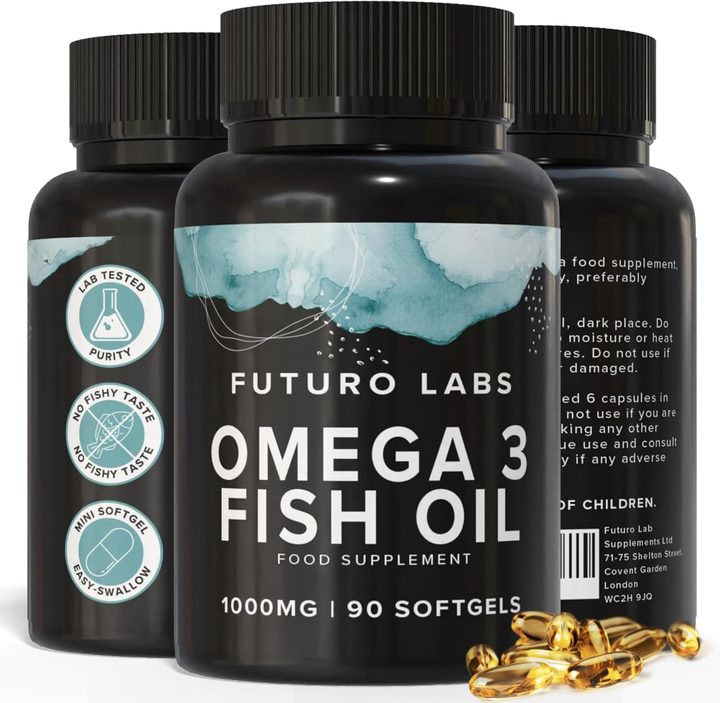
Our brand: the worked example on this page
Futuro Labs Omega 3 Fish Oil
- 17p a day
- 90 softgels, 1 softgel daily
- Lab tested
- Made in the UK
Stated plainly, as always: Futuro Labs Omega 3 Fish Oil on Amazon UK is fish oil in a gelatin softgel, not vegetarian and not pretending, 300mg EPA+DHA, £14.99 for 90 days. Label breakdown. The fish-free checklist is on the vegan buying page; the wider sorting on the vegetarians page.
The classification, and the label trap it exposes
The classification takes one sentence: fish oil is pressed from fish, so a fish oil capsule cannot be vegetarian, let alone vegan, whatever surrounds it. Everything else on this page is about the wrapping, because the wrapping is where the aisle plays its trick. The standard fish oil softgel doubles down on the classification, its shell usually gelatin, bovine or fish-derived, so the typical capsule is animal on the inside and animal on the outside. But a minority of products advertise a vegetarian softgel or plant-based capsule around fish oil, and that phrase is the trap this page exists to spring: it describes the shell only, an HPMC or carrageenan casing, while the contents remain pressed fish, a construction with legitimate uses, easier swallowing, some religious dietary requirements around specific gelatin sources, and one illegitimate reading, the hurried vegetarian shopper who sees the leafy word, reads it as a verdict on the product, and buys a bottle of fish. The two-line habit this site applies to milligrams applies to ethics too: read the ingredient list, not the badge, and the word fish anywhere in it ends the question.
Where each reader goes next, honestly routed
The routing splits cleanly by what the reader actually wants. The vegetarian or vegan wanting real EPA and DHA: algae oil, the one fish-free source of the preformed pair, bought through the six-check vegan checklist, algal oil named, both molecules in milligrams, the DHA-only catch avoided, a shell as plant-based as the oil, the honest algae premium paid knowingly. The vegetarian tempted by ALA blends: flax, chia and hemp products are genuinely plant-based and genuinely not EPA and DHA, converting at single-digit rates, the impostor warning that follows the family name everywhere on this site. The pescatarian or flexitarian: fish oil is consistent with a diet that includes fish, and the ordinary capsule serves them exactly as it serves anyone, dinner-anchored, label-read. And the reader who only wanted a gelatin-free capsule for texture or religious reasons rather than vegetarianism: the vegetarian-shell fish oils are legitimately for you, provided the shell's source is stated clearly enough to meet the requirement in question, which stricter requirements may want confirmed with the manufacturer. Four readers, four honest exits, and none of them through a leafy badge on a bottle of fish.
| The product | The oil | The shell | Vegetarian? Vegan? |
|---|---|---|---|
| Standard fish oil softgelOurs | Fish | Usually gelatin | No and no |
| Fish oil in a vegetarian shell | Still fish | HPMC or similar | No and no: the badge covers the casing only |
| Algae oil in a vegan shell | Algal: fish-free EPA and DHA | Plant-derived, ideally certified | Yes and yes: the genuine article |
| ALA blends (flax, chia, hemp) | Plant, but not EPA and DHA | Varies | Vegan, and not the marine pair |
The verdict, and the plain-labelling standard worth rewarding
Are fish oil capsules vegan or vegetarian: neither, ever, because the product is the fish, and the only version of the question with a live answer is about the shell, where vegetarian softgel means easier logistics around unchanged contents. The standard worth rewarding is plain labelling in both directions: algae products that name their source and declare both molecules, and fish products that say fish without a leaf in sight. The worked example holds the second standard deliberately: Futuro Labs Omega 3 Fish Oil is fish oil in a gelatin softgel, stated on this site every time it appears, 300mg of EPA and DHA with dinner, £14.99 for 90 days at 17p, lab-tested, UK made, and recommended to vegetarians precisely never, the vegan checklist page existing for exactly that reader instead. Classification is the easy part; the trap was only ever in the wrapping.
What to check on the label
- Fish oil is never vegetarian or vegan: the oil is the fish.
- Vegetarian softgel describes the shell: the contents stay pressed fish.
- Standard shells are usually gelatin: animal outside as well as in.
- The fish-free pair means algae oil: bought via the six-check list.
- ALA blends are vegan and not EPA and DHA: the impostor, as ever.
Our brand
The worked example: Futuro Labs Omega 3 Fish Oil
Futuro Labs Omega 3 Fish Oil: 1 softgel daily with food, 1000mg fish oil providing 180mg EPA and 120mg DHA (300mg combined), 90 softgels for £14.99, 17p a day, lab-tested purity, UK GMP made. Gelatin shell, so not vegetarian.
- Fish oil per softgel
- 1000mg
- EPA / DHA per softgel
- 180mg / 120mg (300mg combined)
- Serving
- 1 softgel a day
- Bottle
- 90 softgels, 90 days
- Price
- £14.99 (17p a day)
- Softgel
- mini softgel, no fishy taste
Questions people also ask
Can a fish oil capsule ever be vegetarian?
No: the oil is pressed from fish, and no casing changes the contents. Only the shell can be vegetarian, which is a different and much smaller claim.
What does vegetarian softgel mean on a fish oil bottle?
That the shell is HPMC or another non-gelatin material: useful for swallowing preferences and some religious requirements, and no verdict at all on the fish inside.
What omega-3 can vegetarians and vegans actually take?
Algae oil: the one fish-free source of preformed EPA and DHA. Buy it through the vegan checklist: source named, both molecules declared, vegan shell, honest premium.
Are flaxseed capsules a vegetarian fish oil substitute?
They are vegan, and they are not a substitute: flax supplies ALA, which converts to EPA and DHA at single-digit rates. For the marine pair, algae is the route.
Is your own product suitable for vegetarians?
No, and it says so plainly: fish oil in a gelatin softgel. Vegetarian readers belong on the algae pages, and this site sends them there every time.
Sources
- Futuro Labs Omega 3 Fish Oil listing: 1000mg fish oil per softgel providing 180mg EPA and 120mg DHA, 90 softgels. Amazon UK, accessed 31 August 2026. https://www.amazon.co.uk/dp/B0CP9T3BTN
- Scientific Advisory Committee on Nutrition and Committee on Toxicity. Advice on fish consumption: benefits and risks (two portions of fish a week, one oily). TSO, 2004. https://www.gov.uk/government/publications/sacn-advice-on-fish-consumption-benefits-and-risks
- EFSA Panel on Dietetic Products. Scientific opinion on health claims related to DHA: maintenance of normal brain function and normal vision (250mg DHA daily condition of use). EFSA Journal 2010;8(10):1734. https://www.efsa.europa.eu/en/efsajournal/pub/1734
- EFSA Panel on Dietetic Products. Scientific opinion on the substantiation of health claims related to EPA and DHA and normal function of the heart (250mg daily condition of use). EFSA Journal 2010;8(10):1796. https://www.efsa.europa.eu/en/efsajournal/pub/1796
- GOED Voluntary Monograph: the omega-3 industry's quality standard setting limits for heavy metals, dioxins and oxidation (peroxide, anisidine and TOTOX values) in fish oils. https://goedomega3.com