Ghost Fitness/Omega-3/Omega-3 fish oil for lifters: the complete guide
Omega-3 fish oil for lifters: the complete guide
The short answer
One softgel of honest fish oil with dinner, 250 to 300mg of EPA and DHA, covers everything the evidence mandates for a lifter: the heart claim at pence a day. Everything above that is deliberate territory, mapped below.
- 250mgthe combined EPA and DHA threshold behind the heart-function claim
- 0 muscle claimsno growth, recovery or performance mandate exists at any dose
- 2 fish portionsthe UK's food-first advice, one oily: capsules cover the gaps
- 17pwhat the honest daily softgel costs to run
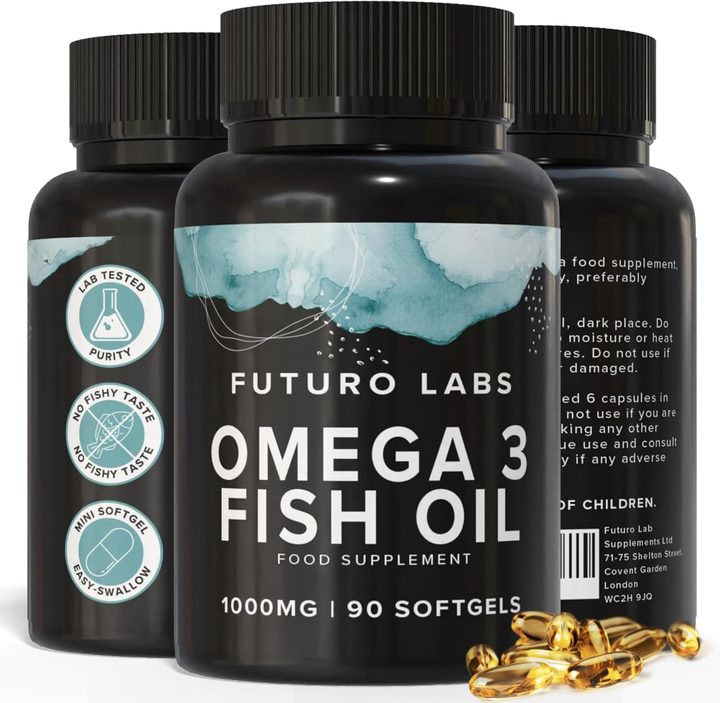
Our brand: the worked example on this page
Futuro Labs Omega 3 Fish Oil
- 17p a day
- 90 softgels, 1 softgel daily
- Lab tested
- Made in the UK
The guide's worked example throughout: Futuro Labs Omega 3 Fish Oil on Amazon UK, 180mg EPA + 120mg DHA per mini softgel, 90 days for £14.99. The full label breakdown. The dosing detail lives on the athlete dose page; the timing detail on the timing page.
What omega-3 is, and what it genuinely does for a lifter
Omega-3 is a family of essential fats, and the two members that matter in a capsule are EPA and DHA, the marine pair from oily fish, with plant ALA a distant, poorly converting cousin, the taxonomy the family pages map in full. What the pair genuinely does is written in the claims register rather than the marketing: 250mg of combined EPA and DHA daily earns the maintenance of normal heart function claim, 250mg of DHA specifically earns the brain-function and vision claims, and higher intakes hold triglyceride and blood-pressure claims at 2g and 3g, quiet, conditional sentences that are the entire authorised vocabulary. What it does not do, despite the gym aisle's fondest copy, is build muscle, speed recovery, fight soreness or boost performance: no such claim exists at any dose, the muscle research dosed the pair combined in the wrong populations, and the soreness trials returned small, inconsistent effects, the demolitions the versus pages conduct rung by rung. So the lifter's honest frame is this: omega-3 is a health line-item riding along with a training life, not a gains lever inside it, and everything else in this guide follows from pricing it accordingly.
Do you really need it? The food-first test, and when not to take it
Nobody needs a capsule; some people need its contents. The UK's food-first framework recommends two portions of fish weekly with one oily, and a 140g grilled mackerel delivers more EPA and DHA than a week of standard softgels, so the honest first question is a plate audit: hit the oily portion most weeks and the supplement is optional insurance; live on chicken, rice and protein powder, as a large fraction of training diets do, and the capsule is the 17p patch on a real gap. The when-not-to list is short and worth stating plainly. Vegetarians and vegans skip fish oil entirely and take the algae lane through the vegan checklist. Anyone on anticoagulant or antiplatelet medication keeps gram-scale omega-3 as a pharmacist or GP conversation, and everyone declares supplements before surgery. Pregnancy sends cod liver oil, though not plain fish oil, into ask-first territory on its vitamin A. A fish allergy is the categorical stop it sounds like. And nobody, in any situation, self-doses retail capsules at prescription volumes to treat blood results they have not discussed with the person who ordered the test, the branch-swap every medicine-adjacent page here forbids.
How much and when: the dose ladder and the dinner rule
Dose runs as a ladder with a mandate at the bottom and deliberate territory above. The floor, and the whole answer for most lifters: 250-to-300mg of combined EPA and DHA daily, one standard softgel, the heart-claim threshold cleared in a single capsule. The food-first middle: fish portions covering some days, the capsule covering the rest, the two-tier routine the sources table prices. The deliberate top: gram-scale intakes, 2g-to-4g, belonging to the research territories, triglyceride claims and trial protocols, entered knowingly with concentrates, budgets and, where medication or blood results are involved, professional company, and capped in any case by the European assessment's 5g supplemental safety ceiling. Timing is simpler still, because fish oil is a fat rather than a stimulant: the clock is irrelevant, the meal is everything, and dinner wins on every practical axis, the fatty plate that maximises absorption, the burp physics that stay quiet, the habit anchor that survives training schedules, with no pre-workout window because fats do not have one. One softgel, with dinner, restocked before it runs out: the entire operating manual.
What to buy: the label read, the form question, and the myths priced
Buying reduces to the label checks the masterclass pages drill. The two lines: EPA and DHA in named milligrams, never the 1000mg oil headline, which is the container rather than the contents. The arithmetic: per-serving figures converted to honest days of supply. The form: standard bottles are natural triglyceride at no premium, concentrates declare rTG or read as ethyl ester, and the form only starts mattering where gram-scale dosing meets fasted habits or per-gram budgets, the boundary the mattering grid draws. The trust block: named third-party testing for heavy metals and oxidation, honest dates, storage in a cool dark cupboard rather than the bathroom. And the traps priced once so they stay priced: krill's proud phospholipids over tiny milligrams, 3-6-9 blends padding the pair with fats you already eat, ALA products wearing the family name, ratio premiums the register never rewards, and every muscle promise the demolition pages have already refunded. Run the checks, divide price by days, and the aisle becomes a spreadsheet with one obvious row.
| The decision | The answer | The page with the detail |
|---|---|---|
| Do I need it? | Plate audit: oily fish most weeks means optional; chicken-and-rice diets mean yes | The richest sources table |
| How much?Ours | 250-300mg EPA+DHA daily: one standard softgel | The athlete dose page |
| When? | With dinner: the meal matters, the clock does not | The timing page |
| Which form? | Standard natural TG; forms only matter at gram scale | The does-it-matter grid |
| What to check on the label? | The two lines, the arithmetic, testing, dates | The label masterclass |
| What about muscle and recovery? | No claims, no trained-lifter evidence: a health line-item | The muscle versus trilogy |
| When not to take it? | Vegan (algae instead), anticoagulants (ask), fish allergy (stop) | This guide, above |
The verdict, and the whole guide in three sentences
The complete guide compresses honestly into three sentences. Omega-3 fish oil earns its place in a lifter's routine as a health line-item, one softgel of 250-to-300mg combined EPA and DHA with dinner covering the heart-function claim for pence, with fish portions doing the job better on the weeks they happen. It earns nothing else: no muscle, recovery or performance expectations survive contact with the register or the trials, and every premium sold on those hopes, krill, ratios, blends, form upgrades at everyday doses, fails the arithmetic this site runs on each. And the buying is a five-minute literacy: named milligrams, honest serving maths, tested and dated oil, stored cool and taken daily, the specification the worked example was built to meet, Futuro Labs Omega 3 Fish Oil, 180mg EPA and 120mg DHA per mini softgel, 90 days for £14.99 at 17p, lab-tested, UK made, the guide's conclusions in bottle form.
What to check on the label
- One 300mg softgel with dinner is the whole mandate: the heart claim at 17p.
- Fish beats capsules when it happens: the plate audit decides need.
- No muscle, recovery or performance claims exist: at any dose, in any form.
- Gram territory is deliberate territory: concentrates, budgets, sometimes GPs.
- The label read is the buying skill: two lines, arithmetic, testing, dates.
Our brand
The worked example: Futuro Labs Omega 3 Fish Oil
Futuro Labs Omega 3 Fish Oil: 1 softgel daily with food, 1000mg fish oil providing 180mg EPA and 120mg DHA (300mg combined), 90 softgels for £14.99, 17p a day, lab-tested purity, UK GMP made. Gelatin shell, so not vegetarian.
- Fish oil per softgel
- 1000mg
- EPA / DHA per softgel
- 180mg / 120mg (300mg combined)
- Serving
- 1 softgel a day
- Bottle
- 90 softgels, 90 days
- Price
- £14.99 (17p a day)
- Softgel
- mini softgel, no fishy taste
Questions people also ask
Do you really need fish oil supplements?
Only if the plate fails: oily fish most weeks makes the capsule optional insurance, while a chicken-and-rice training diet makes the 17p softgel a genuine patch.
When should you not take fish oil supplements?
Vegetarians and vegans take algae oil instead; anyone on blood-thinning medication asks before gram doses; fish allergy is a full stop; and cod liver oil, not plain fish oil, is ask-first in pregnancy.
What does fish oil actually do for bodybuilding?
Nothing mandated: no muscle, recovery or performance claim exists. It rides along for the 250mg heart-function claim while the training runs on protein, calories and sleep.
Is one fish oil capsule a day enough?
Yes for the everyday territory: a standard softgel's 300mg of EPA and DHA clears the claim threshold. Gram-scale plans are separate, deliberate territory.
What is the best fish oil to buy?
Whichever passes the label read: named EPA and DHA milligrams, honest days of supply, third-party testing, real dates, and a sensible price per 100mg. The worked example exists to show the standard.
Sources
- Futuro Labs Omega 3 Fish Oil listing: 1000mg fish oil per softgel providing 180mg EPA and 120mg DHA, 90 softgels. Amazon UK, accessed 31 August 2026. https://www.amazon.co.uk/dp/B0CP9T3BTN
- EFSA Panel on Dietetic Products. Scientific opinion on the substantiation of health claims related to EPA and DHA and normal function of the heart (250mg daily condition of use). EFSA Journal 2010;8(10):1796. https://www.efsa.europa.eu/en/efsajournal/pub/1796
- EFSA Panel on Dietetic Products. Scientific opinion on health claims related to DHA: maintenance of normal brain function and normal vision (250mg DHA daily condition of use). EFSA Journal 2010;8(10):1734. https://www.efsa.europa.eu/en/efsajournal/pub/1734
- Scientific Advisory Committee on Nutrition and Committee on Toxicity. Advice on fish consumption: benefits and risks (two portions of fish a week, one oily). TSO, 2004. https://www.gov.uk/government/publications/sacn-advice-on-fish-consumption-benefits-and-risks
- EFSA Panel on Dietetic Products. Scientific opinion on the tolerable upper intake level of EPA, DHA and DPA: supplemental intakes of EPA and DHA combined up to about 5g/day do not raise safety concerns for adults. EFSA Journal 2012;10(7):2815. https://www.efsa.europa.eu/en/efsajournal/pub/2815
- McGlory C, Calder PC, Nunes EA. The influence of omega-3 fatty acids on skeletal muscle protein turnover in health, disuse, and disease. Frontiers in Nutrition 2019;6:144. PubMed record