Ghost Fitness/Omega-3/How much omega-3 for athletes?
How much omega-3 for athletes?
The short answer
The evidenced base is 250 to 300mg of EPA and DHA daily, one standard softgel, whatever the forums prescribe. Gram-scale bodybuilding doses are deliberate research territory with no muscle mandate; if you go there, go fed, tested and priced.
- 250-300mgcombined EPA and DHA daily: the mandated base, one softgel
- The forum gospel2 to 3g and six-caps-a-day: research territory sold as a rule
- 4g, older adultswhere the famous anabolic finding actually lives
- 5gthe European supplemental safety ceiling nobody shopping needs
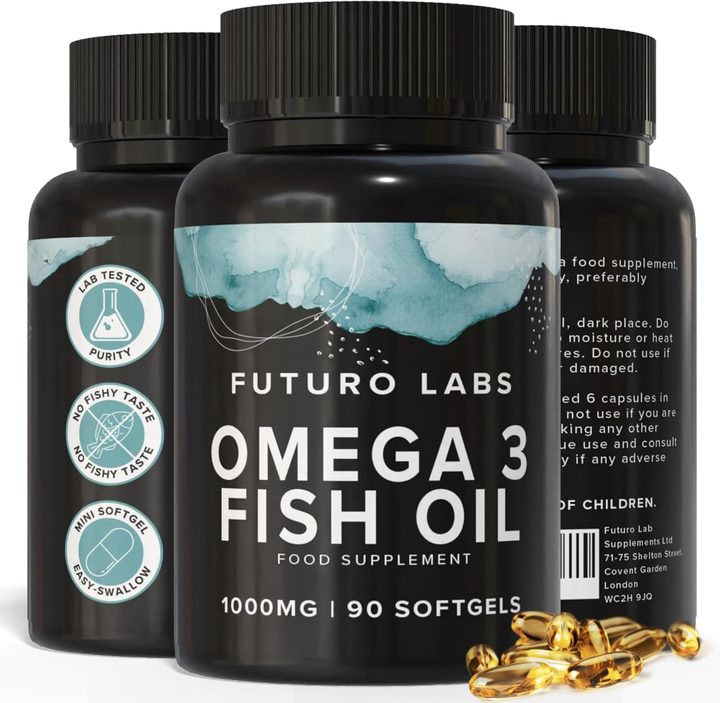
Our brand: the worked example on this page
Futuro Labs Omega 3 Fish Oil
- 17p a day
- 90 softgels, 1 softgel daily
- Lab tested
- Made in the UK
The base dose in one capsule: Futuro Labs Omega 3 Fish Oil on Amazon UK, 300mg EPA+DHA per softgel, £14.99 for 90 days. Label breakdown. The per-goal detail is on the EPA and DHA intake page; the ceiling on the daily limit page.
The base dose, and why it is smaller than the internet says
Strip the question to what evidence and mandate actually support and the athlete number is unspectacular: 250-to-300mg of combined EPA and DHA daily, the threshold behind the heart-function claim, delivered by one standard softgel, identical for a powerlifter and a pensioner because no athletic mandate exists to inflate it. The inflation comes from elsewhere, and it is worth naming the sources so the numbers stop looking like rules. The 2g-to-3g bodybuilding gospel descends from research protocols, the muscle-signalling and soreness literatures having dosed at gram scale, which makes those figures study parameters rather than recommendations, attached to findings the trilogy pages grade as unsplit, population-specific or small and inconsistent. The six-capsules-a-day habit descends from label arithmetic on 1000mg bottles, three softgels approximating a gram of the pair, doubled for enthusiasm. And the how-many-pills question dissolves once the two-line habit is applied: capsules are containers, EPA and DHA milligrams are the dose, and the athlete's base is one container's worth, taken with dinner, restocked on time.
Gram territory, entered properly or not at all
Deliberate gram-scale dosing remains a legitimate choice for the athlete who wants to run the research protocols on themselves, and the honest rules of that territory are the ones the concentrate pages enforce. Know what you are buying: not a muscle mandate, which does not exist at any dose, but participation in an interesting, unpromising literature, soreness effects small and inconsistent, the anabolic finding parked at 4g in older adults, expectations priced accordingly. Buy it properly: honest concentrates with named member milligrams, ethyl ester at the best pence per 100mg for the dinner-disciplined, rTG as insurance for the erratic, never six standard softgels dosed by folklore. Run it properly: every capsule with a fatty meal, the absorption condition the form pages quantify, inside the 5g European supplemental ceiling with daylight to spare. And gate it properly: anticoagulant or antiplatelet medication makes gram doses a pharmacist conversation first, blood results being treated make them a GP matter entirely, and a training diet already rich in oily fish makes them largely redundant, the plate audit that opens every intake page here. The base is mandated; the territory above it is optional, priced, and entered with eyes open or not at all.
| The dose | What it is | The verdict |
|---|---|---|
| 250-300mg EPA+DHA (one softgel)Ours | The heart-claim threshold: the mandated base | The whole answer for most athletes |
| Fish-first weeks | Oily portions covering days, softgel covering gaps | The upgrade that costs a tin of sardines |
| 1g daily | Three standard softgels or one concentrate | Deliberate territory begins: know your reason |
| 2-4g daily | The research-protocol band the forums quote | No muscle mandate; fed, tested, budgeted if entered |
| 5g daily | The European supplemental safety ceiling | The lid nobody shopping needs to touch |
| Six caps because reddit said so | Folklore arithmetic on 1000mg bottles | Replace with member-line maths and a reason |
The verdict, and the two-sentence prescription
How much omega-3 for athletes: 250-to-300mg of combined EPA and DHA daily as the evidenced, mandated base, one honest softgel with dinner, with everything above it belonging to deliberate research territory that carries no muscle promise and real rules, fed dosing, honest concentrates, the 5g ceiling, and professional company wherever medication or blood results are involved. The two-sentence prescription this site would print on the gym wall: take one, with dinner, forever; go higher only on purpose, and never on gospel. The worked example is the first sentence in bottle form, Futuro Labs Omega 3 Fish Oil, 300mg per mini softgel, 90 days for £14.99 at 17p, lab-tested, UK made, the athlete dose that survives contact with the evidence.
What to check on the label
- The base is 250-300mg of the pair daily: one softgel, athlete or not.
- Forum gram doses are research parameters: not recommendations.
- Count member milligrams, never capsules: containers are not doses.
- Gram territory: fed, tested, budgeted, gated: and under the 5g ceiling.
- Medication or blood results move the decision: pharmacist or GP first.
Our brand
The worked example: Futuro Labs Omega 3 Fish Oil
Futuro Labs Omega 3 Fish Oil: 1 softgel daily with food, 1000mg fish oil providing 180mg EPA and 120mg DHA (300mg combined), 90 softgels for £14.99, 17p a day, lab-tested purity, UK GMP made. Gelatin shell, so not vegetarian.
- Fish oil per softgel
- 1000mg
- EPA / DHA per softgel
- 180mg / 120mg (300mg combined)
- Serving
- 1 softgel a day
- Bottle
- 90 softgels, 90 days
- Price
- £14.99 (17p a day)
- Softgel
- mini softgel, no fishy taste
Questions people also ask
How much fish oil do bodybuilders actually need?
The same mandated base as anyone: 250 to 300mg of combined EPA and DHA daily. The bodybuilding gram doses are research protocols, not requirements.
How many 1000mg fish oil pills should I take a day?
One, for the everyday territory: a standard 1000mg softgel carries about 300mg of the pair. More pills is a deliberate gram-scale decision, not a default.
Is 2000mg of omega-3 too much?
Not on safety, sitting well under the 5g European ceiling: but it is deliberate territory with no muscle mandate, so it needs a reason, a fatty meal and honest concentrates.
How long does fish oil take to work for athletes?
It is measured, not felt: blood chemistry moves in weeks at gram doses, tissue status over about three months, and the everyday dose maintains silently from day one.
Should I dose fish oil by body weight?
No per-kilogram mandate exists: the claim thresholds are flat figures. Body weight scales protein, not the softgel.
Sources
- Futuro Labs Omega 3 Fish Oil listing: 1000mg fish oil per softgel providing 180mg EPA and 120mg DHA, 90 softgels. Amazon UK, accessed 31 August 2026. https://www.amazon.co.uk/dp/B0CP9T3BTN
- EFSA Panel on Dietetic Products. Scientific opinion on the substantiation of health claims related to EPA and DHA and normal function of the heart (250mg daily condition of use). EFSA Journal 2010;8(10):1796. https://www.efsa.europa.eu/en/efsajournal/pub/1796
- EFSA Panel on Dietetic Products. Scientific opinion on the tolerable upper intake level of EPA, DHA and DPA: supplemental intakes of EPA and DHA combined up to about 5g/day do not raise safety concerns for adults. EFSA Journal 2012;10(7):2815. https://www.efsa.europa.eu/en/efsajournal/pub/2815
- McGlory C, Calder PC, Nunes EA. The influence of omega-3 fatty acids on skeletal muscle protein turnover in health, disuse, and disease. Frontiers in Nutrition 2019;6:144. PubMed record
- Smith GI, Atherton P, Reeds DN, et al. Dietary omega-3 fatty acid supplementation increases the rate of muscle protein synthesis in older adults: a randomized controlled trial. American Journal of Clinical Nutrition 2011;93(2):402-412. PubMed record
- Review evidence on omega-3 supplementation and exercise-induced muscle damage and soreness: small positive findings mainly in untrained participants, mixed-to-null results in trained populations. PubMed record