Ghost Fitness/Omega-3/How much omega-3 per day to fight inflammation?
How much omega-3 per day to fight inflammation?
The short answer
No such dose exists, because no anti-inflammatory claim is authorised at any amount: the 2 to 3g figures come from research protocols, not mandates. Inflammatory conditions are GP territory; the capsule keeps its heart claim at 250mg.
- 0 authorised dosesno anti-inflammatory claim exists at any intake
- 2-3gthe research-protocol band the internet quotes as a dose
- The mechanism caveatresolution chemistry is real and licenses no shelf promise
- The GP lineactual inflammatory conditions were never aisle territory
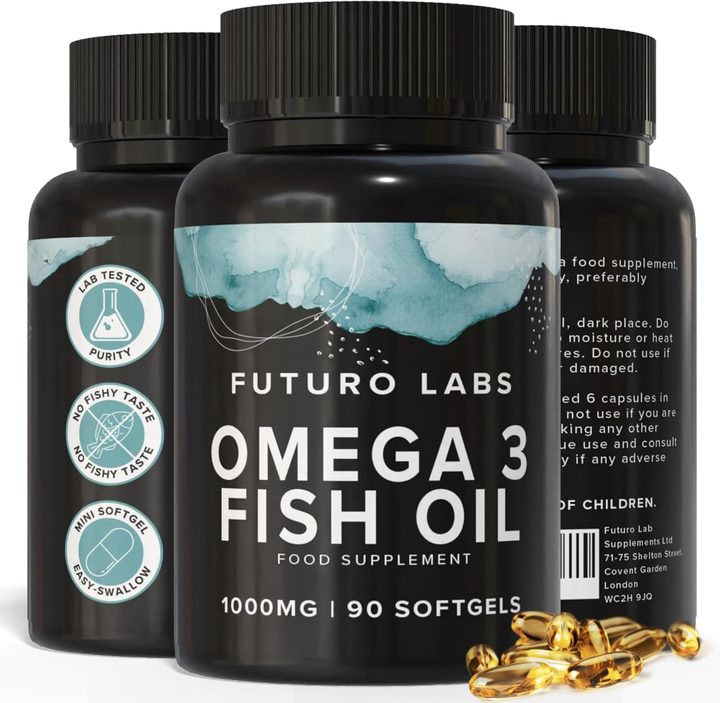
Our brand: the worked example on this page
Futuro Labs Omega 3 Fish Oil
- 17p a day
- 90 softgels, 1 softgel daily
- Lab tested
- Made in the UK
Bought for the claim it holds instead: Futuro Labs Omega 3 Fish Oil on Amazon UK, 300mg EPA+DHA with dinner, £14.99 for 90 days. Label breakdown. The exercise-specific version is on the after-exercise page; the register's real territories on the daily limit page.
Why no dose can answer this, and where the quoted numbers come from
A dose is a price for an effect, so a page can only name one where an effect is on sale, and here none is: the claims register authorises no anti-inflammatory, inflammation-reducing or inflammation-managing statement for EPA, DHA or fish oil at any intake, which means every how-much answer the internet offers is pricing a product the shelf does not legally stock. The quoted figures have a traceable source worth naming so they stop sounding like prescriptions: the inflammation research dosed at 2g-to-3g and beyond, trialling the pair against inflammatory markers and condition symptoms, and those protocol parameters migrated into listicles as recommended doses, the same laundering the muscle numbers underwent. The mechanism deserves its honest sentence too: EPA and DHA genuinely feed the body's inflammation-resolving chemistry, the specialised mediators that interest researchers, and mechanism is the beginning of a case rather than a verdict, the trials it launched returning marker changes that translate inconsistently into anyone feeling or functioning better, exactly the profile that never converts into a claim. No claim, no dose; protocols, not prescriptions; chemistry, not promises: the question's premises dissolve in order.
What the question should have asked, and the three honest referrals
Behind fight inflammation stands a person with one of three situations, and each has a better question with a real answer. Situation one, a diagnosed or suspected inflammatory condition, joint disease, gut disease, anything with a name or needing one: the question is for a GP, full stop, because conditions are treated with diagnosis, monitoring and medicine, self-dosing capsules against them is the branch-swap every medical-adjacent page here forbids, and any omega-3 role in such care is the clinician's call within it. Situation two, training soreness and the gym's everyday inflammation: the after-exercise page holds the file, small inconsistent trial effects at gram doses, the adaptation question over whether blunting the signal is even desirable, and a recovery desk, sleep, protein, food, programming, that actually works. Situation three, general wellness, the vague sense that inflammation is the modern enemy and a dose might fight it: the honest reallocation is the dietary pattern rather than the milligram, the UK's food-first framework with its oily fish already embodying the sensible version, alongside the unglamorous levers, weight, activity, sleep, not smoking, that carry the population evidence. In all three, the capsule's legitimate place is unchanged: 250mg-plus of the pair for the heart-function claim it verifiably holds, bought at 17p and never sold a war it cannot fight.
| Who is really asking | The honest answer | The routing |
|---|---|---|
| Someone with a diagnosed or suspected condition | Conditions are treated, not supplemented | GP: diagnosis, monitoring, medicine |
| A lifter chasing recovery | Small, inconsistent trial effects; adaptation question open | The after-exercise page and the recovery desk |
| A wellness generalist | Pattern beats milligram: diet, weight, activity, sleep | The food-first framework, oily fish included |
| Anyone quoting 2-3g as the dose | Protocol parameters, laundered into listicles | The research described as research |
| Every reader, regardless | The capsule's real claim: heart function at 250mg | One softgel with dinner, 17p |
The verdict, and the dose question returned unanswered on purpose
How much omega-3 per day to fight inflammation: no amount, because no authorised anti-inflammatory effect exists for any amount to buy, the 2g-to-3g internet figures being research protocols in borrowed clothes, the mechanism being real chemistry and not a promise, and the fight framing itself splitting into a GP matter, a recovery-desk matter and a dietary-pattern matter depending on who is asking. Returning the dose question unanswered is the page's whole service: it is the difference between a site that prices hope and one that prices claims. The worked example is priced on the second basis: Futuro Labs Omega 3 Fish Oil, 300mg of EPA and DHA with dinner for the maintenance of normal heart function, £14.99 for 90 days at 17p, lab-tested, UK made, a capsule sold for the sentence it holds, with the war respectfully declined.
What to check on the label
- No anti-inflammatory dose exists: no claim is authorised at any amount.
- The 2-3g figures are protocols: research parameters, not prescriptions.
- Mechanism is not a verdict: resolution chemistry licenses no promise.
- Conditions go to a GP: self-dosing against diagnoses is the branch-swap.
- The pattern beats the milligram: oily fish, weight, activity, sleep.
Our brand
The worked example: Futuro Labs Omega 3 Fish Oil
Futuro Labs Omega 3 Fish Oil: 1 softgel daily with food, 1000mg fish oil providing 180mg EPA and 120mg DHA (300mg combined), 90 softgels for £14.99, 17p a day, lab-tested purity, UK GMP made. Gelatin shell, so not vegetarian.
- Fish oil per softgel
- 1000mg
- EPA / DHA per softgel
- 180mg / 120mg (300mg combined)
- Serving
- 1 softgel a day
- Bottle
- 90 softgels, 90 days
- Price
- £14.99 (17p a day)
- Softgel
- mini softgel, no fishy taste
Questions people also ask
Is omega-3 anti-inflammatory or not?
It feeds real inflammation-resolving chemistry, and no anti-inflammatory claim is authorised at any dose: mechanism starts a case the trials have not finished.
What dose did the inflammation studies use?
Mostly 2g and upward of the pair: protocol parameters for research purposes, which is exactly what they should be described as, never as recommended doses.
Can fish oil help my arthritis or gut condition?
Named conditions are GP territory: diagnosis, monitoring and medicine. Any omega-3 role in that care is the clinician's call, not a shelf decision.
What actually lowers inflammation day to day?
The unglamorous pattern: a food-first diet with oily fish, sensible weight, regular activity, sleep and not smoking carry the population evidence.
Should I still take fish oil at all?
For its real claim, yes: 250-300mg of the pair with dinner maintains normal heart function for 17p, a purchase that needs no war attached.
Sources
- EFSA Panel on Dietetic Products, Nutrition and Allergies. Scientific Opinion on the substantiation of health claims related to magnesium. EFSA Journal 2010;8(10):1807. https://efsa.onlinelibrary.wiley.com/doi/10.2903/j.efsa.2010.1807
- Review evidence on omega-3 supplementation and exercise-induced muscle damage and soreness: small positive findings mainly in untrained participants, mixed-to-null results in trained populations. PubMed record
- Research on exercise-induced inflammation as part of the adaptive training signal, and whether blunting it with supplements is desirable: an open question in the recovery literature. PubMed record
- Scientific Advisory Committee on Nutrition and Committee on Toxicity. Advice on fish consumption: benefits and risks (two portions of fish a week, one oily). TSO, 2004. https://www.gov.uk/government/publications/sacn-advice-on-fish-consumption-benefits-and-risks
- EFSA Panel on Dietetic Products. Scientific opinion on the substantiation of health claims related to EPA and DHA and normal function of the heart (250mg daily condition of use). EFSA Journal 2010;8(10):1796. https://www.efsa.europa.eu/en/efsajournal/pub/1796