Ghost Fitness/Omega-3/What is the difference between 1000mg fish oil and 1000mg omega-3?
What is the difference between 1000mg fish oil and 1000mg omega-3?
The short answer
About 700mg of difference: 1000mg fish oil is the whole oil, roughly 300mg of it EPA and DHA, while 1000mg omega-3 means the fatty acids themselves, needing about three standard capsules or one concentrate. Same number, three times the content.
- ~30%the omega-3 fraction of standard fish oil: the conversion rate
- 300mgwhat 1000mg of standard fish oil actually delivers of the pair
- 3 softgels or 1 concentratewhat a true 1000mg of omega-3 takes
- Same shelf, same fontthe two phrases sit side by side priced as twins
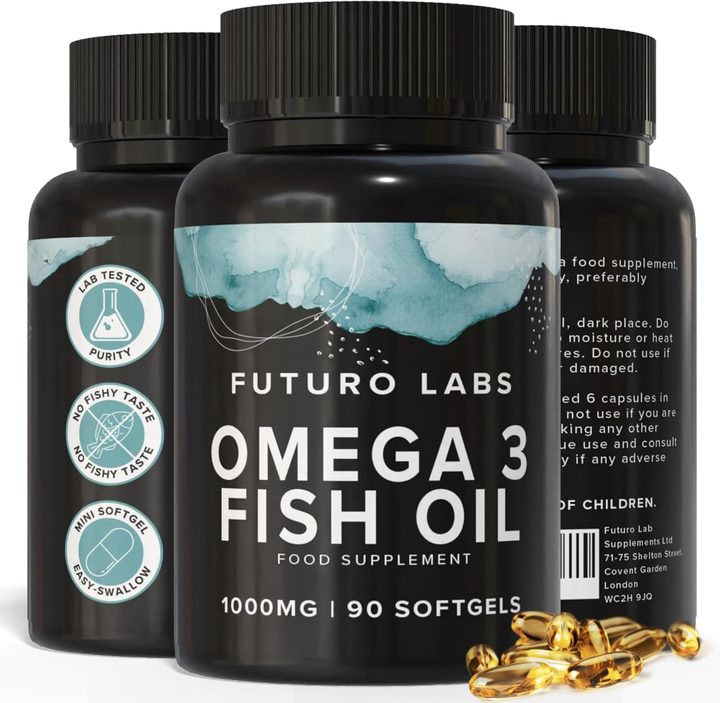
Our brand: the worked example on this page
Futuro Labs Omega 3 Fish Oil
- 17p a day
- 90 softgels, 1 softgel daily
- Lab tested
- Made in the UK
A label that states both numbers plainly: Futuro Labs Omega 3 Fish Oil on Amazon UK, 1000mg fish oil carrying 300mg EPA+DHA per softgel, £14.99 for 90 days. Label breakdown. The full reading method is on how to read a fish oil label; the family taxonomy on EPA, DHA and omega-3.
The container and the contents: why the same number means different things
The two phrases measure different layers of the same product. 1000mg fish oil measures the container: the whole oil pressed from the fish, a mixture in which EPA and DHA, the omega-3 fatty acids the claims actually read, make up roughly 30% at standard strength, the remainder being other perfectly ordinary fatty acids along for the ride. So the classic 1000mg softgel delivers about 300mg of the pair, this site's benchmark bottle being the worked example. 1000mg omega-3 measures the contents: the fatty acids themselves, and hitting a true 1000mg of them takes either about three standard softgels or a single concentrate capsule, where processing has raised the omega-3 fraction to 50-to-90% and the label, if honest, says so in named EPA and DHA milligrams. The difference, about 700mg on identical-looking headlines, is the aisle's most profitable ambiguity, because the two phrases sit on neighbouring bottles in the same font at similar prices, and a shopper comparing headlines is comparing a container to its contents without being told.
The side-by-side decode, and the repricing that follows
Put the two labels side by side and the decode is mechanical. Bottle A, 1000mg fish oil, 90 softgels, £14.99: flip to the panel, find 300mg combined EPA and DHA per softgel, and the real figures are 300mg a day at 17p, pence per 100mg about 5.6p. Bottle B, 1000mg omega-3, 60 capsules, £24: the honest version's panel shows something like 600mg EPA and 400mg DHA per capsule, a genuine concentrate, and the real figures are 1000mg a day at 40p, pence per 100mg about 4p, cheaper per delivered milligram despite the dearer bottle, the concentrate economics the EE pages map. The dishonest version of Bottle B shows no member lines at all, an omega-3 blend total that may lean on ALA from plant oils, at which point the two-line habit ends the comparison: no EPA and DHA figures, no purchase. The repricing rule that falls out is the one the label masterclass teaches as its closing division: never compare headline milligrams across the two phrases, always convert both bottles to pence per 100mg of combined EPA and DHA, the one exchange rate at which container and contents finally trade fairly.
| The label says | What is being measured | Typical EPA + DHA delivered | The honest comparison |
|---|---|---|---|
| 1000mg fish oil (standard softgel)Ours | The whole oil: the container | ~300mg per capsule | 17p a day, ~5.6p per 100mg on the benchmark bottle |
| 1000mg omega-3 (true concentrate) | The fatty acids: the contents | ~1000mg per capsule, lines named | Dearer bottle, often cheaper per 100mg |
| 1000mg omega-3 (blend, no member lines) | Unknown: possibly ALA-padded | Cannot be computed | The two-line habit walks away |
| Three standard softgels | Contents reached by multiplication | ~900-1000mg | The no-concentrate route to a gram |
The verdict, and the exchange rate worth memorising
What is the difference between 1000mg fish oil and 1000mg omega-3: about 700mg of EPA and DHA, because one phrase measures the oil and the other measures the fatty acids inside it, a distinction worth exactly the price difference the aisle charges for confusing them. The exchange rate worth memorising is 30%: standard fish oil converts to the pair at roughly that fraction, so headline oil milligrams divided by three approximates the real product, and any label that will not confirm the arithmetic in named member lines has answered a different question, namely whether to buy it. The worked example states both layers without being asked: Futuro Labs Omega 3 Fish Oil, 1000mg fish oil per softgel on the front, 180mg EPA and 120mg DHA on the panel, 300mg combined, £14.99 for 90 days at 17p, lab-tested, UK made, container and contents reconciled on one honest label.
What to check on the label
- 1000mg fish oil measures the container: the whole oil, ~30% the pair.
- 1000mg omega-3 measures the contents: three softgels or one concentrate.
- The gap is about 700mg: on headlines printed in the same font.
- No member lines, no purchase: blend totals can hide ALA padding.
- Compare at pence per 100mg of EPA and DHA: the only fair exchange rate.
Our brand
The worked example: Futuro Labs Omega 3 Fish Oil
Futuro Labs Omega 3 Fish Oil: 1 softgel daily with food, 1000mg fish oil providing 180mg EPA and 120mg DHA (300mg combined), 90 softgels for £14.99, 17p a day, lab-tested purity, UK GMP made. Gelatin shell, so not vegetarian.
- Fish oil per softgel
- 1000mg
- EPA / DHA per softgel
- 180mg / 120mg (300mg combined)
- Serving
- 1 softgel a day
- Bottle
- 90 softgels, 90 days
- Price
- £14.99 (17p a day)
- Softgel
- mini softgel, no fishy taste
Questions people also ask
Is 1000mg of fish oil the same as 1000mg of omega-3?
No: 1000mg fish oil is the whole oil, delivering roughly 300mg of EPA and DHA at standard strength. A true 1000mg of omega-3 is the fatty acids themselves.
How much omega-3 is in a 1000mg fish oil capsule?
Typically around 300mg of combined EPA and DHA, about 30%: the exact figures belong on the panel in named milligrams, as on the worked example.
How do I actually get 1000mg of omega-3 a day?
About three standard softgels, or one honest concentrate declaring figures like 600mg EPA and 400mg DHA: gram targets are deliberate territory, planned rather than stumbled into.
Why do brands print the fish oil number so large?
Because 1000 reads better than 300: the headline measures the container, the claims read the contents, and the gap between them is the aisle's favourite ambiguity.
Which bottle is better value?
Whichever wins at pence per 100mg of combined EPA and DHA: concentrates often win per milligram, standard softgels win per day at everyday targets.
Sources
- Futuro Labs Omega 3 Fish Oil listing: 1000mg fish oil per softgel providing 180mg EPA and 120mg DHA, 90 softgels. Amazon UK, accessed 31 August 2026. https://www.amazon.co.uk/dp/B0CP9T3BTN
- GOED Voluntary Monograph: the omega-3 industry's quality standard setting limits for heavy metals, dioxins and oxidation (peroxide, anisidine and TOTOX values) in fish oils. https://goedomega3.com
- EFSA Panel on Dietetic Products. Scientific opinion on the substantiation of health claims related to EPA and DHA and normal function of the heart (250mg daily condition of use). EFSA Journal 2010;8(10):1796. https://www.efsa.europa.eu/en/efsajournal/pub/1796
- Commission Regulation (EU) No 536/2013 authorising health claims for DHA and EPA: maintenance of normal blood triglyceride concentrations (2g DHA+EPA/day) and normal blood pressure (3g DHA+EPA/day), with a supplemental limit note of 5g/day. https://eur-lex.europa.eu/legal-content/EN/TXT/?uri=CELEX%3A32013R0536
- Dyerberg J, Madsen P, Møller JM, Aardestrup I, Schmidt EB. Bioavailability of marine n-3 fatty acid formulations. Prostaglandins, Leukotrienes and Essential Fatty Acids 2010;83(3):137-141. PubMed record