Ghost Fitness/Omega-3/Does omega-3 reduce inflammation in gut?
Does omega-3 reduce inflammation in gut?
The short answer
By the three things gut inflammation means. A diagnosed inflammatory bowel disease: the large Crohn's trials at four grams were null and the colitis trials at most modest, so no review recommends omega-3 and a gastroenterologist owns it. The wellness notion of an inflamed gut: no test, no definition, no file. A post-meal upset: fish oil at high doses is likelier to cause it than cure it. No claim covers the gut.
- A diagnosed diseaseCrohn's: four grams, null for remission; colitis: modest and inconsistent; no review recommends it
- The wellness notionno test, no definition, no trial, no file: nothing measurable to reduce
- A post-meal upsetloose stools and a greasy stomach at high doses: a cause, not a cure; a lower dose
- The registerno gut, digestive or inflammation claim for omega-3; the claims are heart, brain, vision, triglycerides and blood pressure
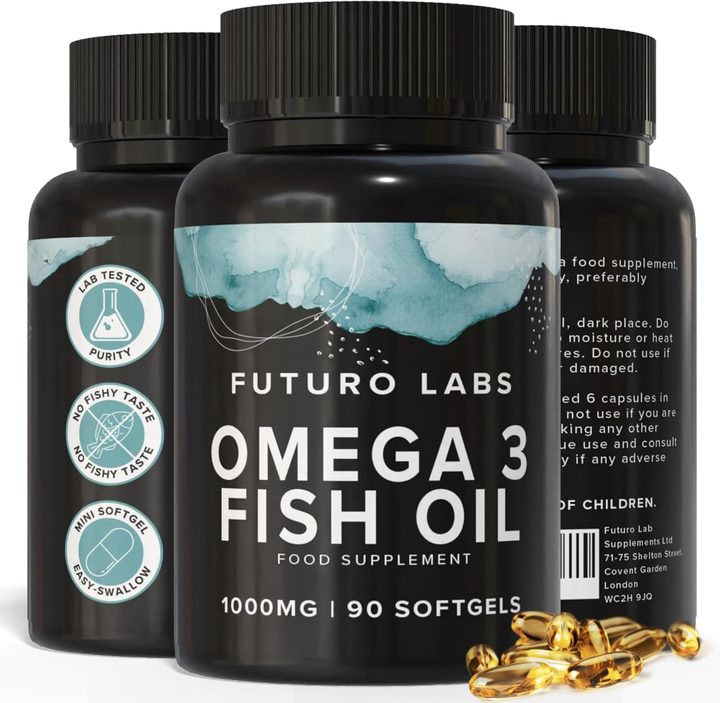
Our brand: the worked example on this page
Futuro Labs Omega 3 Fish Oil
- 17p a day
- 90 softgels, 1 softgel daily
- Lab tested
- Made in the UK
A standard softgel for the register's claims, with no gut claim among them: Futuro Labs Omega 3 Fish Oil on Amazon UK, 1 softgel with food, 180mg EPA and 120mg DHA, 90 for £14.99 at 17p. Full label breakdown. Resolve versus suppress is on the take-away-inflammation page; whether it is good for kidneys and liver on the kidneys and liver page.
The first meaning, a diagnosed inflammatory bowel disease, where the trials were run and were disappointing
Does omega-3 reduce inflammation in the gut is a question that means three different things depending on who asks it, and the honest page answers all three because the shelf answers none. The first meaning, a diagnosed inflammatory bowel disease: a reader with Crohn's disease or ulcerative colitis has gut inflammation in the literal sense, measured on a colonoscopy and a calprotectin test, and for them the question has been asked properly and answered disappointingly. The EPIC trials, two large randomised trials of four grams of omega-3 a day in Crohn's disease, found no benefit over placebo for maintaining remission, a null result at a dose thirteen times a standard softgel over a year, and the ulcerative colitis trials, smaller and older, found at most a modest and inconsistent effect on symptoms and steroid use that the pooled analyses do not consider reliable, so the reviews do not recommend omega-3 for inflammatory bowel disease and no guideline includes it, the IBD trial literature's verdict, and the condition stays a gastroenterologist's, managed with aminosalicylates, steroids, immunomodulators and biologics that work. A reader with a diagnosis takes fish oil or not by the oily-fish audit for the heart claim, tells the gastroenterologist as part of the list, is careful that high doses can loosen stools in a bowel that is already loose, and does not take it in place of, or in the hope of reducing, a treatment that works, the four-grams-null result being the thing to remember when a page or a forum claims otherwise.
The second and third meanings, an inflamed gut with no test and a post-meal upset the oil may cause, the register, and the meanings filed
The second meaning, the wellness notion of an inflamed gut: a reader without a diagnosis who has read that their gut is inflamed, by a leaky gut, a bad microbiome or a modern diet, and who wants omega-3 to reduce it, is asking about a thing that has no test, no definition and no trial, the inflammation being a metaphor for feeling unwell after eating rather than a measurement, and the honest answer is that there is nothing measurable to reduce and no file in which omega-3 reduces it, the resolvin and inflammation-marker literature concerning circulating markers like CRP in people who are measurably inflamed at gram doses over months and not a gut that no one has measured, so the answer for the second meaning is that the question needs a diagnosis before it can have a supplement, and a reader with persistent gut symptoms has a GP and possibly a calprotectin test before they have a softgel. The third meaning, a post-meal upset called inflammation: a reader whose gut feels inflamed after meals, bloated, loose, greasy or crampy, and who takes fish oil to settle it, has the cause and the cure the wrong way round at any high dose, since two grams and up of omega-3 a day is one of the commoner causes of exactly those symptoms, loose stools, a greasy stomach and repeating, the gut being the first thing to complain of too much oil, so a reader on grams whose gut is unhappy lowers the dose first, and a reader on a standard softgel whose gut is unhappy has a cause that is not the oil, the meal, the timing, lactose, a sweetener or the anxiety of it, and a GP if it persists. The register has no gut, digestive or inflammation claim for omega-3 at any dose, its sentences being heart, brain, vision, triglycerides and blood pressure, and the phrase reduces inflammation is not a claim any supplement may make, so the page's three answers are the trials' null for the first meaning, the absence of a thing to measure for the second, and a lower dose for the third. The meanings filed: a diagnosed disease with null and modest trials and a gastroenterologist, a wellness notion with no test and no file, a post-meal upset the oil is likelier to cause than cure, and no register claim for the gut, with the worked example being a standard softgel for the register's claims, £14.99 for 90 at 17p.
| What is meant | The evidence | The answer |
|---|---|---|
| Crohn's disease | EPIC trials: four grams a day, null for maintaining remission | No; a gastroenterologist's drugs |
| Ulcerative colitis | Modest, inconsistent effects on symptoms and steroid use; not reliable | No recommendation; the same |
| The wellness inflamed gut | No test, no definition, no trial | Nothing measurable to reduce; a diagnosis before a supplement |
| A post-meal upset | High doses cause loose stools and a greasy stomach | A lower dose first; a GP if it persists |
| The register | No gut, digestive or inflammation claim | The claims are heart, brain, vision, triglycerides, blood pressure |
| The audit | Unchanged by any of the three | One softgel for a low-fish plate; none for oily fish twice a week |
The verdict, null where it was tested, undefined where it was not, and a cause rather than a cure at high doses
Does omega-3 reduce inflammation in the gut: by the three things the phrase means, no for a diagnosed inflammatory bowel disease, the large Crohn's trials at four grams a day having found no benefit for maintaining remission and the colitis trials at most a modest and inconsistent effect, so that no review recommends it and a gastroenterologist's treatments own the condition, no measurable answer for the wellness notion of an inflamed gut, which has no test, definition or trial, and the reverse for a post-meal upset, which fish oil at high doses is likelier to cause than to cure and which a lower dose answers, with no gut, digestive or inflammation claim on the register at any dose. A standard softgel for the register's claims: Futuro Labs Omega 3 Fish Oil, one with food, 180mg EPA and 120mg DHA, 90 for £14.99 at 17p a day.
What to check on the label
- Name which gut inflammation you mean: a diagnosis, a notion or an upset.
- Keep a diagnosed disease with its gastroenterologist: the trials were null at four grams.
- Get a diagnosis before a supplement: an inflamed gut with no test has no file.
- Lower the dose for an upset: high doses cause what they are taken to cure.
- Expect no gut claim: heart, brain, vision, triglycerides, blood pressure only.
Our brand
The worked example: Futuro Labs Omega 3 Fish Oil
Futuro Labs Omega 3 Fish Oil: 1 softgel daily with food, 1000mg fish oil providing 180mg EPA and 120mg DHA (300mg combined), 90 softgels for £14.99, 17p a day, lab-tested purity, UK GMP made. Gelatin shell, so not vegetarian.
- Fish oil per softgel
- 1000mg
- EPA / DHA per softgel
- 180mg / 120mg (300mg combined)
- Serving
- 1 softgel a day
- Bottle
- 90 softgels, 90 days
- Price
- £14.99 (17p a day)
- Softgel
- mini softgel, no fishy taste
Questions people also ask
Does omega-3 help Crohn's disease or ulcerative colitis?
No reliably: the two large EPIC trials of four grams of omega-3 a day found no benefit for maintaining remission in Crohn's disease, and the ulcerative colitis trials found at most a modest and inconsistent effect on symptoms and steroid use, so no review or guideline recommends omega-3 for inflammatory bowel disease, which stays with a gastroenterologist's treatments.
Can I take fish oil if I have inflammatory bowel disease?
By the oily-fish audit for the heart claim, telling the gastroenterologist as part of the list, with the caution that high doses can loosen stools in a bowel that is already loose, and never in place of or in the hope of reducing a treatment that works, the four-grams-null result being the thing to remember.
Does omega-3 reduce gut inflammation from a bad diet or leaky gut?
There is nothing measurable to reduce: the wellness notion of an inflamed gut has no test, no definition and no trial, the inflammation-marker literature concerning circulating markers in measurably inflamed people rather than a gut no one has measured, so persistent gut symptoms go to a GP for a diagnosis before they go to a supplement.
Can fish oil cause gut problems rather than fix them?
Yes, at high doses: two grams and up of EPA and DHA a day is one of the commoner causes of loose stools, a greasy stomach and repeating, the gut being the first thing to complain of too much oil, so a reader on grams whose gut is unhappy lowers the dose before looking anywhere else, and a reader on a standard softgel has a different cause.
Is there an omega-3 health claim for the gut or digestion?
No: the authorised omega-3 claims are heart function at 250mg of EPA and DHA, brain function and vision at 250mg of DHA, triglycerides at two grams and blood pressure at three, and reduces inflammation is not a claim any supplement may make, so a gut or digestive promise on a tub has no basis on the register.
Sources
- The omega-3 and inflammatory bowel disease trials: the large EPIC trials of four grams of omega-3 a day found no benefit for maintaining remission in Crohn's disease, and the ulcerative colitis trials found at most a modest and inconsistent effect on symptoms and steroid use, so the reviews do not recommend omega-3 for inflammatory bowel disease, which remains a gastroenterologist's condition managed with its own drugs. PubMed record
- Meta-analyses of omega-3 supplementation and C-reactive protein: small reductions in CRP with EPA and DHA at around two grams a day or more over weeks to months, larger where CRP was raised at baseline, a marker effect rather than a treatment of any condition. PubMed record
- The specialised pro-resolving mediator literature: EPA and DHA in cell membranes are converted to resolvins, protectins and maresins that help inflammation resolve, a mechanism demonstrated in cell and animal models and in human blood after supplementation, without an authorised inflammation claim for omega-3 in the UK. PubMed record
- Retained Regulation (EC) No 1924/2006 on nutrition and health claims made on foods, and the Great Britain nutrition and health claims register. https://www.gov.uk/government/publications/great-britain-nutrition-and-health-claims-nhc-register