Ghost Fitness/Omega-3/How long does fish oil last in the body?
How long does fish oil last in the body?
The short answer
Two meanings. In the body: three pools with three half-lives. Plasma EPA and DHA last days. Red-cell membranes and the omega-3 index last three to four months, the index falling to the diet's level over a season after stopping. Tissue membranes last months on the same clock. In the tub: a sealed softgel lasts to its best-before date in a cool dark cupboard, an opened tub a couple of months, an opened liquid about a month in the fridge.
- In the body: plasmadays: rises and falls with the last few softgels
- In the body: red cells and tissuesthree to four months: the index falls to the diet's level over a season after stopping
- In the tub: sealedto the best-before date, typically two to three years, cool and dark
- In the tub: openeda couple of months for softgels; about a month in the fridge for a liquid
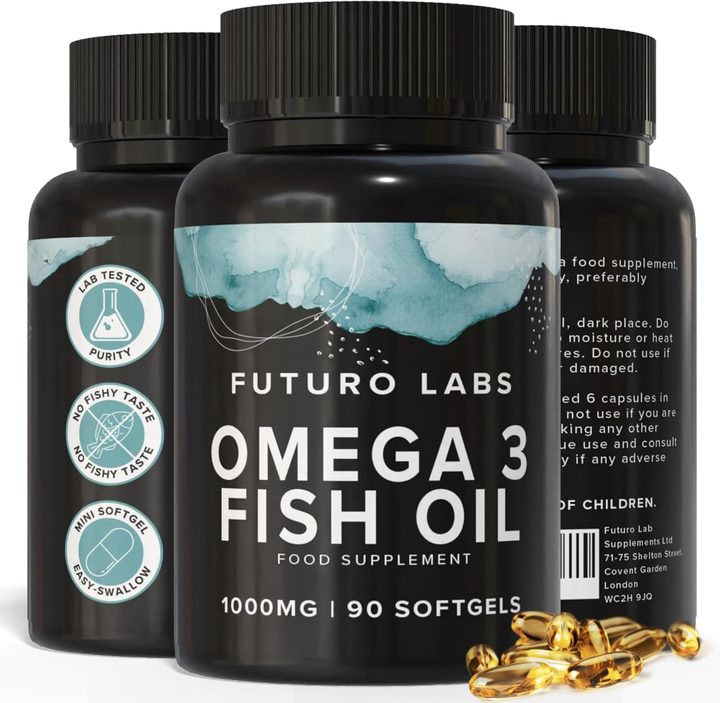
Our brand: the worked example on this page
Futuro Labs Omega 3 Fish Oil
- 17p a day
- 90 softgels, 1 softgel daily
- Lab tested
- Made in the UK
A ninety-day tub, finished before the oil turns and matching the body's own clock: Futuro Labs Omega 3 Fish Oil on Amazon UK, 1 softgel with food, 180mg EPA and 120mg DHA, lab-tested purity, 90 for £14.99 at 17p. Full label breakdown. The stopping mirror is on the stopping page; storage on the storage page.
In the body, three pools with three half-lives, and what they mean for a stopped habit and a missed week
How long fish oil lasts in the body is a question with a second meaning hiding in it, how long it lasts in the tub, and both deserve an answer because a reader who asks the first is often worried about the second. In the body, three pools with three half-lives. Plasma: EPA and DHA carried in the blood's fats rise within days of daily intake and fall within days of stopping, a pool that reflects the last few softgels rather than the body's stores, the how-long page's fastest and least meaningful pool, lasting days. Red cells: EPA and DHA built into red-cell membranes, measured as the omega-3 index, last as long as the cells do, around four months, so the index rises over three to four months of daily intake to a plateau and falls over a similar period after stopping, the index kinetics literature's mirror-image clock, a habit stopped in January being back to the diet's level by spring, the stopping page's timeline. Tissue membranes: heart, brain, muscle and the rest incorporate EPA and DHA on the same months-long clock and give them up the same way, the brain's DHA being the most conserved and the slowest to change in either direction. Two practical consequences follow. A stopped habit is gone by a season, not by a week, so a reader who stops for a fortnight on holiday has lost nothing measurable and restarts without doubling up, while a reader who stops for six months has an index back where their diet puts it. And a reader who wants to know whether a fish oil is still in their system for a blood test, a surgical pause or an allergy question has the answer by pool, days for the blood, months for the cells, with the antiplatelet effect clearing within days as platelets turn over.
In the tub, sealed and opened, the enemies and the storage rule, the liquid's shorter life, and both meanings filed
In the tub, the second meaning, and a fat's enemies rather than its pools. Sealed: a fish oil softgel in an unopened tub, or a tub whose seal is intact and whose lid has stayed on, lasts to its best-before date, typically two to three years from manufacture, provided it has lived in a cool dark cupboard, the shell keeping air away from the oil and the antioxidant vitamin E most fish oils add slowing what oxygen gets in, and a sealed tub found at the back of a cupboard within its date is fine, the date being the manufacturer's freshness promise and not a safety cliff. Opened: once the seal is broken and the lid comes on and off daily, air reaches the softgels' surfaces and the oil inside begins to oxidise, faster in warmth and light, so an opened tub is finished within a couple of months, kept in a cool dark cupboard or the fridge with the lid closed, and bitten now and then for a paint or old-nut taste, the freshness read that matters more than the date, a ninety-day tub at one a day being sized for exactly this. A liquid: an opened bottle of fish oil, with its large surface exposed to air at every pour, oxidises fastest and lasts about a month in the fridge, the reason liquids are bought small and finished. The enemies are the same in every case, heat, light and air, and the rule is the same, cool, dark, closed and finished, with a rancid oil delivering oxidised fat rather than omega-3 and burping worst of all, the rancid pages' file. Both meanings filed: in the body, plasma for days, red cells and the index for three to four months and tissues for months, a stopped habit gone by a season; in the tub, a sealed softgel to its date in a cool dark cupboard, an opened tub a couple of months and an opened liquid a month in the fridge, with the worked example being a ninety-day tub finished before the oil turns and matching the body's own clock, £14.99 at 17p.
| The pool or the container | How long | The note |
|---|---|---|
| Plasma EPA and DHA | Days | Reflects the last few softgels; the least meaningful pool |
| Red cells and the omega-3 index | Three to four months | Rises to a plateau and falls to the diet's level over a season |
| Tissue membranes | Months | The brain's DHA the most conserved |
| A sealed tub | To the best-before date, typically two to three years | Cool and dark; the date is a freshness promise, not a safety cliff |
| An opened tub of softgels | A couple of months | Cool, dark, lid closed; bitten for a paint taste |
| An opened liquid | About a month | In the fridge; bought small and finished |
The verdict, months in the body and months in an opened tub, with a ninety-day tub matching both
How long does fish oil last in the body: in three pools with three half-lives, plasma EPA and DHA for days, red-cell membranes and the omega-3 index for three to four months so that a stopped habit is back to the diet's level by a season, and tissue membranes for months on the same clock, with a missed fortnight losing nothing measurable, and in the tub, a sealed softgel to its best-before date in a cool dark cupboard, an opened tub a couple of months before heat, light and air oxidise the oil, and an opened liquid about a month in the fridge, the rule being cool, dark, closed and finished. A ninety-day tub finished before the oil turns: Futuro Labs Omega 3 Fish Oil, one softgel with food, 180mg EPA and 120mg DHA, lab-tested purity, 90 for £14.99 at 17p a day.
What to check on the label
- Know the body's three clocks: days, three to four months, months.
- Expect a stopped habit to be gone by a season: not by a week.
- Trust a sealed tub to its date: cool and dark.
- Finish an opened tub within a couple of months: lid closed, bitten now and then.
- Finish a liquid within a month: in the fridge.
Our brand
The worked example: Futuro Labs Omega 3 Fish Oil
Futuro Labs Omega 3 Fish Oil: 1 softgel daily with food, 1000mg fish oil providing 180mg EPA and 120mg DHA (300mg combined), 90 softgels for £14.99, 17p a day, lab-tested purity, UK GMP made. Gelatin shell, so not vegetarian.
- Fish oil per softgel
- 1000mg
- EPA / DHA per softgel
- 180mg / 120mg (300mg combined)
- Serving
- 1 softgel a day
- Bottle
- 90 softgels, 90 days
- Price
- £14.99 (17p a day)
- Softgel
- mini softgel, no fishy taste
Questions people also ask
How long does omega-3 stay in your system?
By pool: plasma EPA and DHA for days, red-cell membranes and the omega-3 index for three to four months, and tissue membranes for months on the same clock, so a stopped habit falls back to the diet's level over a season and a missed fortnight loses nothing measurable.
How long before fish oil is out of my system for surgery?
The modest antiplatelet effect clears within days as platelets turn over, which is why a surgical team asks for a pause of a high-dose habit a week or two before an operation rather than a month, while the membrane pools take months to fall and are not the concern.
How long does fish oil last once opened?
A couple of months for a tub of softgels kept cool, dark and closed, since air reaches the softgels' surfaces each time the lid comes off and the oil begins to oxidise, and about a month in the fridge for an opened liquid, whose large surface oxidises fastest at every pour.
Can I take fish oil that is past its best-before date?
A sealed tub within its date is fine and a sealed tub a little past it is usually fine too, the date being a freshness promise rather than a safety cliff, but it is bitten for a paint or old-nut taste before use and discarded if rancid, since a rancid oil delivers oxidised fat rather than omega-3.
How should fish oil be stored to last longest?
Cool, dark and closed: a sealed tub in a cupboard away from the cooker and the window, an opened tub in a cool cupboard or the fridge with the lid on and finished within a couple of months, and a liquid in the fridge and finished within a month, with heat, light and air being the three enemies.
Sources
- The omega-3 index kinetics literature: red-cell EPA and DHA rise over three to four months of daily intake and fall over a similar period after stopping, the index changing on a clock of months rather than days, with no acute effect of a single dose. PubMed record
- Harris WS, von Schacky C. The omega-3 index: red blood cell EPA and DHA as a measurable marker of omega-3 status, the research standard for judging how effectively intake raises tissue levels. PubMed record
- The fish oil oxidation literature: oxidation is measured by peroxide value, anisidine value and their combination as TOTOX, with the industry monograph setting limits of 5, 20 and 26 respectively, and surveys of retail fish oils finding a meaningful share above those limits, freshness being a quality dimension a label rarely shows and a certificate does. PubMed record
- EFSA Panel on Dietetic Products. Scientific opinion on the tolerable upper intake level of EPA, DHA and DPA: supplemental intakes of EPA and DHA combined up to about 5g/day do not raise safety concerns for adults. EFSA Journal 2012;10(7):2815. https://www.efsa.europa.eu/en/efsajournal/pub/2815