Ghost Fitness/Omega-3/How long do I need to take fish oil to notice a difference?
How long do I need to take fish oil to notice a difference?
The short answer
Mostly you will not feel it: omega-3 works on measurements, not sensations. Blood triglycerides move within weeks at gram doses, tissue levels shift over about three months, and the everyday 250mg territory maintains quietly. Twelve weeks is the honest checkpoint.
- Not a felt supplementno buzz, no pump, no sensation to wait for
- Weeksblood triglycerides respond at gram doses, on a test
- ~3 monthsred blood cell membranes turn over: tissue levels shift slowly
- 12 weeksthe honest checkpoint the trial literature itself uses
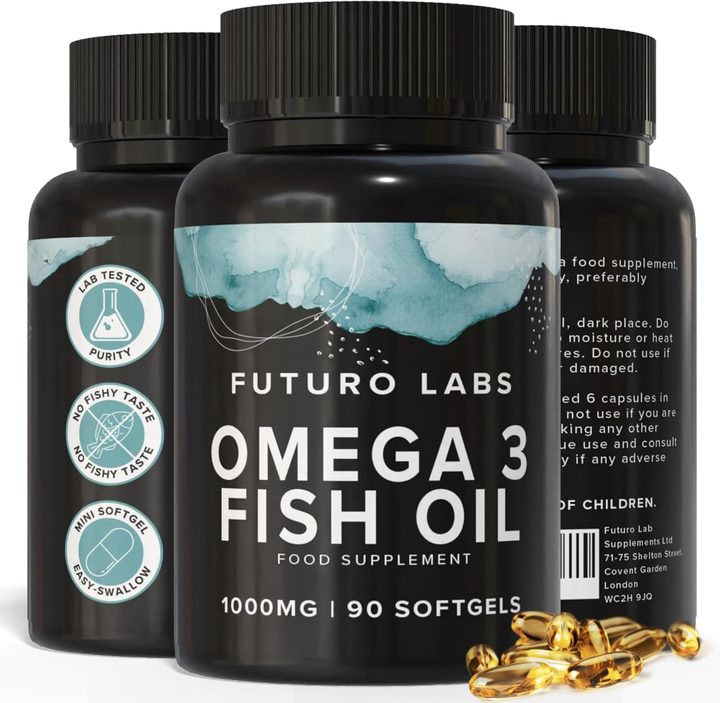
Our brand: the worked example on this page
Futuro Labs Omega 3 Fish Oil
- 17p a day
- 90 softgels, 1 softgel daily
- Lab tested
- Made in the UK
The quiet maintainer this page describes: Futuro Labs Omega 3 Fish Oil on Amazon UK, 300mg EPA+DHA per softgel, £14.99 for 90 days. Label breakdown. What a bottle costs to run is on the cost per day page; what it genuinely does on the family explainer.
Why the difference is measured, not felt
The honest opening move is to say what kind of supplement this is: not a felt one. Caffeine announces itself in twenty minutes and creatine shows up on the bar within weeks, but omega-3 does its work structurally and biochemically, EPA and DHA being incorporated into cell membranes and lipid metabolism rather than producing any sensation, which is why nobody has ever accurately reported feeling their heart-function claim maintain. The changes that do happen run on two honest clocks. The fast clock is blood chemistry: at gram-scale intakes, triglyceride levels move within a few weeks, visible on a lipid panel and on nothing else. The slow clock is tissue: red blood cell membranes, the basis of the omega-3 index that research uses as its status measure, turn over across roughly three to four months, so an index retest before the three-month mark is measuring your old blood cells. And the outcome literature runs slower still, the large trials following participants for years precisely because the endpoints are events, not feelings, which is the whole reason the marketing phrase notice a difference deserves suspicion on sight.
The timescale table, and what to do at twelve weeks
Set expectations by goal and the table writes itself. The everyday 250mg territory, this site's default: nothing to notice at any point, by design, because a maintenance claim maintains, and the deliverable is a covered base at 17p rather than an experience, meaning the only sensible review is a habit review, is the softgel still landing at dinner. Triglycerides at prescribed gram doses: weeks to a repeat blood test, the GP's calendar owning the checkpoint. Research territories like mood, run at EPA-forward gram doses in trials: the studies themselves typically ran eight to twelve weeks before measuring anything, which is where the twelve-week checkpoint this page recommends comes from. Joints and soreness: the trial record is small and inconsistent enough that no timescale can honestly be promised at all. So the twelve-week move is this: if you started fish oil to cover the claim territory, check the habit and the restock, nothing else; if you started it expecting a felt change and twelve weeks delivered none, the product was working exactly as labelled and the expectation was the faulty part, worth redirecting at sleep, training or diet, the levers that do produce noticeable differences.
| What you took it for | Where change shows | Honest timescale |
|---|---|---|
| The everyday 250mg heart territoryOurs | Nowhere: maintenance maintains | No felt change at any point, by design |
| Triglycerides (prescribed gram doses) | A repeat lipid panel | Weeks: the GP's calendar decides |
| Omega-3 status (the index) | A finger-prick index test | About 3 to 4 months: membrane turnover |
| Mood research territory | Trial-style rating scales | 8 to 12 weeks in the studies themselves |
| Joints and soreness | Small, inconsistent trial effects | No promisable timescale exists |
| Long-term outcomes | Event rates across populations | Years: why the big trials ran for years |
The verdict, and the expectation worth keeping
How long do you need to take fish oil to notice a difference: reframe before you count, because the differences are measurements, blood chemistry in weeks at gram doses, tissue status in about three months, outcomes across years, and the everyday softgel produces the least noticeable result of all, a quietly covered claim territory that never was going to feel like anything. The expectation worth keeping is the one the worked example is built for: Futuro Labs Omega 3 Fish Oil, one softgel with dinner, 300mg of EPA and DHA maintaining the heart-function territory at 17p a day, £14.99 for 90 days, lab-tested, UK made, reviewed at twelve weeks by the only honest question available, whether the habit held. If you want a supplement you can feel, the aisle next door sells caffeine; this one sells upkeep.
What to check on the label
- Omega-3 is not a felt supplement: no sensation exists to wait for.
- Blood triglycerides move in weeks: at gram doses, on a test, via the GP.
- Tissue status shifts over ~3 months: membrane turnover sets the clock.
- The trials measured at 8 to 12 weeks: the honest checkpoint to borrow.
- At twelve weeks, review the habit: not the sensations that were never coming.
Our brand
The worked example: Futuro Labs Omega 3 Fish Oil
Futuro Labs Omega 3 Fish Oil: 1 softgel daily with food, 1000mg fish oil providing 180mg EPA and 120mg DHA (300mg combined), 90 softgels for £14.99, 17p a day, lab-tested purity, UK GMP made. Gelatin shell, so not vegetarian.
- Fish oil per softgel
- 1000mg
- EPA / DHA per softgel
- 180mg / 120mg (300mg combined)
- Serving
- 1 softgel a day
- Bottle
- 90 softgels, 90 days
- Price
- £14.99 (17p a day)
- Softgel
- mini softgel, no fishy taste
Questions people also ask
Will I feel anything from taking fish oil?
Almost certainly not: EPA and DHA work structurally in membranes and lipids, producing measurements rather than sensations. A felt change was never the deliverable.
How long does fish oil take to lower triglycerides?
At prescribed gram doses, a few weeks to a visible move on a lipid panel: which is why the GP schedules the repeat bloods, and why retail doses are not the tool.
What is the omega-3 index and when would it change?
A red blood cell measure of EPA and DHA status: membranes turn over across roughly three to four months, so retesting earlier measures old cells.
I have taken fish oil for a month and notice nothing: is it working?
If it is a genuine product taken with food, yes: the everyday claim territory maintains silently. Nothing was scheduled to be noticed.
What actually produces a noticeable difference in training?
The unglamorous levers: sleep, total protein, programmed overload and time. Fish oil rides along for the heart claim at 17p, not for sensations.
Sources
- Futuro Labs Omega 3 Fish Oil listing: 1000mg fish oil per softgel providing 180mg EPA and 120mg DHA, 90 softgels. Amazon UK, accessed 31 August 2026. https://www.amazon.co.uk/dp/B0CP9T3BTN
- Harris WS, von Schacky C. The omega-3 index: red blood cell EPA and DHA as a measurable marker of omega-3 status, the research standard for judging how effectively intake raises tissue levels. PubMed record
- Manson JE, Cook NR, Lee IM, et al. Marine n-3 fatty acids and prevention of cardiovascular disease and cancer (the VITAL randomized trial). New England Journal of Medicine 2019;380:23-33. PubMed record
- EFSA Panel on Dietetic Products. Scientific opinion on the substantiation of health claims related to EPA and DHA and normal function of the heart (250mg daily condition of use). EFSA Journal 2010;8(10):1796. https://www.efsa.europa.eu/en/efsajournal/pub/1796
- EFSA Panel on Dietetic Products, Nutrition and Allergies. Scientific Opinion on the substantiation of health claims related to magnesium. EFSA Journal 2010;8(10):1807. https://efsa.onlinelibrary.wiley.com/doi/10.2903/j.efsa.2010.1807