Ghost Fitness/Omega-3/How long does omega-3 take to work for skin?
How long does omega-3 take to work for skin?
The short answer
There is no skin claim and no skin effect to feel on the day, so the clock is the research's, file by file: the sunburn-resistance trials measured a raised redness threshold after four to twelve weeks of EPA at gram-and-above doses; the hydration studies reported slightly better hydration at eight to twelve weeks; and the eczema trials ran eight to sixteen weeks with mixed results. All run on the membrane's months-long clock.
- Sunburn resistancefour to twelve weeks of EPA at gram-and-above doses: a raised ultraviolet redness threshold; the strongest small file
- Hydrationeight to twelve weeks: slightly better skin hydration in small studies
- Eczemaeight to sixteen weeks: mixed results; a GP first
- The clock underneathEPA and DHA building into skin membranes over months; no skin claim; nothing on the day
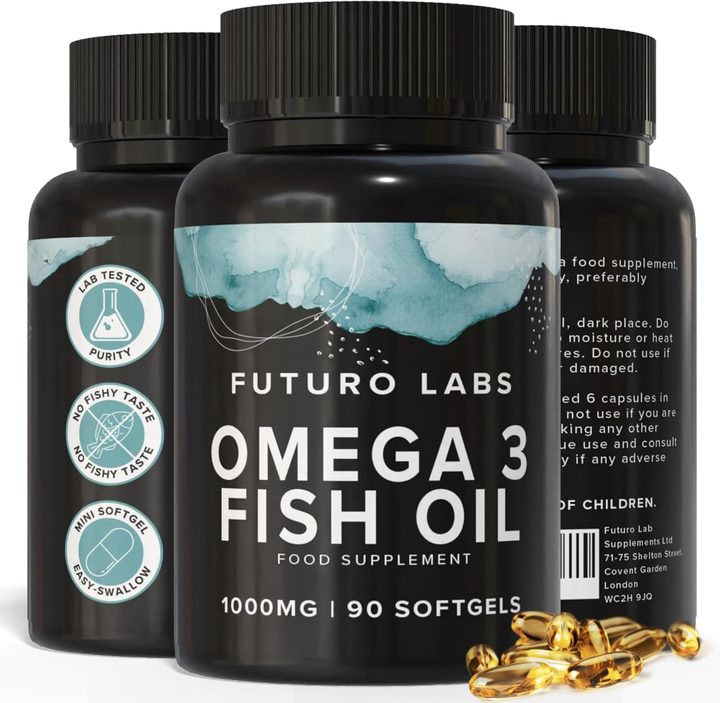
Our brand: the worked example on this page
Futuro Labs Omega 3 Fish Oil
- 17p a day
- 90 softgels, 1 softgel daily
- Lab tested
- Made in the UK
Omega-3 for its own sentences on its own clock: Futuro Labs Omega 3 Fish Oil on Amazon UK, 1 softgel with food, 180mg EPA and 120mg DHA, 90 for £14.99 at 17p. Full label breakdown. The skin roster is on the skin page; the three pools and their clocks on the how-long page.
No skin claim and nothing on the day, so the clock is the research's, file by file
How long omega-3 takes to work for skin is a question with a premise to correct and a clock to give, because omega-3 holds no skin claim, the register's skin sentences belonging to zinc, biotin, niacin, riboflavin, iodine, vitamin A and vitamin C, and has no skin effect a reader can feel on the day, so the honest clock is the research's, read file by file with each file's dose and duration, the skin page's grading given a timeline. The sunburn-resistance file, the strongest of the small ones: trials giving EPA at gram-and-above doses measured the skin's minimal erythema dose, the ultraviolet exposure needed to redden it, before and after supplementation, and found the threshold raised after four to twelve weeks, the earliest studies at about a month and the larger ones at three months, an effect that grew with time as EPA built into skin membranes and that faded after stopping, real, modest, claimless and no substitute for sunscreen, a lifter training outdoors in summer gaining more from a hat and factor thirty by lunchtime than from a softgel by autumn. The hydration file: small studies reporting slightly improved skin hydration and reduced roughness measured by instrument at eight to twelve weeks on gram doses, a plausible effect of a fat that builds into every membrane and a small one that a moisturiser produces by evening. The eczema file: trials in atopic eczema running eight to sixteen weeks with mixed results, some improving and some not, so that a reader with eczema has a GP and the evidenced treatments, which work in days to weeks, rather than a softgel and a season.
The clock underneath every file, what a lifter's skin responds to faster, and the skin clock filed
The clock underneath every file is the same one every omega-3 page here carries: EPA and DHA build into cell membranes, skin's included, over three to four months of daily intake, the index kinetics literature's finding, so a skin effect that depends on membrane composition cannot arrive before the membranes change, and the four-to-twelve-week windows of the trials are the leading edge of a process that plateaus at a season, at gram-and-above doses that a standard softgel does not reach and that three softgels or a concentrate do. A reader on one standard softgel for the heart claim is building a modest status over months and should expect no skin effect at any point, the file's doses being higher; a reader on a gram for the index may, after a season, have a slightly higher sunburn threshold and slightly better hydration that they will not notice without an instrument; and nobody will see a change in a fortnight, a claim that a skin product makes and a fat cannot. What a lifter's skin responds to faster is the skin page's list, on shorter clocks: sleep, whose effects on skin appear within days; sun protection, which works the same day; a shower after training so sweat does not sit on the back and shoulders, which changes training acne within weeks; a plate carrying zinc, the B vitamins, iodine, vitamin A and vitamin C, whose maintenance sentences are the register's and whose shortfall on a cut dulls skin within a month or two; and a GP for acne or eczema, whose treatments work in days to weeks. The skin clock filed: no claim and nothing on the day, sunburn resistance at four to twelve weeks of EPA at gram doses, hydration at eight to twelve, eczema at eight to sixteen and mixed, all riding the membrane's months-long clock at doses above a standard softgel's, with a lifter's skin helped faster by sleep, sun protection, a shower, the plate and a GP, and the worked example being omega-3 for its own sentences on its own clock, one softgel at 17p, £14.99 for 90.
| The file | The dose and duration in the trials | The grade |
|---|---|---|
| Sunburn resistance | EPA at gram-and-above doses; four to twelve weeks; the effect grows with time | The strongest small file; no claim; not a sunscreen |
| Hydration and roughness | Gram doses; eight to twelve weeks; measured by instrument | Modest; a moisturiser does it by evening |
| Eczema | Eight to sixteen weeks; mixed results | A GP and the evidenced treatments, which work in weeks |
| The clock underneath | Skin membranes change over three to four months | Nothing in a fortnight; nothing at a standard softgel's dose |
| The register | No skin claim; the skin roster belongs to other nutrients | Omega-3 taken for its own sentences |
| What works faster | Sleep in days; sun protection the same day; a shower in weeks; the plate in a month or two | The lifter's real levers |
The verdict, a season for a small effect at a high dose, and faster levers for a lifter's skin
How long does omega-3 take to work for skin: there being no skin claim and nothing to feel on the day, the clock is the research's, the sunburn-resistance trials finding a raised ultraviolet redness threshold after four to twelve weeks of EPA at gram-and-above doses, the hydration studies slightly better hydration at eight to twelve weeks, and the eczema trials mixed results over eight to sixteen, all riding the membrane's three-to-four-month clock at doses above a standard softgel's, so that a reader on one softgel should expect no skin effect and a reader on a gram may have an unnoticed one by the end of a season, while a lifter's skin is helped faster by sleep, sun protection, a post-training shower, the roster's nutrients on the plate and a GP for acne or eczema. Omega-3 for its own sentences: Futuro Labs Omega 3 Fish Oil, one softgel with food, 180mg EPA and 120mg DHA, 90 for £14.99 at 17p a day.
What to check on the label
- Drop the premise: no skin claim, nothing on the day.
- Read the files with their clocks: four to twelve weeks at gram doses for sunburn resistance.
- Know the clock underneath: skin membranes change over months.
- Expect nothing at a standard softgel's dose: the files used grams.
- Use the faster levers: sleep, sun protection, a shower, the plate, a GP.
Our brand
The worked example: Futuro Labs Omega 3 Fish Oil
Futuro Labs Omega 3 Fish Oil: 1 softgel daily with food, 1000mg fish oil providing 180mg EPA and 120mg DHA (300mg combined), 90 softgels for £14.99, 17p a day, lab-tested purity, UK GMP made. Gelatin shell, so not vegetarian.
- Fish oil per softgel
- 1000mg
- EPA / DHA per softgel
- 180mg / 120mg (300mg combined)
- Serving
- 1 softgel a day
- Bottle
- 90 softgels, 90 days
- Price
- £14.99 (17p a day)
- Softgel
- mini softgel, no fishy taste
Questions people also ask
How long does fish oil take to improve skin?
In the small trials, four to twelve weeks of EPA at gram-and-above doses for a raised sunburn threshold and eight to twelve weeks for slightly better hydration measured by instrument, effects riding the membrane's three-to-four-month clock, with no skin claim on the register and nothing to notice at a standard softgel's dose.
Does omega-3 clear skin in two weeks?
No: EPA and DHA build into skin membranes over months, no trial reports a skin change in a fortnight, and the acne file is weak, so a two-week change in skin is sleep, sun, a shower or a treatment rather than a fat.
How long does fish oil take to help eczema?
The trials ran eight to sixteen weeks with mixed results, some improving and some not, so a reader with eczema has a GP and the evidenced treatments, which work in days to weeks, rather than a softgel and a season.
What dose did the omega-3 skin studies use?
Gram-and-above doses of EPA and DHA, three standard softgels or a concentrate a day, which is why a reader on one standard softgel for the heart claim should expect no skin effect at any point and a reader on a gram may have an unnoticed one after a season.
What improves a lifter's skin faster than omega-3?
Sleep, which shows within days; sun protection, which works the same day; a shower after training so sweat does not sit on the back and shoulders, which changes training acne within weeks; a plate carrying zinc, the B vitamins, iodine, vitamin A and vitamin C; and a GP for acne or eczema.
Sources
- The omega-3 and skin literature: small trials report increased resistance to sunburn with EPA supplementation over weeks, mixed results in eczema, weak signals in acne, and modest effects on skin hydration, none reaching an authorised claim, the register's skin sentences belonging to other nutrients. PubMed record
- The omega-3 index kinetics literature: red-cell EPA and DHA rise over three to four months of daily intake and fall over a similar period after stopping, the index changing on a clock of months rather than days, with no acute effect of a single dose. PubMed record
- The GB claims register, skin entries: zinc, biotin, niacin, riboflavin, iodine and vitamin A contribute to the maintenance of normal skin, vitamin C contributes to normal collagen formation for the normal function of skin, and no omega-3 entry mentions skin. https://www.gov.uk/government/publications/great-britain-nutrition-and-health-claims-nhc-register
- The habit formation literature: anchoring a new behaviour to an existing daily routine is the best-documented adherence strategy, with consistency outperforming timing choices. PubMed record