Ghost Fitness/Omega-3/How long does it take for omega-3 to work for anxiety?
How long does it take for omega-3 to work for anxiety?
The short answer
Read off the trials: the pooled trials that found lower anxiety symptoms ran around twelve weeks, used two grams a day or more, and found the effect only in clinical populations, not in healthy adults or at lower doses. So the clock is twelve weeks at a dose a standard softgel does not approach, as a research finding with no claim and never a substitute for treatment. Anxiety that affects daily life has a clock of now, with a GP.
- The trials' clockaround twelve weeks
- The trials' dosetwo grams a day or more; no effect at lower doses
- The trials' populationclinical: a diagnosis or a medical condition; no effect in healthy adults
- The clock that mattersnow, with a GP and talking therapy, for anxiety that affects daily life
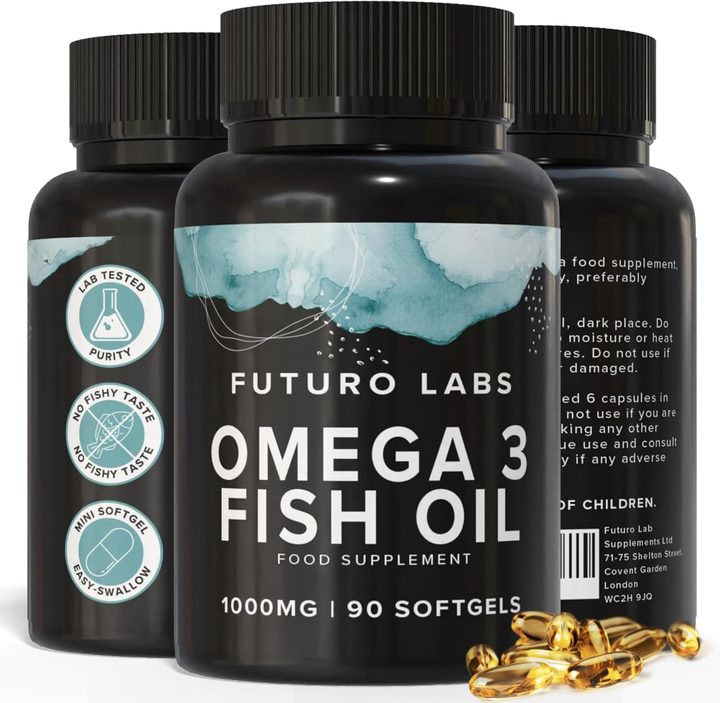
Our brand: the worked example on this page
Futuro Labs Omega 3 Fish Oil
- 17p a day
- 90 softgels, 1 softgel daily
- Lab tested
- Made in the UK
A standard softgel for the audit, not a treatment for anxiety: Futuro Labs Omega 3 Fish Oil on Amazon UK, 1 softgel with food, 180mg EPA and 120mg DHA, 90 for £14.99 at 17p. Full label breakdown. The mood file is on the brain health page; the feel-better ledger on the feel-better page.
The clock read off the trials, twelve weeks, two grams, and a population most readers are not in
How long it takes for omega-3 to work for anxiety is a question the honest page answers by reading the clock off the trials that found anything, because the shelf's answer, a few weeks, comes from nowhere and the trials' answer comes with conditions that matter more than the number. The trials: the meta-analysis that found omega-3 associated with lower anxiety symptoms pooled randomised trials that ran, on average, around twelve weeks, and when it looked at which trials carried the effect it found three conditions, the omega-3 and anxiety literature's finding. The dose: the effect appeared in trials using two grams of EPA and DHA a day or more, seven standard softgels, and not in trials using less, so a standard softgel at 300mg is not in the trials that found anything and has no anxiety clock of any length. The population: the effect appeared in clinical populations, people with a diagnosed anxiety disorder or a medical condition that carried anxiety with it, and not in healthy adults, the trials in the general population finding nothing, so a reader with everyday worry rather than a diagnosis is in the population where the trials found no effect at any dose. The duration: around twelve weeks, which fits the omega-3 pool's clock, three to four months to a membrane plateau, and rules out any effect in the first days or weeks, the day-of feeling being expectation as the feel-so-good page ranks it. So the clock, read honestly, is around twelve weeks, at two grams or more, in a clinical population, as an adjunct alongside whatever treatment the diagnosis already has, which is a narrow answer and the only one the trials support, a research finding with no register claim, since the omega-3 claims are heart, brain function, vision, triglycerides and blood pressure and no anxiety, mood or stress sentence exists for it.
The clock that matters, now with a GP, what a reader in the trials' population does, what a reader outside it does, and the clock filed
The clock that matters is a different one. Anxiety that affects daily life, that keeps a reader from sleeping, working, training or seeing people, or that comes with panic, has a clock of now, with a GP and with the talking therapies, cognitive behavioural therapy above all, that have the file omega-3 does not, and a reader who is waiting twelve weeks for a softgel to work on an anxiety of that kind has spent twelve weeks that a referral would have used, so the first instruction on the page is that the omega-3 clock is never the clock for anxiety that needs help, and the second is that it is never a substitute for the treatment a GP offers. What a reader in the trials' population does, a diagnosed reader already under care who wants to add the research finding: they tell the GP or the psychiatrist, take an EPA-predominant oil at two grams or more of EPA and DHA a day, a concentrate at two capsules rather than seven standard softgels, with a fatty meal, and rate their anxiety on a simple scale weekly across twelve weeks, since a research-grade adjunct deserves a research-grade record, keeping the treatment that works unchanged and the clinician informed, and stopping at twelve weeks if the scale has not moved, the pool by then at most of its plateau. What a reader outside it does, a reader with everyday worry, a stressful month or a nervous disposition: they take fish oil or not by the oily-fish audit for the heart claim, expect nothing from it for the worry, and look at the things with a file for everyday anxiety, sleep, exercise, less caffeine and alcohol, and a GP if the worry lasts, the magnesium pages' same conclusion for calm. The one caution at the trials' dose is the standing one for the two-gram rung, a gut that may complain, an LDL that may nudge and an anticoagulant that needs the clinician told, none of which a diagnosed reader under care should take on without the care knowing. The clock filed: twelve weeks, at two grams or more, in a clinical population, as an adjunct with no claim, no clock at a standard softgel, and the clock that matters being now with a GP for anxiety that affects daily life, with the worked example being a standard softgel for the audit and not a treatment, £14.99 for 90 at 17p.
| The condition | What the trials found | What it means |
|---|---|---|
| Duration | Around twelve weeks | Nothing in the first days or weeks; the pool's own clock |
| Dose | Two grams a day or more; nothing below | A standard softgel is not in the trials; no clock at 300mg |
| Population | Clinical: a diagnosis or a medical condition; nothing in healthy adults | Everyday worry is in the population with no effect |
| Status | A research finding; no register claim; an adjunct | Never a substitute for treatment |
| The clock that matters | Now | A GP and talking therapy for anxiety that affects daily life |
| The reader outside the trials | The oily-fish audit | One softgel for the heart claim; nothing expected for the worry |
The verdict, twelve weeks in a narrow population at a high dose, and now for anyone whose anxiety needs help
How long does it take for omega-3 to work for anxiety: read off the trials, around twelve weeks, at two grams of EPA and DHA a day or more, in clinical populations with a diagnosis or a medical condition, as a research finding with no register claim and as an adjunct to treatment rather than a substitute, with no effect in healthy adults or at lower doses so that a standard softgel has no anxiety clock at all, and with the clock that matters for anxiety that affects daily life being now, with a GP and talking therapy, which have the file that omega-3 does not. A standard softgel for the audit and not a treatment: Futuro Labs Omega 3 Fish Oil, one with food, 180mg EPA and 120mg DHA, 90 for £14.99 at 17p a day.
What to check on the label
- Read the clock off the trials: twelve weeks, two grams, clinical populations.
- Expect nothing from a standard softgel for anxiety: not in the trials.
- Put a GP first for anxiety that affects daily life: the clock is now.
- Add it, if at all, as an adjunct with the clinician told: and rate it weekly.
- Take it for the audit otherwise: and expect nothing for the worry.
Our brand
The worked example: Futuro Labs Omega 3 Fish Oil
Futuro Labs Omega 3 Fish Oil: 1 softgel daily with food, 1000mg fish oil providing 180mg EPA and 120mg DHA (300mg combined), 90 softgels for £14.99, 17p a day, lab-tested purity, UK GMP made. Gelatin shell, so not vegetarian.
- Fish oil per softgel
- 1000mg
- EPA / DHA per softgel
- 180mg / 120mg (300mg combined)
- Serving
- 1 softgel a day
- Bottle
- 90 softgels, 90 days
- Price
- £14.99 (17p a day)
- Softgel
- mini softgel, no fishy taste
Questions people also ask
Does omega-3 help with anxiety?
In a narrow research finding: pooled trials found lower anxiety symptoms at two grams of EPA and DHA a day or more over around twelve weeks in clinical populations with a diagnosis or a medical condition, with no effect in healthy adults or at lower doses, no register claim, and no standing as a treatment, anxiety that affects daily life being a GP's and talking therapy's.
How much omega-3 for anxiety?
The trials that found an effect used two grams a day or more, seven standard softgels or two concentrate capsules, in diagnosed people as an adjunct, and nothing below that dose did anything, so a reader adding it under care takes a concentrate with the clinician told and a reader on a standard softgel has no anxiety dose and no clock.
Can I take fish oil instead of anxiety medication or therapy?
No: omega-3 is a research adjunct in clinical trials, not a treatment, and anxiety that affects daily life has a clock of now with a GP and cognitive behavioural therapy, the things with a file, so the treatment stays unchanged and the fish oil, if added, is added with the clinician knowing.
Will I feel calmer in the first week of taking omega-3?
Not from the oil: the pool takes three to four months to reach a membrane plateau and the anxiety trials ran around twelve weeks, so a calmer first week is expectation, the placebo response every trial measures, or the sleep, exercise and reduced caffeine that often arrive with a new tub.
What is the difference between omega-3 for anxiety and for depression?
The depression file is the stronger one, EPA-predominant oils at a gram or more of EPA improving depressive symptoms as an adjunct over weeks, while the anxiety file rests on a pooled analysis with an effect confined to two grams and up in clinical populations, and both are research findings with no claim, never substitutes for a GP's treatment.
Sources
- The omega-3 and anxiety meta-analysis: pooled trials found omega-3 associated with lower anxiety symptoms, the effect confined to clinical populations, to doses of two grams a day or more and to trials lasting around twelve weeks, with no effect in healthy people or at lower doses, a research finding rather than a treatment, anxiety that affects daily life being a GP's and talking therapy's condition. PubMed record
- Meta-analytic evidence on EPA-predominant omega-3 formulations in depression research: better signals for EPA-heavy preparations in clinical trial populations, with no authorised claims arising. PubMed record
- The omega-3 index kinetics literature: red-cell EPA and DHA rise over three to four months of daily intake and fall over a similar period after stopping, the index changing on a clock of months rather than days, with no acute effect of a single dose. PubMed record
- The expectation and sleep literature: placebo responses in insomnia trials are substantial and rapid, subjective sleep improving within nights of starting an inert treatment the sleeper believes in. PubMed record