Ghost Fitness/Omega-3/Why do I feel better after taking fish oil?
Why do I feel better after taking fish oil?
The short answer
Better in what, over weeks, is the useful question. Expectation and the changes that arrived with the tub explain most of it. But over weeks there is one legitimate candidate: mood, where the depression meta-analyses find an EPA-predominant oil at a gram or more of EPA improving symptoms over weeks as an adjunct to treatment, a research file with no claim and a GP's. There is no legitimate candidate in energy, skin, joints, sleep or digestion.
- The usual answersexpectation, and the programme, sleep or resolve that arrived with the tub
- The one legitimate candidatemood: an EPA-predominant oil at a gram or more of EPA over weeks, as an adjunct to treatment; no claim; a GP's
- No legitimate candidateenergy, skin, joints, sleep, digestion: no file at any dose over weeks
- The testa fortnight off and on for the usual answers; a GP and a mood scale for the candidate
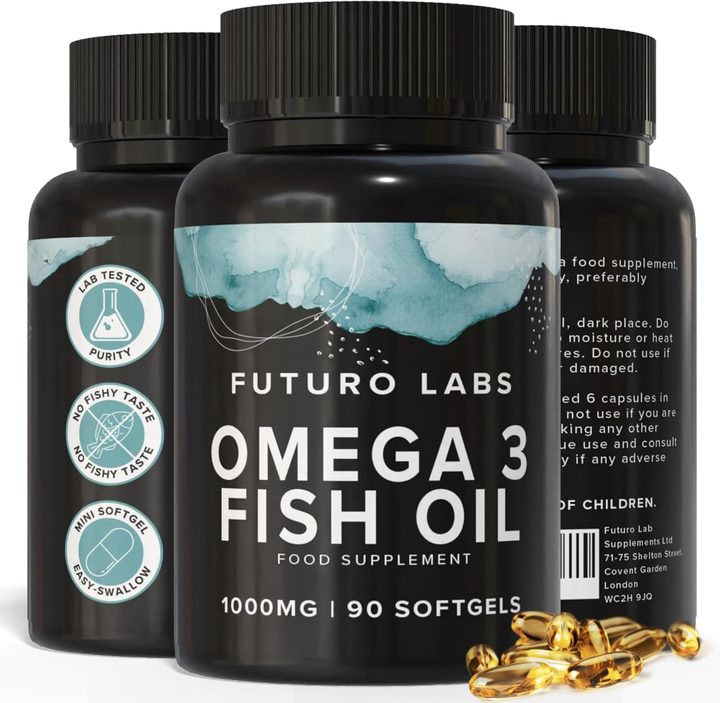
Our brand: the worked example on this page
Futuro Labs Omega 3 Fish Oil
- 17p a day
- 90 softgels, 1 softgel daily
- Lab tested
- Made in the UK
A standard oil for the audit, whichever ledger line explains the feeling: Futuro Labs Omega 3 Fish Oil on Amazon UK, 1 softgel with food, 180mg EPA and 120mg DHA, 90 for £14.99 at 17p. Full label breakdown. The day-of ranking is on the feel-so-good page; the mood file on the brain health page.
Better in what, the usual answers over weeks, and the symptom ledger that sorts the rest
Why do I feel better after taking fish oil is a question whose useful form is better in what, and over what time, because the day-of feeling has its own page and its own ranking, expectation first, the meal second and the week third, and the feeling this page takes is the one that has lasted weeks, a reader a month into a tub who feels better and wants to know whether the tub did it. The usual answers still lead: expectation persists for weeks in the trials' control arms, not only for days, and the changes that arrived with the tub, a programme kept, sleep lengthened, drink reduced or a decision to look after oneself, are exactly the changes that make a person feel better over a month, so the first two lines of the ledger are the same as the day-of page's and explain most readers. But over weeks rather than days the physiology no longer rules everything out, since a month is long enough for a fat to have entered membranes at a meaningful fraction of its plateau, and the honest page sorts the symptoms one by one, a ledger of what fish oil could and could not have improved over a month at the dose the reader took. Energy: no file at any dose, no energy sentence and no trial finding fatigue improved, so a reader with more energy has the week's changes to thank. Skin: no file at a standard dose, a small and slow file at grams over months for dryness, nothing at a month. Joints: no file for a loaded or worn joint, the one file being inflammatory arthritis at several grams for months. Sleep: no file, the trials that measured it finding nothing consistent. Digestion: no file, and if anything the opposite at high doses.
The one legitimate candidate, what makes it legitimate, what to do with it, and the ledger filed
The one legitimate candidate is mood. The depression meta-analyses find that EPA-predominant oils at a gram or more of EPA a day improve depressive symptoms over several weeks when added to standard treatment, with DHA-predominant oils doing less and the effect strongest in diagnosed depression rather than in the general population, the EPA-and-mood literature's finding, a research file with no register claim, so a reader who has been taking an EPA-heavy concentrate at that dose for a month, and whose mood was low and has lifted, has a real possibility to put beside expectation, the first line of the ledger that the physiology does not close. What makes it legitimate and what limits it: the dose, a gram or more of EPA, which a standard softgel at 180mg does not approach, so a reader on one standard softgel whose mood lifted has the usual answers and not this one; the context, an adjunct to treatment in diagnosed depression rather than a mood supplement for the well, so a reader with a low mood that has lasted weeks has a GP before a concentrate rather than instead of one; and the timescale, weeks, which fits this page's question and not the day-of page's. What to do with it: a reader who suspects the candidate keeps taking the concentrate, tells their GP what they are taking and why, and, if they want to know, rates their mood on a simple scale weekly through a fortnight off and a fortnight on, the n-of-1 test the day-of page describes, remembering that the pool falls slowly and a fortnight off is a partial test at best, and a reader whose mood was not low in the first place files the feeling under the usual answers. The ledger filed: expectation and the accompanying changes for most of it, no legitimate candidate in energy, skin, joints, sleep or digestion at a month, and one legitimate candidate in mood at a gram or more of EPA over weeks as an adjunct to treatment, with a GP in the loop and a standard oil for the audit whichever line explains the feeling, £14.99 for 90 at 17p.
| The symptom | The fish oil file over weeks | The likelier explanation |
|---|---|---|
| Mood | An EPA-predominant oil at a gram or more of EPA, as an adjunct to treatment: a real file | The one legitimate candidate; expectation beside it; a GP in the loop |
| Energy | No file at any dose | The programme, the sleep, the resolve |
| Skin | Grams over months for dryness; nothing at a month | The week's changes; the season |
| Joints | Inflammatory arthritis only, at grams for months | A deload; expectation |
| Sleep | No consistent file | The routine that arrived with the tub |
| Digestion | No file; the opposite at high doses | The diet that changed alongside |
The verdict, a ledger with one open line, and expectation on every line beside it
Why do I feel better after taking fish oil: over weeks, better in what decides it, expectation and the programme, sleep or resolve that arrived with the tub explaining most of the feeling on every line of the ledger, with no legitimate fish oil candidate in energy, skin, joints, sleep or digestion at a month, and one legitimate candidate in mood, where the depression meta-analyses find an EPA-predominant oil at a gram or more of EPA improving symptoms over weeks as an adjunct to standard treatment, a research file with no claim that a reader on a concentrate whose low mood lifted may put beside expectation with a GP in the loop, and that a reader on a standard softgel cannot. A standard oil for the audit whichever line explains the feeling: Futuro Labs Omega 3 Fish Oil, one with food, 180mg EPA and 120mg DHA, 90 for £14.99 at 17p a day.
What to check on the label
- Ask better in what: the ledger by symptom.
- Lead with the usual answers: expectation and the week's changes persist for weeks.
- Close energy, skin, joints, sleep and digestion: no file at a month.
- Leave mood open at the right dose: a gram or more of EPA, with treatment.
- Keep a GP in the loop for a low mood: before a concentrate, not instead.
Our brand
The worked example: Futuro Labs Omega 3 Fish Oil
Futuro Labs Omega 3 Fish Oil: 1 softgel daily with food, 1000mg fish oil providing 180mg EPA and 120mg DHA (300mg combined), 90 softgels for £14.99, 17p a day, lab-tested purity, UK GMP made. Gelatin shell, so not vegetarian.
- Fish oil per softgel
- 1000mg
- EPA / DHA per softgel
- 180mg / 120mg (300mg combined)
- Serving
- 1 softgel a day
- Bottle
- 90 softgels, 90 days
- Price
- £14.99 (17p a day)
- Softgel
- mini softgel, no fishy taste
Questions people also ask
Can fish oil really improve your mood?
In one file, over weeks, at a specific dose: the depression meta-analyses find EPA-predominant oils at a gram or more of EPA a day improving depressive symptoms over several weeks when added to standard treatment, strongest in diagnosed depression, a research finding with no register claim, and nothing at a standard softgel's 180mg of EPA.
I have more energy since starting fish oil, is that the fish oil?
No: omega-3 has no energy file at any dose, no energy sentence on the register and no trial finding fatigue improved, so more energy over a month comes from the programme, the sleep, the reduced drink or the resolve that arrived with the tub, and from expectation, which persists for weeks in every trial's control arm.
How do I know if the fish oil is what made me feel better?
For mood on a concentrate, keep taking it, tell your GP, and rate your mood weekly through a fortnight off and a fortnight on, remembering the pool falls slowly so the test is partial; for everything else, the same fortnight test, which the omega-3 pool does not notice and expectation does.
Should I take fish oil for low mood?
Not instead of a GP: a low mood that has lasted weeks is seen first, and the file is for an EPA-predominant concentrate at a gram or more of EPA as an adjunct to standard treatment rather than as a mood supplement for the well, taken with the GP knowing what is being taken and why.
Does fish oil help skin, joints, sleep or digestion over a month?
No: skin has a small and slow file at grams over months for dryness and nothing at a month, joints have a file only in inflammatory arthritis at grams for months, sleep has no consistent file, and digestion has none and the opposite at high doses, so improvements in those over a month are the week's changes and expectation.
Sources
- Meta-analytic evidence on EPA-predominant omega-3 formulations in depression research: better signals for EPA-heavy preparations in clinical trial populations, with no authorised claims arising. PubMed record
- The expectation and sleep literature: placebo responses in insomnia trials are substantial and rapid, subjective sleep improving within nights of starting an inert treatment the sleeper believes in. PubMed record
- The omega-3 index kinetics literature: red-cell EPA and DHA rise over three to four months of daily intake and fall over a similar period after stopping, the index changing on a clock of months rather than days, with no acute effect of a single dose. PubMed record
- The habit formation literature: anchoring a new behaviour to an existing daily routine is the best-documented adherence strategy, with consistency outperforming timing choices. PubMed record