Ghost Fitness/Omega-3/Why does fish oil make me feel good?
Why does fish oil make me feel good?
The short answer
The feeling belongs to the act, not the oil. A small daily act of looking after yourself, completed and ticked off, produces a reward feeling the habit literature measures, and swallowing a softgel earns it in full whatever the softgel contains. The oil earns none of it, a fat that builds into membranes over months with no acute action. That is why a placebo capsule produces the same feeling. Keep the act for the feeling; take the oil for the plate.
- The acta small daily act of self-care, at a fixed time with a meal, completed and ticked off: a reward feeling the habit literature measures
- The oilabsorbed over hours into a pool that changes over months; no acute action; no feeling to give
- The proofa placebo capsule produces the same feeling; the feeling arrives on day one when the oil has not
- The instructionkeep the act for the feeling; take the oil for the plate
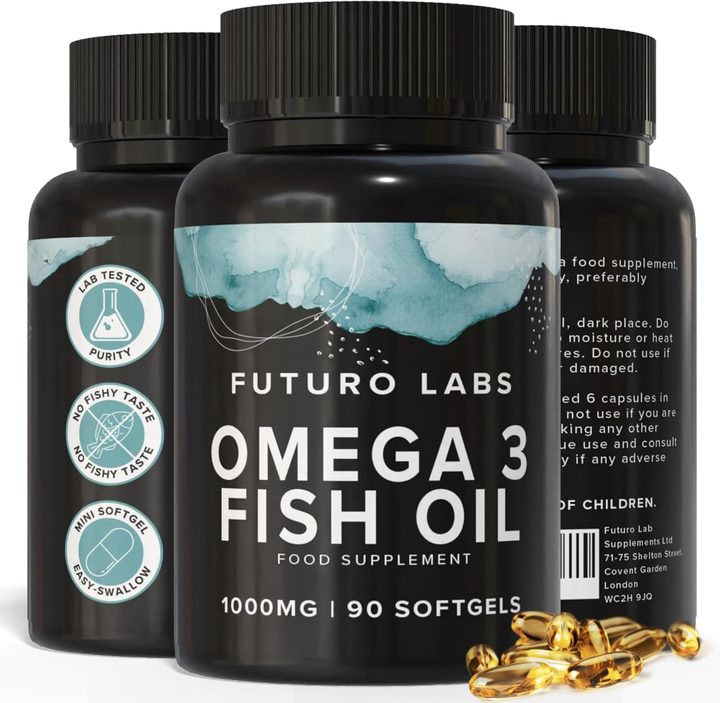
Our brand: the worked example on this page
Futuro Labs Omega 3 Fish Oil
- 17p a day
- 90 softgels, 1 softgel daily
- Lab tested
- Made in the UK
A softgel worth the act for the plate's reason: Futuro Labs Omega 3 Fish Oil on Amazon UK, 1 softgel with the same meal each day, 180mg EPA and 120mg DHA, 90 for £14.99 at 17p. Full label breakdown. The day-of feeling ranked is on the feel-so-good page; whether it makes you happy on the happy page.
The act that earns the feeling, and what the habit literature says about a small thing done daily
Why does fish oil make me feel good is a question with an answer the reader already half knows, which is that the feeling belongs to the act and not to the oil, and the honest page traces it there, because the day-of ranking and the weeks-long ledger have been given on other pages and this one is about the mechanism of the feeling itself. The act: a fish oil softgel is a small daily act of looking after yourself, taken at a fixed time, with a meal, in a routine, and then completed and mentally ticked off, and the habit literature measures what such an act does, a routine kept producing a small reward feeling each time it is kept, the satisfaction of a good intention acted on, a sense of being the kind of person who does the thing, and a little relief at a task closed, the habit and self-care literature's account of why routines are pleasant to keep and unpleasant to break. Swallowing a softgel earns that feeling in full on its own, on the day it is swallowed, whatever the softgel contains, because the reward is for the completing and not for the contents, and a reader who takes the softgel with breakfast every morning and feels good about it has felt a habit kept, which is real, healthy and worth having, and has mistaken its source. The tell is the timing: the feeling arrives on day one, with the first softgel, when nothing the softgel contains has reached anywhere, and it arrives every day thereafter at the moment of the act rather than hours later when the oil is absorbed, which is the signature of a reward for an act and not of a substance doing something.
The oil that earns none of it, the placebo proof, why the finding is good news, and the tick filed
The oil earns none of the feeling, and the physiology is plain. EPA and DHA in a softgel are emulsified, absorbed over hours into the lymph and carried into a membrane pool that changes over three to four months as red cells and tissues turn over, the incorporation literature's clock, and they have no acute action on mood, energy, alertness or anything a reader could feel by the evening, at a standard dose or at grams, the outcome trials at a gram a day for years and the prescription trials at four recording no acute effect of any kind, so the fat cannot be the feeling, and the one omega-3 mood file, EPA at a gram or more in diagnosed depression over weeks as an adjunct, is about a floor being lifted in the ill over months and not a good feeling in the well on a Tuesday, the happy page's floor and ceiling. The placebo proof is the same thing seen from the other side: in every supplement trial the control arm takes a capsule of olive oil or corn oil at the same fixed time with the same routine, and reports feeling better, more energetic and more looked-after at rates that surprise anyone who has not read a trial, the placebo literature's finding, because the control arm is performing the same act and earning the same reward, and a reader who wants to check this on themselves has the fortnight test, a fortnight of a plain oil capsule at the same time in the same routine, blind if a partner will help, producing the same feeling because the act is the same. Why the finding is good news rather than a debunking: a reader who feels good for keeping a small daily act of self-care is feeling something true and useful, the habit literature finding that a kept routine anchors other routines, the softgel at breakfast pulling the breakfast, the water and the early night along with it, so the feeling is worth keeping and the act is worth keeping, and the only error to correct is the attribution, which matters because a reader who credits the oil will chase the feeling up the dose ladder, three softgels, a concentrate, a premium tub, for a feeling that a plain capsule would give and that the higher rungs cannot improve. The instruction, then, is two halves: keep the act, at the same meal every day, for the feeling and the routine it anchors, and take the oil for the plate's reason, the 250mg heart claim a low-fish diet leaves unmet, which a standard softgel meets at 17p without any feeling at all. The tick filed: the feeling as a reward for a small daily act completed, the oil as a fat with no acute action, the placebo arm as the proof, the finding as good news, and the worked example being a softgel worth the act for the plate's reason, £14.99 for 90 at 17p.
| The candidate | What it does | The evidence |
|---|---|---|
| The act: a daily self-care routine kept | A reward feeling at the moment of completion | The habit literature; the feeling arrives on day one, at the act |
| The oil: EPA and DHA | Absorbed over hours into a pool that changes over months | No acute action; no feeling to give at any dose |
| The placebo arm | The same act with a plain oil capsule | The same feeling, in every trial |
| The fortnight test | A plain capsule in the same routine, blind if possible | The feeling stays with the act |
| The good news | A kept routine anchors other routines | Keep the act |
| The error to correct | Crediting the oil and chasing the feeling up the dose ladder | Take the oil for the plate; no higher rung gives a feeling |
The verdict, a real feeling earned by a real act, and an oil that earns none of it
Why does fish oil make me feel good: because the feeling belongs to the act and not the oil, a small daily act of looking after yourself, taken at a fixed time with a meal, completed and ticked off, producing the reward feeling the habit literature measures and that swallowing any capsule earns in full on the day it is swallowed, while EPA and DHA are absorbed over hours into a membrane pool that changes over months with no acute action on mood or energy at any dose, which is why the placebo arm of every trial reports the same feeling on a plain oil capsule and why the feeling arrives on day one before the oil has reached anywhere, so that a reader keeps the act for the feeling and the routine it anchors, corrects only the attribution so as not to chase the feeling up a dose ladder that cannot improve it, and takes the oil for the plate's 250mg heart claim. A softgel worth the act for the plate's reason: Futuro Labs Omega 3 Fish Oil, one with the same meal each day, 180mg EPA and 120mg DHA, 90 for £14.99 at 17p.
What to check on the label
- Credit the act: a routine kept is a real reward.
- Clear the oil: no acute action, no feeling to give.
- Read the timing as the tell: day one, at the moment of the act.
- Keep the act: it anchors the breakfast, the water, the early night.
- Do not chase the feeling up the dose ladder: take the oil for the plate.
Our brand
The worked example: Futuro Labs Omega 3 Fish Oil
Futuro Labs Omega 3 Fish Oil: 1 softgel daily with food, 1000mg fish oil providing 180mg EPA and 120mg DHA (300mg combined), 90 softgels for £14.99, 17p a day, lab-tested purity, UK GMP made. Gelatin shell, so not vegetarian.
- Fish oil per softgel
- 1000mg
- EPA / DHA per softgel
- 180mg / 120mg (300mg combined)
- Serving
- 1 softgel a day
- Bottle
- 90 softgels, 90 days
- Price
- £14.99 (17p a day)
- Softgel
- mini softgel, no fishy taste
Questions people also ask
Is the good feeling from fish oil just placebo?
It is the reward for a small daily act of self-care, which the habit literature measures and which is real, and which the placebo arm of every trial reports on a plain oil capsule because it performs the same act, while the oil itself, a fat absorbed over hours into a pool that changes over months, has no acute action and earns none of the feeling.
Why do I feel good the very first day I take fish oil?
Because the feeling is for the act completed and arrives at the moment of the act, the signature of a habit reward rather than a substance, and on day one nothing the softgel contains has reached a membrane or a cell, EPA and DHA taking three to four months to change the pool they build into.
Should I stop taking fish oil if the feeling is not from the oil?
No, for two reasons: the act is worth keeping for the feeling and the routine it anchors, and the oil is worth taking for the plate's reason, the 250mg heart claim a low-fish diet leaves unmet, which a standard softgel meets at 17p, so the only thing to change is the attribution.
Would a higher dose of fish oil make me feel even better?
No: the feeling is for the act and a second or third softgel is the same act, so the higher rungs add nothing to it while adding the gut and rhythm effects of grams, which is why correcting the attribution matters, a reader who credits the oil chasing a feeling up a ladder that cannot improve it.
How can I test whether the feeling is the act or the oil?
With a fortnight of a plain oil capsule taken at the same time in the same routine, blind if a partner will hand over capsules without saying which, which produces the same feeling because the act is the same, the omega-3 pool not noticing a fortnight either way.
Sources
- The habit formation literature: anchoring a new behaviour to an existing daily routine is the best-documented adherence strategy, with consistency outperforming timing choices. PubMed record
- The expectation and sleep literature: placebo responses in insomnia trials are substantial and rapid, subjective sleep improving within nights of starting an inert treatment the sleeper believes in. PubMed record
- The omega-3 index kinetics literature: red-cell EPA and DHA rise over three to four months of daily intake and fall over a similar period after stopping, the index changing on a clock of months rather than days, with no acute effect of a single dose. PubMed record
- Meta-analytic evidence on EPA-predominant omega-3 formulations in depression research: better signals for EPA-heavy preparations in clinical trial populations, with no authorised claims arising. PubMed record