Ghost Fitness/Omega-3/Why does fish oil make me so gassy?
Why does fish oil make me so gassy?
The short answer
Mostly it cannot. Flatulence is made by colonic bacteria fermenting carbohydrate that escaped digestion, fibre, lactose, fructose and sugar alcohols, plus swallowed air. A fat is absorbed in the small intestine and not fermented, so a softgel adds a gram of fat and no carbohydrate. The gas is almost always the shake, the sweetener, the oats or the beans the softgel came with. At very high doses unabsorbed fat makes loose stools, not wind.
- What makes windcolonic bacteria fermenting escaped carbohydrate: fibre, resistant starch, lactose, fructose, sugar alcohols; plus swallowed air
- What a softgel addsa gram of fat and no carbohydrate: not fermented
- The usual culprits beside itthe protein shake, the sweetener, the pre-workout, the oats, the beans, eating fast
- The one fish oil contributionvery high doses: loose, greasy stools from unabsorbed fat, not gas
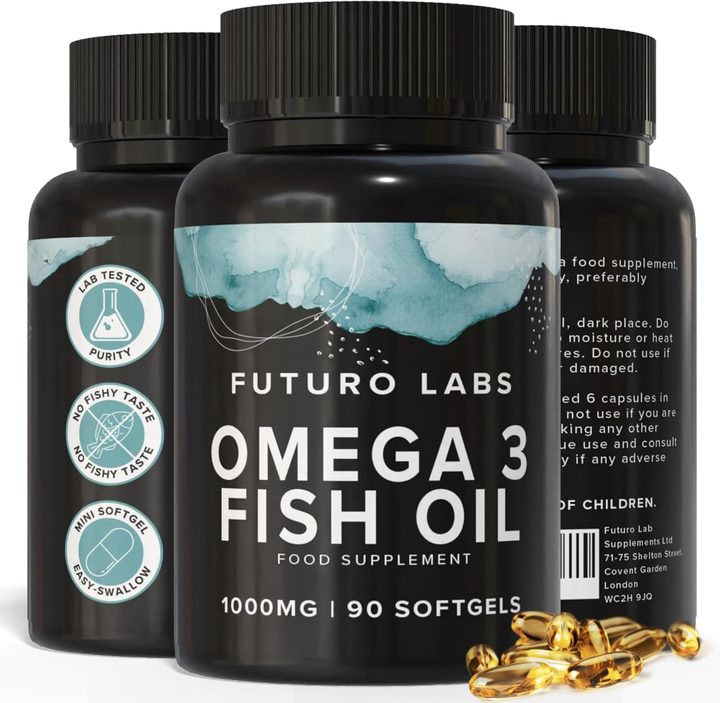
Our brand: the worked example on this page
Futuro Labs Omega 3 Fish Oil
- 17p a day
- 90 softgels, 1 softgel daily
- Lab tested
- Made in the UK
A gram of fat and no carbohydrate: Futuro Labs Omega 3 Fish Oil on Amazon UK, 1 softgel with food, 180mg EPA and 120mg DHA, 90 for £14.99 at 17p. Full label breakdown. The burps, which are the other end, are on the stop-burps page; what loose stools at high doses mean on the too-much page.
Where wind comes from, and why a gram of oil is not on the list
Why fish oil makes you so gassy is a question whose honest answer starts with where wind comes from, because once that is clear the softgel mostly falls off the list of suspects. Flatulence is made in the colon by bacteria fermenting carbohydrate that escaped digestion in the small intestine, the fibre in oats, wholegrains, vegetables and beans, the resistant starch in cooled potatoes and rice, the lactose in milk and many protein powders that a lot of adults do not fully digest, the fructose in fruit and sweetened drinks, and the sugar alcohols, sorbitol, xylitol and the rest, in sugar-free gum, sweets and protein bars, together with swallowed air from eating fast, drinking through a straw or talking over a meal, the intestinal gas literature's inventory. A fat is different: a dietary fat is emulsified by bile, split by lipase and absorbed in the small intestine as fatty acids, and what reaches the colon is very little, so fat is not fermented and does not feed the bacteria that make wind, which is why a spoon of olive oil does not make anyone gassy and a bowl of beans does. A fish oil softgel adds a gram of fat and no carbohydrate at all, no fibre, no lactose, no sweetener, no sugar alcohol, and its gelatin shell is a protein that is digested and absorbed too, so on the physiology a standard softgel, or three, cannot make a reader gassy in the flatulence sense, the gas having no substrate to come from, and a reader who is sure that it does has almost always started the softgel at the same time as something that can.
The company the softgel keeps, the one fish oil contribution, the other gas at the other end, and the wind filed
The company the softgel keeps is where the gas is, and a lifter's version of it is a gassy company. A fish oil started alongside a protein shake, which is the commonest pairing, has started alongside whey concentrate's lactose and, in the sugar-free versions, a sugar alcohol or a gum, both of which the colon ferments; a pre-workout with sweeteners; a new oats-and-beans diet begun in the same resolve that bought the tub; a jump in vegetables and wholegrains that a colon takes weeks to adjust to; a fibre supplement; and the swallowed air of eating a large meal fast at a desk, the softgel being taken with exactly that meal. The test is the fortnight test the placebo pages use, but run on the company rather than the softgel: keep the fish oil and drop the shake, or the sweetener, or slow the meal, for a fortnight, and the wind follows the thing that made it, which is not the oil. The one fish oil contribution is real and specific: at very high doses, several grams a day, more fat arrives than the small intestine absorbs and the excess reaches the colon, where it makes loose, greasy, urgent stools rather than gas, the gut complaint the too-much pages rank first, so a reader on grams whose bowel is loose has a dose problem and lowers it, and a reader on a standard softgel with wind has a carbohydrate problem and looks at the plate. The other gas at the other end is the burp, which is not flatulence but the smell of oil floating on an empty stomach rising through a relaxed sphincter, a different mechanism with a different fix, mid-meal timing, that the burp pages cover, and a reader who says gassy meaning burpy is on the wrong page and sent to the right one. Two notes: a gelatin capsule is digested and does not ferment, so the shell is not the cause either; and a reader whose wind is new, painful, bloating or comes with a change in bowel habit has a GP rather than a supplement audit. The wind filed: bacteria and escaped carbohydrate as the source, a gram of fat and no carbohydrate as what the softgel adds, the shake, the sweetener, the oats, the beans and swallowed air as the company, loose stools at grams as the one contribution, and the burp as a different gas, with the worked example being a gram of fat and no carbohydrate, £14.99 for 90 at 17p.
| The suspect | Does the colon ferment it? | The verdict |
|---|---|---|
| A fish oil softgel | No: fat is absorbed in the small intestine; no carbohydrate | Not the wind |
| The gelatin shell | No: a protein, digested and absorbed | Not the wind |
| The protein shake | Yes: lactose in whey concentrate; sugar alcohols and gums in sugar-free versions | The usual culprit |
| Oats, beans, wholegrains, vegetables | Yes: fibre and resistant starch | The new-diet culprit |
| Sweeteners, gum, protein bars | Yes: sugar alcohols | The hidden culprit |
| Grams of fish oil a day | No, but unabsorbed fat reaches the colon | Loose, greasy stools, not gas: lower the dose |
The verdict, wind is a carbohydrate story and a softgel has none in it
Why does fish oil make me so gassy: mostly it cannot, because flatulence is made by colonic bacteria fermenting carbohydrate that escaped digestion, fibre, resistant starch, lactose, fructose and sugar alcohols, together with swallowed air, and a fat is absorbed in the small intestine and not fermented, so a softgel adds a gram of fat and no carbohydrate and the wind is almost always the company it keeps, the protein shake's lactose or sugar alcohol, the sweetener, the oats and beans of a new resolve and the air of a fast meal, with the one fish oil contribution being loose, greasy stools from unabsorbed fat at very high doses rather than gas, and the burps being a different gas from the other end with a different fix. A gram of fat and no carbohydrate: Futuro Labs Omega 3 Fish Oil, one with food, 180mg EPA and 120mg DHA, 90 for £14.99 at 17p a day.
What to check on the label
- Know where wind comes from: bacteria and escaped carbohydrate.
- Clear the softgel: a gram of fat, nothing to ferment.
- Audit the shake: lactose, sugar alcohols, gums.
- Audit the new diet: oats, beans, fibre, eating fast.
- Read loose stools at grams as the dose: and burps as a different page.
Our brand
The worked example: Futuro Labs Omega 3 Fish Oil
Futuro Labs Omega 3 Fish Oil: 1 softgel daily with food, 1000mg fish oil providing 180mg EPA and 120mg DHA (300mg combined), 90 softgels for £14.99, 17p a day, lab-tested purity, UK GMP made. Gelatin shell, so not vegetarian.
- Fish oil per softgel
- 1000mg
- EPA / DHA per softgel
- 180mg / 120mg (300mg combined)
- Serving
- 1 softgel a day
- Bottle
- 90 softgels, 90 days
- Price
- £14.99 (17p a day)
- Softgel
- mini softgel, no fishy taste
Questions people also ask
Can fish oil cause flatulence?
Not on the physiology: wind is made by colonic bacteria fermenting carbohydrate that escaped digestion, and a fat is absorbed in the small intestine and not fermented, so a softgel of fish oil, a gram of fat with no fibre, lactose or sweetener in it, gives the bacteria nothing to make gas from, and the wind belongs to whatever the softgel was started alongside.
Why am I gassy since I started taking fish oil with my protein shake?
The shake: whey concentrate carries lactose that many adults do not fully digest, and sugar-free shakes carry sugar alcohols and gums, all of which the colon ferments into gas, so keeping the fish oil and dropping the shake for a fortnight shows the wind following the shake, and an isolate or a lactose-free whey is the usual fix.
Does fish oil cause bloating?
Not at a standard dose, which adds a gram of fat and nothing to ferment, while bloating that started with the tub usually started with the fibre, beans, wholegrains or sweeteners of the same resolve, and bloating that is new, painful or comes with a change in bowel habit is a GP's question rather than a supplement's.
What does fish oil do to your bowels at high doses?
At several grams a day more fat arrives than the small intestine absorbs and the excess reaches the colon, where it makes loose, greasy, urgent stools rather than wind, the first gut complaint of too much oil, so a reader on grams whose bowel is loose lowers the dose and a reader on a standard softgel with wind looks at the carbohydrate on the plate.
Is fish oil gas the same as fish oil burps?
No: a burp is the smell of oil floating on an empty stomach rising through a relaxed sphincter, fixed by taking the softgel mid-meal, while flatulence is colonic fermentation of carbohydrate that a softgel does not supply, so a reader who says gassy meaning burpy wants the burp pages and a reader with wind wants the plate.
Sources
- The intestinal gas literature: flatulence is produced by colonic bacteria fermenting carbohydrate that escaped digestion, fibre, resistant starch, lactose, fructose and sugar alcohols, together with swallowed air, while dietary fat is absorbed in the small intestine and is not fermented, so fat does not generate gas, though unabsorbed fat at very high intakes causes loose, greasy stools instead. PubMed record
- The gastric emptying literature: fat slows gastric emptying more than carbohydrate or protein, so a fatty meal or an oil taken shortly before exercise leaves more in the stomach during the session and is the usual advice to avoid before training. PubMed record
- The reflux and posture literature: lying flat within an hour or two of eating, and of taking an oil, increases reflux because the stomach's contents sit against the oesophageal junction, so a fish oil softgel taken at the pillow refluxes more than the same softgel taken with an upright meal. PubMed record
- EFSA Panel on Dietetic Products. Scientific opinion on the tolerable upper intake level of EPA, DHA and DPA: supplemental intakes of EPA and DHA combined up to about 5g/day do not raise safety concerns for adults. EFSA Journal 2012;10(7):2815. https://www.efsa.europa.eu/en/efsajournal/pub/2815