Ghost Fitness/Omega-3/Why does fish oil make you burp?
Why does fish oil make you burp?
The short answer
Why, in a sentence: a softgel dissolves in the stomach, the oil floats on whatever is there, and when there is nothing there it sits against the oesophageal junction and comes back up, worse lying flat and worst from a rancid oil. Is there one that does not: enteric-coated softgels burp least, a triglyceride form and a small softgel next, an emulsion or an algal oil for the reader who burps on everything. A fresh standard softgel taken mid-meal beats all of them for most people.
- Whyoil floats on an empty stomach and refluxes; worse lying flat; worst from a rancid oil's aldehydes
- Least likely to burpan enteric-coated softgel, releasing past the stomach; a cost premium
- Nexta stated triglyceride form; a smaller softgel; a flavoured liquid taken by the spoon with food
- For the reader who burps on everythingan emulsion, where nothing floats; an algal oil; and a fresh standard softgel mid-meal beating all for most
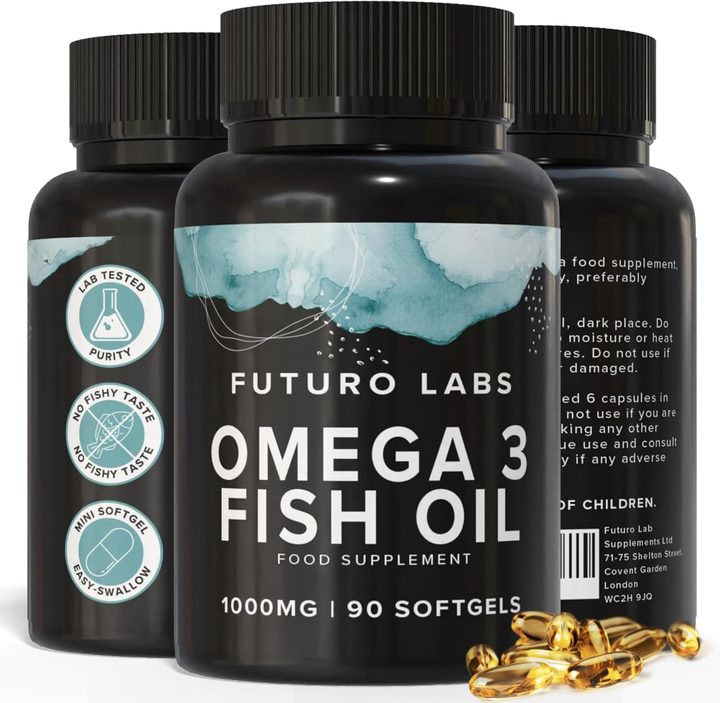
Our brand: the worked example on this page
Futuro Labs Omega 3 Fish Oil
- 17p a day
- 90 softgels, 1 softgel daily
- Lab tested
- Made in the UK
A fresh standard softgel, taken mid-meal, that most people never burp: Futuro Labs Omega 3 Fish Oil on Amazon UK, 1 softgel in the middle of a meal, 180mg EPA and 120mg DHA, lab-tested purity, 90 for £14.99 at 17p. Full label breakdown. The four mechanisms are on the avoid-fish-burps page; the no-burp shelf on the burp-free shelf page.
Why, in a sentence and then in the detail, and the freshness question that sits under it
Why fish oil makes you burp is a sentence, and whether there is a fish oil that does not is a ranked list, and the page gives both. The sentence: a softgel dissolves in the stomach within minutes, the oil it releases is lighter than the stomach's watery contents and floats to the top, and when there is nothing else in the stomach to mix it into, a fasted softgel or one taken before a meal, the oil sits against the oesophageal junction and comes back up as a fishy reflux, the burp being oil rather than gas, worse when the reader lies flat and rests a full stomach on the junction, worse when a large bolus of fat relaxes the sphincter, and worst when the oil is rancid, its oxidised aldehydes being the painty fishy smell itself and repeating for hours whatever the timing, the four-mechanisms page's account compressed. The detail explains why the product question has an answer: each mechanism can be addressed by a product feature, release past the stomach, a form that sits better, a smaller bolus, a format where nothing floats, and by a habit, mid-meal and upright, and the habit addresses more mechanisms than any product does. The freshness question sits under all of it: a rancid oil burps on every product type, no coating hiding its aldehydes and no format silencing them, so the first question for a reader who burps on a fish oil is whether the tub is fresh, a bite test for a paint or old-nut taste and a check of the date and the storage answering it before any product is bought.
Is there a fish oil that does not make you burp, the product types ranked by burp likelihood, and the answer filed
Is there a fish oil that does not make you burp is answered by ranking the product types by how likely they are to burp, least first. Enteric-coated softgels: a coating that resists the stomach's acid and dissolves in the intestine, so the oil is released past the stomach and past the sphincter, the enteric literature finding fewer burps for most users with absorption similar to an uncoated oil taken with food, the product least likely to burp and the one with a cost premium per softgel, sold as burp-less or burpless. A stated triglyceride or re-esterified triglyceride form: reported by many users to sit better than an ethyl ester, the ethyl backbone being suspected in the reflux and the triglyceride form absorbing well with a light meal, so a reader on an unstated-form budget oil who burps tries a stated triglyceride next. A smaller softgel: 500mg taken twice rather than 1000mg once, halving the oil per swallow and the bolus that relaxes the sphincter. A flavoured liquid: a surprise to many, since a spoonful of lemon-flavoured oil sounds like the burpiest option and often is not, because it is taken by the spoon with food, mixed in from the start, and never floats as a dissolving softgel does, the formats page's cheapest-per-milligram rung with the caveat that it oxidises fastest once opened. An emulsion: pre-emulsified liquid omega-3 in which nothing floats at all, the burp ladder's last resort for the reader who burps on everything, dearer per milligram and the best answer for that reader. An algal oil: a different oil with a DHA-first profile and a vegetable shell that some reflux-prone readers tolerate better, the vegan's source and a fallback for the fish-averse. And the honest top of the list for most people is not a product but a habit: a fresh standard softgel taken in the middle of a meal with an upright hour after burps for very few, costs nothing extra and addresses three of the four mechanisms at once, the one-week protocol's first two days, so the product list is for the reader who has done that and still burps. The answer filed: fish oil burps because oil floats on an empty stomach and refluxes, worse flat and worst rancid, and the products least likely to burp run enteric-coated, triglyceride, small, liquid, emulsion and algal, with a fresh standard softgel mid-meal beating all of them for most people, the worked example being that softgel, £14.99 for 90 at 17p.
| The product | Why it burps less | The note |
|---|---|---|
| A fresh standard softgel, mid-meal and uprightOurs | Addresses three mechanisms by habit | Beats every product for most people; no extra cost |
| An enteric-coated softgel | Releases past the stomach and the sphincter | The product least likely to burp; a cost premium; a rancid oil still burps under a coat |
| A stated triglyceride form | Sits better than an ethyl ester for many; absorbs with a light meal | The next thing to try |
| A smaller softgel | Half the oil per swallow; a smaller bolus | 500mg twice rather than 1000mg once |
| A flavoured liquid | Taken by the spoon with food; never floats as a softgel does | Cheapest per milligram; oxidises fastest once opened |
| An emulsion or an algal oil | Nothing floats; a different oil and shell | The last resort for the reader who burps on everything |
The verdict, oil that floats and refluxes, and a list of products that a fresh softgel taken mid-meal beats for most
Why does fish oil make you burp: because a softgel dissolves in the stomach and its oil floats on whatever is there, sitting against the oesophageal junction and coming back up when the stomach is empty, worse lying flat, worse from a large bolus and worst from a rancid oil whose aldehydes are the smell itself, and there are fish oils that burp less, ranked enteric-coated softgels least for releasing past the stomach, then a stated triglyceride form, a smaller softgel, a flavoured liquid taken by the spoon with food, and an emulsion or an algal oil for the reader who burps on everything, with the honest top of the list being a fresh standard softgel taken in the middle of a meal with an upright hour after, which beats every product for most people at no extra cost. That softgel: Futuro Labs Omega 3 Fish Oil, one in the middle of a meal, 180mg EPA and 120mg DHA, lab-tested purity, 90 for £14.99 at 17p a day.
What to check on the label
- Know the sentence: oil floats on an empty stomach and refluxes.
- Check freshness before any product: a rancid oil burps on every type.
- Try the habit first: a fresh softgel mid-meal, upright after.
- Then climb the products: enteric-coated, triglyceride, small, liquid.
- Reach for an emulsion or algal oil last: for the reader who burps on everything.
Our brand
The worked example: Futuro Labs Omega 3 Fish Oil
Futuro Labs Omega 3 Fish Oil: 1 softgel daily with food, 1000mg fish oil providing 180mg EPA and 120mg DHA (300mg combined), 90 softgels for £14.99, 17p a day, lab-tested purity, UK GMP made. Gelatin shell, so not vegetarian.
- Fish oil per softgel
- 1000mg
- EPA / DHA per softgel
- 180mg / 120mg (300mg combined)
- Serving
- 1 softgel a day
- Bottle
- 90 softgels, 90 days
- Price
- £14.99 (17p a day)
- Softgel
- mini softgel, no fishy taste
Questions people also ask
Is there a fish oil that doesn't make you burp?
The product least likely to burp is an enteric-coated softgel, which releases the oil past the stomach and the sphincter for most users at a cost premium, followed by a stated triglyceride form, a smaller softgel, a flavoured liquid taken with food and, for the reader who burps on everything, an emulsion or an algal oil, though a fresh standard softgel taken mid-meal beats all of them for most people.
Why do fish oil capsules repeat on you?
Because the oil is lighter than the stomach's contents and floats: a softgel dissolves within minutes, and when there is nothing in the stomach to mix the oil into it sits against the oesophageal junction and comes back up as reflux of oil, worse lying flat and worst when the oil is rancid.
Do burpless fish oils work?
For most users, yes: the enteric coating resists the stomach's acid and dissolves in the intestine, so the oil is released past the sphincter, with absorption similar to an uncoated oil taken with food, the caveats being a cost premium per softgel and that a rancid oil under a coat is still a rancid oil.
Is liquid fish oil worse for burping than capsules?
Usually better, to many people's surprise: a flavoured liquid is taken by the spoon with food and mixed in from the start, never floating as a dissolving softgel does, so it burps less for many, with the caveat that an opened bottle oxidises fastest and lives in the fridge for a month.
What is the cheapest way to stop fish oil burps?
A fresh standard softgel taken in the middle of a meal with an upright hour or two after, which addresses three of the four burp mechanisms by habit alone, costs nothing extra and stops burps for most people before any coated, triglyceride, liquid or emulsified product is bought.
Sources
- The reflux and posture literature: lying flat within an hour or two of eating, and of taking an oil, increases reflux because the stomach's contents sit against the oesophageal junction, so a fish oil softgel taken at the pillow refluxes more than the same softgel taken with an upright meal. PubMed record
- The enteric-coated fish oil literature: an enteric coating delays a softgel's release until it has passed the stomach, reducing fishy reflux for most users, with overall EPA and DHA absorption similar to uncoated oil taken with food and a modest cost premium for the coating. PubMed record
- The omega-3 delivery-format literature: softgels, liquids and emulsions deliver EPA and DHA as oil, emulsions absorbing well without a fatty meal, while microencapsulated omega-3 powders pressed into tablets or gummies carry low actives per unit and are reviewed on the same EPA and DHA arithmetic. PubMed record
- The fish oil oxidation literature: oxidation is measured by peroxide value, anisidine value and their combination as TOTOX, with the industry monograph setting limits of 5, 20 and 26 respectively, and surveys of retail fish oils finding a meaningful share above those limits, freshness being a quality dimension a label rarely shows and a certificate does. PubMed record