Ghost Fitness/Omega-3/Can fish oil make you lose weight?
Can fish oil make you lose weight?
The short answer
No, and the energy-balance equation shows why. Weight is lost when expenditure exceeds intake, sustained, and omega-3 touches neither side measurably: a softgel adds about nine calories, the appetite studies are small and unreplicated, and the trials measuring resting metabolism and fat oxidation find no meaningful change. The reviews find no effect on weight, fat or waist, and no claim exists. The deficit does the losing.
- The intake sidea softgel adds about nine calories; appetite studies a couple of small unreplicated ones
- The expenditure sideresting metabolism and fat oxidation unchanged in the trials at any dose
- The reviewsno effect on weight, body fat or waist; no weight, fat or metabolism claim
- What does the losinga sustained deficit at half a kilo to a kilo a week; protein and training protect muscle; a softgel in a cut for the heart claim
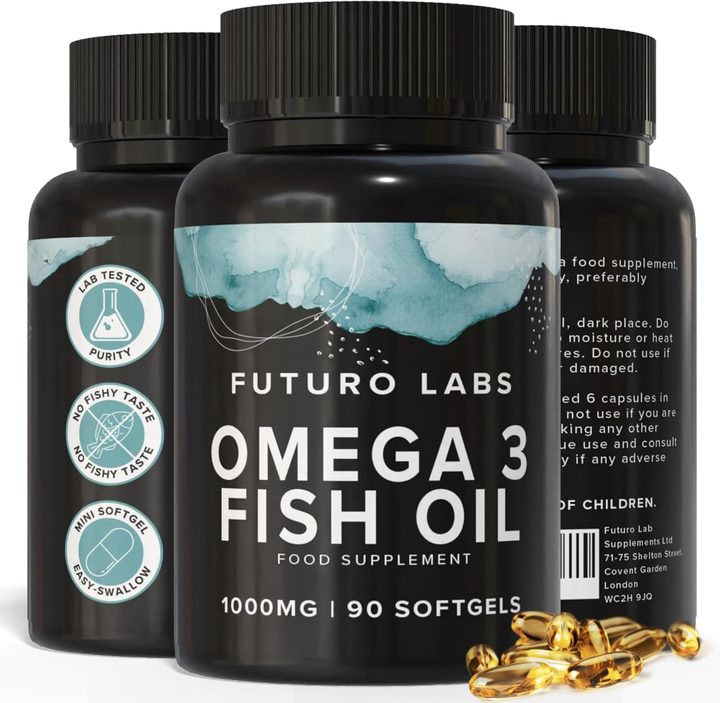
Our brand: the worked example on this page
Futuro Labs Omega 3 Fish Oil
- 17p a day
- 90 softgels, 1 softgel daily
- Lab tested
- Made in the UK
A softgel in a cut, for the claim and not the scale: Futuro Labs Omega 3 Fish Oil on Amazon UK, 1 softgel with food, 180mg EPA and 120mg DHA, about nine calories, 90 for £14.99 at 17p. Full label breakdown. The forum lore audit is on the weight loss page; the belly fat page on the belly fat page.
The energy-balance equation, and the intake side, which a softgel touches by nine calories and appetite touches by nothing reliable
Can fish oil make you lose weight is a question the careful-claims flag answers with an equation, because weight is lost on one condition and the equation shows where omega-3 would have to act to satisfy it. The condition: energy expenditure exceeds energy intake, sustained over weeks, so that the deficit is drawn from stored fat at around half a kilo to a kilo a week for a deficit of five hundred to a thousand calories a day, the only mechanism by which anyone has ever lost fat and the mechanism every supplement must work through to make anyone lose weight, by lowering intake or raising expenditure. The intake side: a standard 1000mg softgel is a gram of fat and adds about nine calories to intake, so on the arithmetic a fish oil makes a reader gain, by a rounding error, rather than lose; and the appetite story, that omega-3 reduces hunger and so lowers intake, rests on a couple of small studies reporting greater fullness after meals in overweight adults on fish oil, short, unreplicated and unaccompanied by any weight change, the weight loss page's audit, so that the intake side is touched by nine calories in the wrong direction and by nothing reliable in the right one, with the hunger levers that do have evidence being protein at each meal, fibre, food volume and sleep.
The expenditure side, which the trials find unmoved, the reviews and the register, what does the losing, and the equation filed
The expenditure side: for omega-3 to make a reader lose weight without lowering intake it would have to raise expenditure, resting metabolism or the fat burned at rest and in exercise, and the trials that measured those find no meaningful change, resting metabolic rate unmoved by weeks of omega-3 at gram doses and fat oxidation during exercise changed little or not at all in human trials despite the receptor mechanisms the cell and rodent work describe, the fat-oxidation story being a laboratory mechanism that never reached a human calorimeter, so the expenditure side is touched by nothing measurable at any dose. With neither side of the equation moved, the reviews find what the equation predicts: systematic reviews and meta-analyses of omega-3 supplementation and body weight in adults find no meaningful effect on weight, body fat or waist circumference, small inconsistent changes that vanish when pooled and no dose at which fat loss appears, and the register agrees, no weight, fat, metabolism, appetite or body-composition claim existing for omega-3, whose sentences are heart, brain, vision, triglycerides and blood pressure, so a fish oil sold for weight loss has stepped outside the register and the equation both. What does the losing is the deficit, sustained, with protein at around 1.6 grams per kilogram and resistance training protecting the muscle the deficit would otherwise take, sleep protecting the adherence, and the scale read over weeks rather than days, the levers of every cut, and a softgel sits in a cut for a reason unrelated to the scale, that a cut's plate of chicken and white fish leaves the 250mg heart claim unmet and the omega-3 index unbuilt, the softgel filling both at nine calories that no deficit notices, the cut-both-ways page's second reading. The equation filed: intake touched by nine calories the wrong way and by nothing reliable the right way, expenditure touched by nothing measurable, the reviews null, no claim, the deficit doing the losing, and a softgel in a cut for the claim, with the worked example being that softgel, one at 17p, £14.99 for 90.
| The side of the equation | What omega-3 does to it | The consequence |
|---|---|---|
| Intake: calories | A softgel adds about nine | A rounding error, in the wrong direction |
| Intake: appetite | A couple of small unreplicated fullness studies; no weight change | Nothing reliable; protein, fibre, volume and sleep are the hunger levers |
| Expenditure: resting metabolism | Unmoved in the trials at gram doses | Nothing |
| Expenditure: fat oxidation | A laboratory mechanism; little or no change in human trials | Nothing that reaches a scale |
| The reviews and the register | No effect on weight, fat or waist; no claim | The equation's prediction confirmed |
| What does the losing | A sustained deficit; protein and training; sleep | A softgel beside it for the heart claim, at nine calories |
The verdict, an equation untouched on either side, and a softgel that sits in a cut for a different reason
Can fish oil make you lose weight: no, on the energy-balance equation that omega-3 touches on neither side, adding about nine calories to intake while the appetite studies are a couple of small unreplicated ones, and changing resting metabolism and fat oxidation by nothing measurable in human trials at any dose, so that the systematic reviews find no effect on weight, body fat or waist, no weight, fat or metabolism claim exists, and the losing is done by a sustained deficit with protein, training and sleep protecting muscle and adherence, while a softgel sits in a cut for the 250mg heart claim and the index that a low-fish cut leaves unbuilt, at nine calories nobody counts. A softgel in a cut for the claim: Futuro Labs Omega 3 Fish Oil, one with food, 180mg EPA and 120mg DHA, 90 for £14.99 at 17p a day.
What to check on the label
- Write the equation: expenditure over intake, sustained.
- Check the intake side: nine calories added; appetite unmoved reliably.
- Check the expenditure side: metabolism and fat oxidation unmoved.
- Read the reviews and the register: nothing, and no claim.
- Keep the softgel in a cut for the claim: and let the deficit do the losing.
Our brand
The worked example: Futuro Labs Omega 3 Fish Oil
Futuro Labs Omega 3 Fish Oil: 1 softgel daily with food, 1000mg fish oil providing 180mg EPA and 120mg DHA (300mg combined), 90 softgels for £14.99, 17p a day, lab-tested purity, UK GMP made. Gelatin shell, so not vegetarian.
- Fish oil per softgel
- 1000mg
- EPA / DHA per softgel
- 180mg / 120mg (300mg combined)
- Serving
- 1 softgel a day
- Bottle
- 90 softgels, 90 days
- Price
- £14.99 (17p a day)
- Softgel
- mini softgel, no fishy taste
Questions people also ask
Does fish oil burn calories?
No: the trials that measured resting metabolic rate find it unmoved by weeks of omega-3 at gram doses, and the fat-oxidation story is a receptor mechanism from cell and rodent work that produces little or no change in human trials, so the expenditure side of the energy-balance equation is untouched at any dose.
Does omega-3 suppress appetite?
Not reliably: a couple of small studies reported greater fullness after meals in overweight adults on fish oil, short, unreplicated and unaccompanied by any weight change, while protein at each meal, fibre, food volume and sleep are the hunger levers with evidence.
Will fish oil make me gain weight?
By a rounding error: a standard 1000mg softgel is a gram of fat and about nine calories, a thousandth of a day's intake, so it neither makes anyone gain nor lose and sits in any diet, including a cut, without counting.
Why is fish oil recommended during a cut if it doesn't cause fat loss?
For the heart claim, not the scale: a cut's plate of chicken and white fish drops oily fish and leaves the 250mg heart claim unmet and the omega-3 index unbuilt, so one softgel fills both at nine calories, with a little less soreness at gram doses over months as a bonus for a reader cutting hard.
What actually makes you lose weight?
A sustained energy deficit, around half a kilo a week at five hundred calories a day and up to a kilo at more, with protein at around 1.6 grams per kilogram and resistance training protecting muscle and sleep protecting adherence, the scale read over weeks, and no supplement moving either side of the equation.
Sources
- Systematic review evidence on omega-3 (fish oil) supplementation and body weight in adults: no clinically meaningful effect on weight or fat mass across randomized trials. PubMed record
- The protein intake and resistance training literature: meta-analyses support intakes around 1.6g per kilogram of body weight daily for maximising resistance-training gains, with diminishing returns above. PubMed record
- Commission Regulation (EU) No 536/2013 authorising health claims for DHA and EPA: maintenance of normal blood triglyceride concentrations (2g DHA+EPA/day) and normal blood pressure (3g DHA+EPA/day), with a supplemental limit note of 5g/day. https://eur-lex.europa.eu/legal-content/EN/TXT/?uri=CELEX%3A32013R0536
- Scientific Advisory Committee on Nutrition and Committee on Toxicity. Advice on fish consumption: benefits and risks (two portions of fish a week, one oily). TSO, 2004. https://www.gov.uk/government/publications/sacn-advice-on-fish-consumption-benefits-and-risks