Ghost Fitness/Omega-3/Why do I feel so good after taking omega-3?
Why do I feel so good after taking omega-3?
The short answer
Ranked by likelihood. First, expectation: a new supplement bought for a reason produces a lift on the day it is started, the placebo response every trial measures. Second, the meal the softgel came with. Third, a good week or a new resolve that arrived with the tub. Fourth, a distant fourth, a real effect, which omega-3 does not produce on the day at any dose. An n-of-1 test, a fortnight off and back on, sorts them.
- First, expectationthe placebo response: a lift on the day a supplement bought for a reason is started
- Second, the meala fed, settled ease after the dinner the softgel came with
- Third, the weeka new programme, better sleep or a decision to look after oneself, arriving with the tub
- Fourth, a real effectnone on the day at any dose: a fat that builds into membranes over months
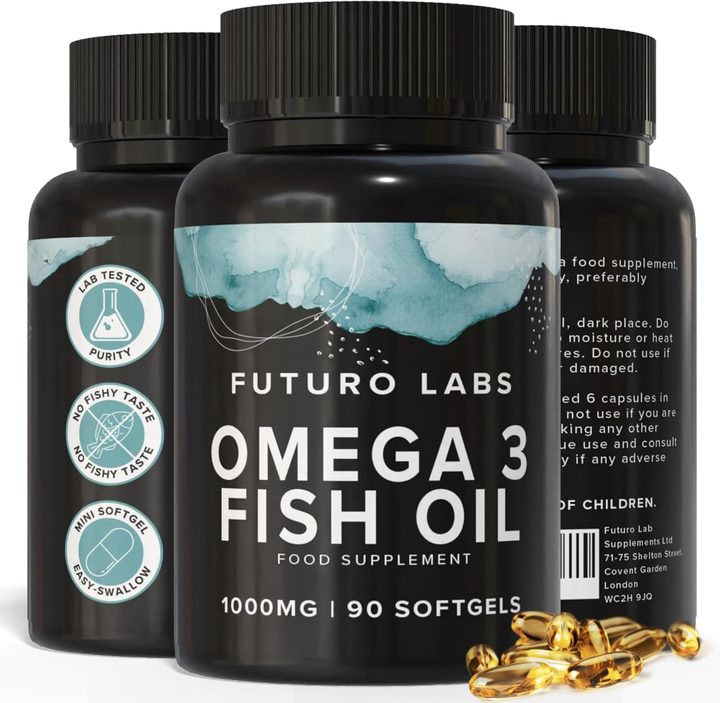
Our brand: the worked example on this page
Futuro Labs Omega 3 Fish Oil
- 17p a day
- 90 softgels, 1 softgel daily
- Lab tested
- Made in the UK
A softgel that does nothing on the day and something over months: Futuro Labs Omega 3 Fish Oil on Amazon UK, 1 softgel with food, 180mg EPA and 120mg DHA, 90 for £14.99 at 17p. Full label breakdown. Feeling better over weeks is on the feel-better page; the how-to-know tests on the how-to-know page.
The four explanations ranked, and why the first three account for almost every reader
Why do I feel so good after taking omega-3 is a question the honest page answers by ranking the explanations by likelihood, because the feeling is real, the reader is not imagining it, and the cause is almost never the softgel. First, expectation: a new supplement bought for a reason, taken with hope and attention, produces a lift on the day it is started and for days after, the placebo response that every supplement trial measures in its control arm, where people given a capsule of olive oil report feeling better, sleeping better and having more energy at rates that surprise everyone who has not read a trial, the placebo literature's finding, and expectation produces exactly the feeling this question describes, a general wellbeing, a sense of having done something good, on exactly the timescale, the day of, that omega-3 cannot. Second, the meal: a softgel taken with a good dinner, as it should be, is followed by the fed, settled, faintly contented ease that a good dinner produces in anyone, blood diverted to digestion and a day's hunger answered, and a reader who attributes the ease to the capsule rather than the plate has felt dinner. Third, the week: a tub of fish oil rarely arrives alone, coming with a new programme, a resolve to sleep more, a decision to look after oneself or the first week of a plan, and the decision does the work, a person who has begun taking care of themselves feeling better for the taking-care, with the softgel as the emblem rather than the cause. Three explanations, and between them they account for nearly every reader who feels so good.
The fourth explanation, which is a distant fourth, the n-of-1 test that sorts them, why the feeling is fine whatever caused it, and the ranking filed
Fourth, a distant fourth, a real effect: omega-3 does not produce a feeling on the day at any dose. A softgel dissolves, its oil is absorbed into the lymph over hours and joins a membrane pool that changes over three to four months, the index kinetics literature's clock, with no acute action on the brain, the mood, the energy or anything a reader could feel by the evening, the outcome trials at a gram a day and the prescription trials at four recording no acute effect of any kind, and even the one omega-3 file that concerns how a person feels, the EPA-predominant adjunct in depression, working over weeks at a gram or more of EPA alongside treatment rather than on the day, the feel-better page's candidate for a longer timescale. So the fourth explanation is ranked fourth not out of caution but because the physiology rules it out for the day-of feeling this question describes. The n-of-1 test sorts the four for a reader who wants to know: keep everything else the same and stop the softgel for a fortnight, then restart it for a fortnight, and note the feeling each day, blind if a partner can hand over a fish oil or an olive oil capsule without saying which; a feeling that stays through the fortnight off was the week or the meal, a feeling that vanishes and returns with the capsule is most likely expectation, since omega-3's pool does not notice a fortnight either way, and the test is the same one the magnesium pages run for calm. The honest note the page ends on is that the feeling is fine whatever caused it, a reader who feels good for having started to look after themselves being right to feel good, and the only cost of misattributing it to the softgel being the money spent on the higher rungs for a feeling they cannot give, so the softgel is kept by the oily-fish audit for the heart claim and the index, and the good feeling is kept for what it is. The ranking filed: expectation first, the meal second, the week third, a real effect a distant fourth, an n-of-1 test to sort them, and the worked example being a softgel that does nothing on the day and something over months, one at 17p, £14.99 for 90.
| The rank | The explanation | The evidence |
|---|---|---|
| First | Expectation: the placebo response | Every trial's control arm reports feeling better on olive oil |
| Second | The meal the softgel came with | A good dinner's fed, settled ease |
| Third | The week: a programme, sleep, a resolve that arrived with the tub | The decision does the work |
| Fourth, distant | A real effect of omega-3 on the day | None at any dose: a months-long membrane pool |
| The test | A fortnight off, a fortnight on, blind if possible | The pool does not notice a fortnight; expectation does |
| The verdict on the feeling | Fine whatever caused it | Keep the softgel for the audit, and the feeling for what it is |
The verdict, a real feeling with three likely causes and one that cannot be it on the day
Why do I feel so good after taking omega-3: for one of three likely reasons and almost never the fourth, expectation producing exactly this feeling on exactly this timescale as the placebo response every trial measures, the good dinner the softgel came with producing a fed and settled ease, and the new programme, better sleep or resolve that arrived with the tub doing the work the softgel is credited for, while a real effect of omega-3 on the day is ruled out by a fat that builds into membranes over months with no acute action at any dose, an n-of-1 test of a fortnight off and a fortnight on sorting the causes for a reader who wants to know, and the feeling being fine whatever caused it. A softgel that does nothing on the day and something over months: Futuro Labs Omega 3 Fish Oil, one with food, 180mg EPA and 120mg DHA, 90 for £14.99 at 17p a day.
What to check on the label
- Rank expectation first: the placebo response on the day of.
- Credit the dinner second: the fed ease is the meal's.
- Credit the week third: the resolve that arrived with the tub.
- Rule out the softgel on the day: no acute effect at any dose.
- Run the fortnight test if you want to know: and keep the feeling either way.
Our brand
The worked example: Futuro Labs Omega 3 Fish Oil
Futuro Labs Omega 3 Fish Oil: 1 softgel daily with food, 1000mg fish oil providing 180mg EPA and 120mg DHA (300mg combined), 90 softgels for £14.99, 17p a day, lab-tested purity, UK GMP made. Gelatin shell, so not vegetarian.
- Fish oil per softgel
- 1000mg
- EPA / DHA per softgel
- 180mg / 120mg (300mg combined)
- Serving
- 1 softgel a day
- Bottle
- 90 softgels, 90 days
- Price
- £14.99 (17p a day)
- Softgel
- mini softgel, no fishy taste
Questions people also ask
Is it possible to feel omega-3 working on the first day?
No: a softgel's oil is absorbed over hours into a membrane pool that changes over three to four months, with no acute action on mood, energy or anything felt by the evening at any dose, so a first-day feeling is expectation, the meal or the week rather than the fat.
Why does a new supplement make me feel better straight away?
Expectation: a capsule bought for a reason and taken with hope produces a lift on the day it is started, the placebo response that every supplement trial measures in its control arm, where people given olive oil report better sleep, energy and wellbeing at rates that surprise anyone who has not read a trial.
How can I tell if omega-3 is really making me feel good?
With an n-of-1 test: keep everything else the same, stop the softgel for a fortnight, restart it for a fortnight and note the feeling each day, blind if a partner can hand over a fish oil or an olive oil capsule without saying which, since the omega-3 pool does not notice a fortnight and expectation does.
Does omega-3 improve mood?
Over weeks in one file, not on the day: the depression meta-analyses favour EPA-predominant oils at a gram or more of EPA as an adjunct to standard treatment, a research finding with no claim that works over weeks, while a standard softgel has no mood effect and no feeling to give on any day.
Should I stop taking omega-3 if the good feeling was placebo?
Not for that reason: the softgel is taken by the oily-fish audit for the 250mg heart claim and the index over months, which it delivers whether or not anything is felt, and the good feeling of having started to look after yourself is kept for what it is, with the only cost of misattributing it being money spent on higher rungs for a feeling they cannot give.
Sources
- The expectation and sleep literature: placebo responses in insomnia trials are substantial and rapid, subjective sleep improving within nights of starting an inert treatment the sleeper believes in. PubMed record
- The omega-3 index kinetics literature: red-cell EPA and DHA rise over three to four months of daily intake and fall over a similar period after stopping, the index changing on a clock of months rather than days, with no acute effect of a single dose. PubMed record
- Meta-analytic evidence on EPA-predominant omega-3 formulations in depression research: better signals for EPA-heavy preparations in clinical trial populations, with no authorised claims arising. PubMed record
- The habit formation literature: anchoring a new behaviour to an existing daily routine is the best-documented adherence strategy, with consistency outperforming timing choices. PubMed record