Ghost Fitness/Omega-3/Does omega-3 make you feel happy?
Does omega-3 make you feel happy?
The short answer
A floor and a ceiling. Omega-3's one mood file is a floor file: EPA-predominant oils at a gram or more of EPA reduce depressive symptoms over weeks in diagnosed depression as an adjunct, on scales that count symptoms going down. There is no ceiling file: no trial in well people shows more happiness or positive mood at any dose. Happy is not a thing omega-3 does; persistent low mood is a GP's.
- The floor fileEPA-predominant oils, a gram or more of EPA, weeks, diagnosed depression, an adjunct: symptoms down toward normal
- The ceiling filenone: no trial in well people shows more happiness, wellbeing or positive affect at any dose
- A standard softgel180mg of EPA: not in the floor trials; no mood effect of any kind
- The readera good day on a new tub is expectation and the week; persistent low mood is a GP's
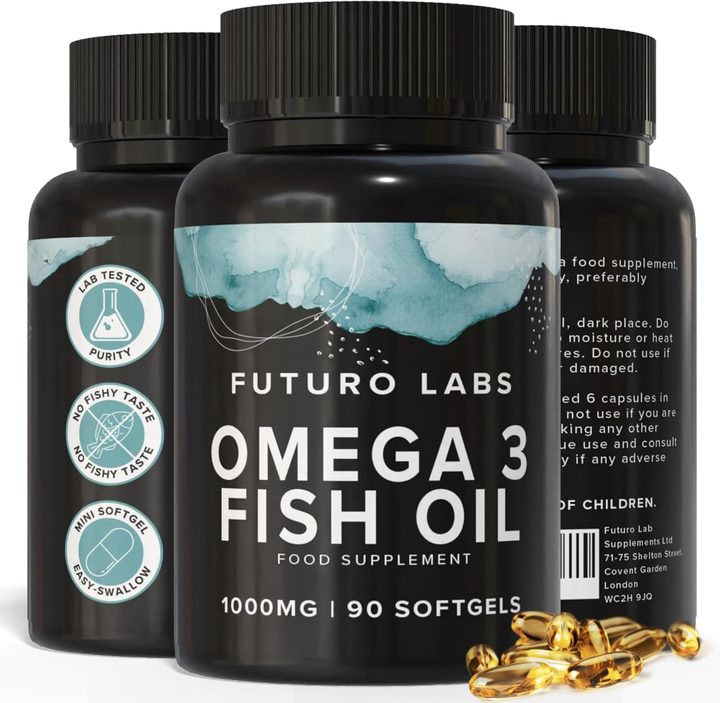
Our brand: the worked example on this page
Futuro Labs Omega 3 Fish Oil
- 17p a day
- 90 softgels, 1 softgel daily
- Lab tested
- Made in the UK
A softgel for the audit with no mood to offer: Futuro Labs Omega 3 Fish Oil on Amazon UK, 1 softgel with food, 180mg EPA and 120mg DHA, 90 for £14.99 at 17p. Full label breakdown. The day-of feeling ranked is on the feel-so-good page; the weeks-long ledger on the feel-better page.
The floor file, what it is, what it measured and who it was in
Does omega-3 make you feel happy is a question the honest page answers with the difference between a floor and a ceiling, because omega-3 has exactly one mood file, and the file is about the first and the question is about the second. The floor file: the depression meta-analyses pool randomised trials in which people with diagnosed depression were given omega-3 or placebo alongside their usual treatment, and find that EPA-predominant oils, at a gram or more of EPA a day, reduce depressive symptoms over several weeks, with DHA-predominant oils doing less and the effect largest in diagnosed depression rather than in people with everyday low mood, the EPA and mood literature's finding, a research result with no register claim. What it measured is the point: the trials scored people on depression rating scales, which count symptoms, low mood, loss of interest, poor sleep, guilt, fatigue and the rest, and record them going down, so a positive result on those scales means a person who was below normal moved toward normal, a floor being lifted, and the scales have no room above normal, a person with no symptoms scoring zero on the first day and zero on the last, so the file cannot by its design say anything about happiness, which lives above the floor. Who it was in completes the picture: people with a diagnosis, on treatment, taking a concentrate at a gram or more of EPA, which a standard softgel at 180mg of EPA does not approach, so a reader who is well and on one softgel is outside the file on every axis, the population, the dose and the measure.
The ceiling file that does not exist, why a good day on a new tub is not it, the reader with a low mood, and the floor and ceiling filed
The ceiling file does not exist. To show that omega-3 makes people happy, a trial would give fish oil to well people and measure happiness, life satisfaction, wellbeing or positive affect on scales built for that, and the trials that have measured mood in the general population, in healthy adults given fish oil for months to years, find nothing, no more happiness, no better wellbeing, no lift in positive mood at any dose, the same literature's general-population arm, and the outcome trials that gave a gram a day to tens of thousands of people for years recorded no mood effect either way, so the ceiling stays where it was and omega-3 is not a thing that raises it. Why a good day on a new tub is not the ceiling file: a reader who feels happier the week they start fish oil has the feel-so-good page's ranking, expectation, which produces exactly a lift in mood on exactly the day a hopeful supplement starts and is the placebo response every trial's control arm records, the good meal the softgel came with, and the week that arrived with the tub, the programme, the sleep and the resolve, with the fortnight test sorting them and the oil, a fat that builds into membranes over months with no acute action, ranked last. The reader with a low mood that has lasted weeks is a different reader, and the floor file is theirs only with a GP in it: low mood that persists, that takes the pleasure out of things or that makes the days hard is a GP's first, and the EPA-predominant adjunct at a gram or more is a conversation to have with the GP rather than a substitute for the appointment, the anxiety and feel-better pages' same instruction. The register's authorised claims for omega-3 are heart, brain function, vision, triglycerides and blood pressure, and no mood, happiness or wellbeing sentence exists for it or, for that matter, for any supplement. The floor and ceiling filed: one file that lifts a floor in diagnosed depression at a gram or more of EPA over weeks as an adjunct, no file that raises a ceiling in the well at any dose, a good day being expectation and the week, and persistent low mood being a GP's, with the worked example being a softgel for the audit with no mood to offer, £14.99 for 90 at 17p.
| The file | What it measured | What it found |
|---|---|---|
| The floor: diagnosed depression | Depression scales counting symptoms going down, as an adjunct | EPA-predominant oils at a gram or more of EPA reduce symptoms over weeks |
| The floor's population and dose | People with a diagnosis, on treatment, on a concentrate | A standard softgel at 180mg of EPA is outside it |
| The ceiling: well people | Happiness, wellbeing, positive affect | No file: nothing at any dose |
| The outcome trials | A gram a day for years in tens of thousands | No mood effect either way |
| A good day on a new tub | Expectation, the meal, the week | Not the oil |
| Persistent low mood | A GP's | The floor file only with a GP in it |
The verdict, a floor that one file lifts in the depressed and a ceiling nothing lifts in the well
Does omega-3 make you feel happy: no, because its one mood file is a floor file, EPA-predominant oils at a gram or more of EPA a day reducing depressive symptoms over weeks in people with diagnosed depression as an adjunct to treatment, measured on scales that count symptoms going down and cannot register anything above normal, and there is no ceiling file, no trial in well people showing more happiness, wellbeing or positive mood on fish oil at any dose and the outcome trials recording no mood effect over years, so that a good day on a new tub is expectation, the meal and the week, a standard softgel at 180mg of EPA is outside the floor file on every axis, and a low mood that persists is a GP's before it is anyone's. A softgel for the audit with no mood to offer: Futuro Labs Omega 3 Fish Oil, one with food, 180mg EPA and 120mg DHA, 90 for £14.99 at 17p a day.
What to check on the label
- Know the one file is a floor file: diagnosed depression, EPA grams, weeks, an adjunct.
- Know there is no ceiling file: nothing in the well at any dose.
- Read the scales for what they count: symptoms down, not happiness up.
- Credit a good week to the week: expectation and the resolve.
- Take persistent low mood to a GP: the floor file only with a GP in it.
Our brand
The worked example: Futuro Labs Omega 3 Fish Oil
Futuro Labs Omega 3 Fish Oil: 1 softgel daily with food, 1000mg fish oil providing 180mg EPA and 120mg DHA (300mg combined), 90 softgels for £14.99, 17p a day, lab-tested purity, UK GMP made. Gelatin shell, so not vegetarian.
- Fish oil per softgel
- 1000mg
- EPA / DHA per softgel
- 180mg / 120mg (300mg combined)
- Serving
- 1 softgel a day
- Bottle
- 90 softgels, 90 days
- Price
- £14.99 (17p a day)
- Softgel
- mini softgel, no fishy taste
Questions people also ask
Does fish oil improve mood in healthy people?
No: the trials that measured mood in healthy adults given fish oil for months to years found no more happiness, wellbeing or positive affect at any dose, and the outcome trials that gave a gram a day to tens of thousands for years recorded no mood effect, so the only mood file is in diagnosed depression and is about symptoms coming down.
What is the omega-3 depression evidence?
A floor file: the meta-analyses find EPA-predominant oils at a gram or more of EPA a day reducing depressive symptoms over several weeks in people with diagnosed depression when added to their usual treatment, measured on scales that count symptoms going down, a research finding with no register claim and no standing as a substitute for a GP.
Why do I feel happier since starting omega-3?
Expectation first, the placebo response every trial's control arm records on the day a hopeful supplement starts, then the good meal the softgel came with and the programme, sleep and resolve that arrived with the tub, with the oil itself, a fat that builds into membranes over months with no acute action, ranked last and testable by a fortnight off.
Can a normal fish oil capsule help with low mood?
No: the floor file used EPA-predominant concentrates at a gram or more of EPA, and a standard softgel carries 180mg, outside the file on dose as well as on population, so a reader with low mood that has lasted weeks sees a GP, and the concentrate adjunct is a conversation to have there rather than a shelf purchase.
Is there a health claim for omega-3 and mood or happiness?
No: the authorised omega-3 claims are heart function, brain function, vision, triglycerides and blood pressure, and no mood, happiness or wellbeing sentence exists for omega-3 or for any supplement, the feeling on a tub being a nutrition claim's condition met and nothing more.
Sources
- Meta-analytic evidence on EPA-predominant omega-3 formulations in depression research: better signals for EPA-heavy preparations in clinical trial populations, with no authorised claims arising. PubMed record
- The expectation and sleep literature: placebo responses in insomnia trials are substantial and rapid, subjective sleep improving within nights of starting an inert treatment the sleeper believes in. PubMed record
- The large cardiovascular outcome trials of omega-3: around a gram a day of EPA and DHA in primary-prevention populations produced no meaningful reduction in major cardiovascular events, while four grams of purified EPA in people with raised triglycerides on statins reduced events in one large trial, so the supplement-dose story is maintenance and the treatment-dose story is a prescription. PubMed record
- Retained Regulation (EC) No 1924/2006 on nutrition and health claims made on foods, and the Great Britain nutrition and health claims register. https://www.gov.uk/government/publications/great-britain-nutrition-and-health-claims-nhc-register