Ghost Fitness/Lion's mane/Does Lion's Mane contain vitamin D?
Does Lion's Mane contain vitamin D?
The short answer
Barely: mushrooms make vitamin D2 only when UV-exposed, and an extract capsule carries a negligible amount unless the label declares micrograms with an NRV. For vitamin D, take vitamin D, per the UK 10 microgram guidance.
- The chemistryergosterol converts to vitamin D2 under UV light
- Fresh mushroomsmeaningful D2 only if sun- or lamp-exposed; grown dark, very little
- The capsule realitya small extract dose carries negligible vitamin D unless declared
- The label rulemicrograms with an NRV percentage, or it doesn't count
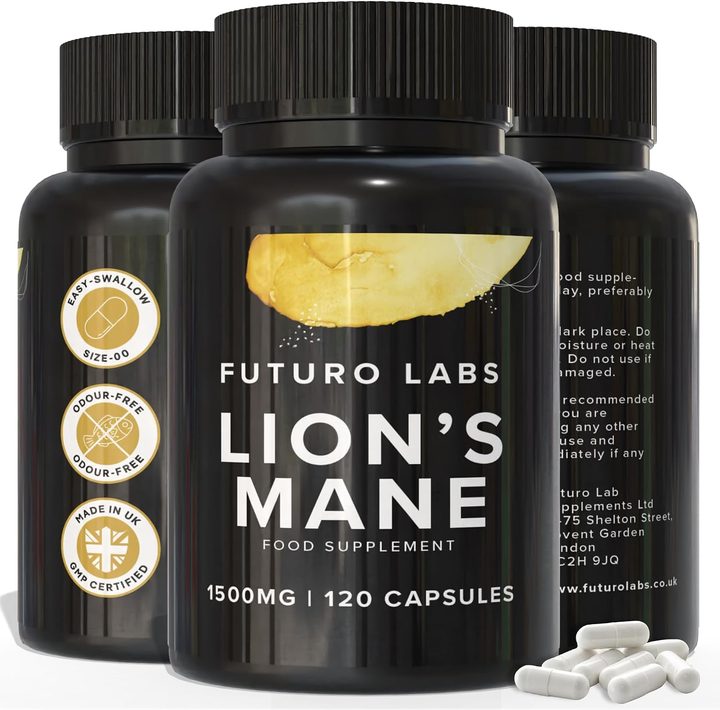
Our brand: the worked example on this page
Futuro Labs Lion's Mane
- 13p a day
- 120 capsules, 1 capsule daily
- Lab tested
- Made in the UK
A capsule that claims no vitamin D because it declares none: Futuro Labs Lion's Mane on Amazon UK, 5:1 fruiting body extract at 13p a day, no vitamin D on the panel. Full label breakdown. The aisle's one lawful nutrient is on the mushroom method page; the register readout on the vitamins page.
The UV chemistry that decides the answer, and what fresh and dried lion's mane actually carry
Whether lion's mane contains vitamin D is a chemistry question with a conditional answer, so teach the condition. Mushrooms contain ergosterol in their cell membranes, a sterol that converts to vitamin D2, ergocalciferol, when exposed to ultraviolet light, the same photochemistry by which human skin makes vitamin D3 from its own precursor, which means a mushroom's vitamin D content depends almost entirely on whether it has seen UV: wild mushrooms grown in daylight and commercial mushrooms deliberately exposed to UV lamps after harvest can carry meaningful vitamin D2, sometimes a large fraction of a daily need per portion, while mushrooms grown in the dark, which is how most cultivated mushrooms including lion's mane are grown, carry very little, the ergosterol present and unconverted. So fresh lion's mane from a dark growing room contains only trace vitamin D, a UV-exposed batch or a sun-dried one could contain a real amount, and the honest answer for the mushroom on a plate is it depends on its light history, with the culinary reader able to add UV themselves by leaving sliced mushrooms in sunlight before cooking, a genuine home trick the mushroom vitamin D literature supports. For the extract capsule the reader is more likely asking about, the chemistry and the dose combine to make the answer negligible, and the next section prices exactly why.
What a capsule actually carries, the declaration rule that settles any claim, and the vitamin D route taken properly
An extract capsule's vitamin D content is decided by two multipliers that both shrink it: the starting material's light history, usually dark-grown and therefore low, and the dose, roughly 300mg of extract a day being a tiny mass from which even a UV-exposed mushroom's vitamin D would arrive in micrograms too small to matter, and hot-water extraction concentrating polysaccharides rather than fat-soluble sterols besides, so a standard lion's mane extract capsule carries negligible vitamin D, which is why honest labels, the worked example among them, declare none. The rule that settles any claim to the contrary is the register's own: vitamin D is one of the aisle's few genuinely lawful nutrients, holding authorised claims for normal bones, muscle function and immune function among others, but a product may make those claims only when it declares a vitamin D content in micrograms with a percentage of the nutrient reference value on the panel, so a lion's mane product implying vitamin D benefits without a declared microgram figure is borrowing a lawful nutrient's vocabulary without carrying the nutrient, and a UV-exposed mushroom powder declaring its D2 in micrograms is the aisle's single honest construction, the mushroom method page's footnote. The vitamin D route taken properly closes the page for the reader who actually wants the nutrient: UK guidance suggests 10 micrograms daily for adults through the autumn and winter months, when skin synthesis fails at this latitude, and a plain vitamin D supplement delivers that for pennies, a purpose no lion's mane capsule serves, the honest instruction being to take vitamin D as vitamin D, in declared micrograms, and to take lion's mane, if at all, for the entirely separate and claim-free reasons its own pages describe, the two never substituting for each other.
| The form | Vitamin D content | The honest note |
|---|---|---|
| Fresh, dark-grown | Trace: ergosterol unconverted | How most cultivated mushrooms are grown |
| Fresh, UV- or sun-exposed | Potentially meaningful D2 | Light history decides; home sun-exposure works |
| Extract capsule | Negligible | Tiny dose, dark-grown stock, polysaccharide extraction |
| A product claiming vitamin D | Only if micrograms and NRV are declared | Otherwise borrowed vocabulary |
| The lawful construction | UV-exposed powder with declared micrograms | The aisle's one honest vitamin D product |
| The real route | A plain vitamin D supplement | 10 micrograms daily in UK autumn and winter |
The verdict, decided by light and dose
Does lion's mane contain vitamin D: barely, in any form a supplement buyer meets, mushrooms making vitamin D2 only when UV-exposed and most cultivated stock growing in the dark, an extract capsule's tiny polysaccharide-focused dose carrying a negligible amount, and the register's declaration rule settling any claim, micrograms with an NRV on the panel or the vitamin is not there, with the nutrient itself taken properly as vitamin D at the UK's 10 microgram autumn and winter guidance for pennies. The honest capsule declares none: Futuro Labs Lion's Mane, 5:1 fruiting body extract, one capsule daily, UK made, lab tested, £15.49 for 120 days at 13p a day, sold for its own claim-free reasons and never as a vitamin D source, which is exactly what its panel says by saying nothing.
What to check on the label
- Learn the UV condition: ergosterol converts to D2 only in light.
- Read the growing history: dark-grown means trace.
- Price the capsule honestly: tiny dose, negligible vitamin D.
- Apply the declaration rule: micrograms and NRV, or it isn't there.
- Take vitamin D as vitamin D: 10 micrograms, autumn and winter.
Our brand
The worked example: Futuro Labs Lion's Mane
Futuro Labs Lion's Mane: 1 capsule daily of 5:1 fruiting body extract, labelled 1500mg mushroom equivalent (about 300mg extract), 120 capsules for £15.49, 120 days at 13p a day. Vegan HPMC shell, UK made under GMP and BRC, independently lab tested, caffeine free. Lion's mane holds no authorised UK health claims; this site describes its small studies as studies.
- Extract
- fruiting body, 5:1
- Per capsule
- 1500mg mushroom equivalent
- Serving
- 1 capsule a day
- Bottle
- 120 capsules, 120 days
- Price
- £15.49 (13p a day)
- Capsule
- HPMC vegan shell, size 00
Questions people also ask
Do mushrooms contain vitamin D?
Only when UV-exposed: their ergosterol converts to vitamin D2 under ultraviolet light, so sun- or lamp-exposed mushrooms can carry meaningful amounts while dark-grown ones carry only trace.
Does a lion's mane capsule give me any vitamin D?
Negligible: a roughly 300mg dose of extract from typically dark-grown stock, processed by hot-water extraction, carries vitamin D in amounts too small to matter, which is why honest labels declare none.
Can a lion's mane product legally claim vitamin D benefits?
Only if it declares a vitamin D content in micrograms with an NRV percentage on the panel; without that declaration the claims borrow a lawful nutrient's vocabulary without carrying the nutrient.
Can I boost a mushroom's vitamin D at home?
Yes: slicing fresh mushrooms and leaving them in sunlight before cooking converts ergosterol to vitamin D2, a genuine home trick the mushroom vitamin D literature supports.
How should I actually get vitamin D in the UK?
As vitamin D: guidance suggests 10 micrograms daily through autumn and winter when skin synthesis fails at this latitude, delivered by a plain supplement for pennies, a job no lion's mane capsule does.
Sources
- The mushroom vitamin D literature: mushrooms exposed to UV light generate meaningful vitamin D2, the one nutrient route by which a mushroom product can carry authorised vitamin D claims. PubMed record
- EFSA Panel on Dietetic Products. Scientific opinion on Dietary Reference Values for fats: Adequate Intake of 250mg combined EPA and DHA per day for adults. EFSA Journal 2010;8(3):1461. https://www.efsa.europa.eu/en/efsajournal/pub/1461
- The medicinal mushroom labelling discussion: fruiting body versus mycelium-on-grain, extract ratios and beta-glucan content as the label facts that separate concentrated extracts from diluted powders. PubMed record
- Retained Regulation (EC) No 1924/2006 on nutrition and health claims made on foods, and the Great Britain nutrition and health claims register. https://www.gov.uk/government/publications/great-britain-nutrition-and-health-claims-nhc-register