Ghost Fitness/Lion's mane/What are the best mushroom supplements?
What are the best mushroom supplements?
The short answer
One method serves every species: fruiting body stated, ratio stated, testing shown, pence divided. No mushroom holds an authorised UK claim, so buy label facts, not promises, and note the one lawful nutrient, vitamin D in UV-exposed mushrooms.
- The aisle's legal stateno mushroom species holds an authorised UK health claim
- The one methodfruiting body, ratio, testing, pence: species-blind
- The research maplion's mane holds the small human trials; the rest run thinner
- The lawful footnoteUV-exposed mushrooms carry vitamin D2, which holds real claims
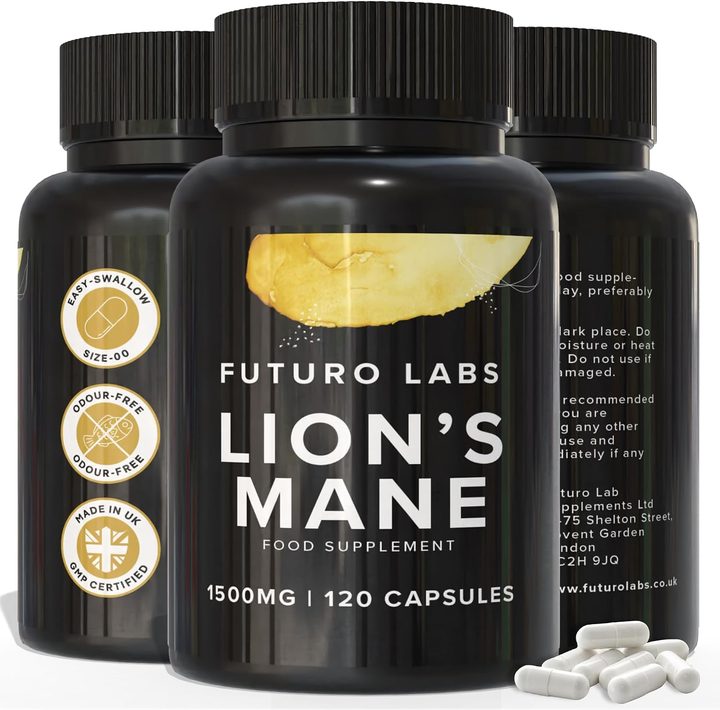
Our brand: the worked example on this page
Futuro Labs Lion's Mane
- 13p a day
- 120 capsules, 1 capsule daily
- Lab tested
- Made in the UK
The method's standing example, one species done properly: Futuro Labs Lion's Mane on Amazon UK, 5:1 fruiting body extract, 1500mg equivalent per capsule, £15.49 for 120 days at 13p. Full label breakdown. The blend arithmetic is on the multi-mushroom page; the four tests in full on the best lion's mane page.
The aisle's legal state declared, the species walked by their research files, and the method that judges them all
Open with the sentence that governs the entire mushroom aisle, because most best-of pages bury it: no mushroom species holds an authorised health claim in the UK, not lion's mane, not reishi, not cordyceps, not chaga, not turkey tail, so every cognitive, calm, energy, immunity and longevity promise on a mushroom label is unlicensed, and best cannot mean most effective because no product may lawfully claim effect, leaving best to mean what it means everywhere on this site, most honestly labelled per penny. Walk the shelf's species by their research files, described as research: lion's mane carries the aisle's least-thin human literature, the 16-week MCI trial and the 41-person pilot its own pages describe, small and interesting; cordyceps trails performance folklore from small studies with mixed results and a famous species mix-up between wild and cultivated forms; reishi trails sleep-and-calm folklore on thinner human ground still; chaga arrives almost entirely as antioxidant marketing on lab-bench data; and turkey tail's serious literature belongs to a pharmaceutical extract studied in oncology settings abroad, not to the powders sold beside the protein bars, a distinction worth stating plainly. Against every file, one method judges every tub identically, the four tests imported whole from the lion's mane flagship: fruiting body stated, because substrate-diluted mycelium is the aisle's default deception by omission; extract ratio stated with its equivalent maths; independent testing and named manufacture shown; and pence per day divided at the label's own directions, the only comparison left once promises are off the table.
The one lawful nutrient in the aisle, the buying order that follows, and the shelf priced honestly
The aisle does hide one genuinely lawful nutrient, and it deserves its footnote promoted: mushrooms exposed to UV light generate vitamin D2 in meaningful amounts, and vitamin D, unlike any mushroom, holds real authorised claims, normal muscle function, normal bones, normal immune function among them, so a UV-exposed mushroom product declaring its vitamin D content in micrograms with an NRV percentage is the single construction in this entire aisle that can print an approved sentence, a fact that reframes some culinary-mushroom powders as honest vitamin D foods while every extract around them stays claims-free, and a fact the marketing curiously underuses, presumably because normal bone maintenance sells worse than ancient immunity secrets. The buying order that falls out of everything above: decide the species by your own reading of its research file, this site's money staying on lion's mane as the least-thin file, described as studies; buy that one species at full stated dose rather than a six-way blend, the multi-mushroom page's division showing why fixed capsules split across species leave tokens of each; run the four tests on the chosen tub, brand-blind; and price the survivor per day against the aisle's benchmark, the worked example's 13p setting it. The shelf priced honestly closes the page: single-species extracts with stated tissue and ratio at 13-to-30p a day are the aisle's defensible purchases; blends, gummies and coffees fail their own format pages' arithmetic; and anything sold on a promise fails before the price, because in a claims-empty aisle the promise is the tell.
| The species | The research file, described as research | The buying note |
|---|---|---|
| Lion's mane | A 16-week MCI trial and a 41-person pilot: least thin | The section's standing example at 13p |
| Cordyceps | Performance folklore, small mixed studies | Same four tests; expect no claim |
| Reishi | Sleep-and-calm folklore, thinner still | Same four tests; expect no claim |
| Chaga | Antioxidant marketing on bench data | Same four tests; expect no claim |
| Turkey tail | Serious literature belongs to a pharmaceutical extract | The powders beside the protein bars are not it |
| UV-exposed mushrooms | Vitamin D2: the aisle's one lawful nutrient | Micrograms and NRV stated, or it doesn't count |
The verdict, one method wide
What are the best mushroom supplements: the ones that pass the species-blind method in a claims-empty aisle, fruiting body stated, ratio stated with its maths, testing and manufacture shown, pence divided, with the species chosen by an honest read of research files this site describes as research, lion's mane holding the least-thin one, and the aisle's single lawful nutrient noted, vitamin D2 in UV-exposed mushrooms carrying the only approved sentences in sight. The method's standing example: Futuro Labs Lion's Mane, one capsule of 5:1 fruiting body extract labelled 1500mg mushroom equivalent, vegan, UK made, lab tested, £15.49 for 120 days at 13p a day, one species done properly, which is what best means where nothing may promise.
What to check on the label
- The aisle is claims-empty: no mushroom holds an authorised UK claim.
- One method judges all: tissue, ratio, testing, pence.
- Read the files as research: lion's mane least thin, the rest thinner.
- Note the vitamin D footnote: UV-exposed mushrooms carry the one lawful nutrient.
- Buy one species at full dose: blends divide into tokens.
Our brand
The worked example: Futuro Labs Lion's Mane
Futuro Labs Lion's Mane: 1 capsule daily of 5:1 fruiting body extract, labelled 1500mg mushroom equivalent (about 300mg extract), 120 capsules for £15.49, 120 days at 13p a day. Vegan HPMC shell, UK made under GMP and BRC, independently lab tested, caffeine free. Lion's mane holds no authorised UK health claims; this site describes its small studies as studies.
- Extract
- fruiting body, 5:1
- Per capsule
- 1500mg mushroom equivalent
- Serving
- 1 capsule a day
- Bottle
- 120 capsules, 120 days
- Price
- £15.49 (13p a day)
- Capsule
- HPMC vegan shell, size 00
Questions people also ask
Which mushroom supplement has the best evidence?
Lion's mane carries the aisle's least-thin human file, a 16-week MCI trial and a 41-person pilot, described here as studies: everything else runs on smaller, mixed or bench-level data.
Do any mushroom supplements have approved health claims?
No species does: the aisle's single lawful construction is vitamin D2 in UV-exposed mushrooms, since vitamin D itself holds authorised claims when declared in micrograms with an NRV.
Is turkey tail good for immunity?
The serious turkey tail literature concerns a pharmaceutical extract studied in clinical oncology settings abroad, not the retail powders, and no immunity claim attaches to any mushroom product here.
Should I buy a single mushroom or a blend?
Single: fixed capsules split across six or ten species leave token doses of each with ratios unstated, so buy the species whose file you actually rate, at full stated dose.
What should any mushroom label show before I pay?
The four tests: fruiting body stated, an extract ratio with its equivalent maths, independent testing and named manufacture, and a price that divides to honest pence per day.
Sources
- The mushroom vitamin D literature: mushrooms exposed to UV light generate meaningful vitamin D2, the one nutrient route by which a mushroom product can carry authorised vitamin D claims. PubMed record
- Mori K, Inatomi S, Ouchi K, Azumi Y, Tuchida T. Improving effects of the mushroom Yamabushitake (Hericium erinaceus) on mild cognitive impairment: a double-blind placebo-controlled clinical trial. Phytotherapy Research 2009;23(3):367-372. PubMed record
- The medicinal mushroom labelling discussion: fruiting body versus mycelium-on-grain, extract ratios and beta-glucan content as the label facts that separate concentrated extracts from diluted powders. PubMed record
- Retained Regulation (EC) No 1924/2006 on nutrition and health claims made on foods, and the Great Britain nutrition and health claims register. https://www.gov.uk/government/publications/great-britain-nutrition-and-health-claims-nhc-register