Ghost Fitness/Lion's mane/Does lion's mane contain caffeine?
Does lion's mane contain caffeine?
The short answer
No: caffeine is a plant alkaloid made by coffee, tea, cacao and a few others, and no fungus produces it. A pure lion's mane capsule is caffeine free; mushroom coffees and focus blends contain caffeine from their other ingredients.
- The botanycaffeine: a purine alkaloid from coffee, tea, cacao, guarana, mate
- The fungusno mushroom makes caffeine: lion's mane is caffeine free
- The format trapmushroom coffees and focus blends add caffeine from other ingredients
- What caffeine-free licensesevening dosing; and no energy or stimulant expectation
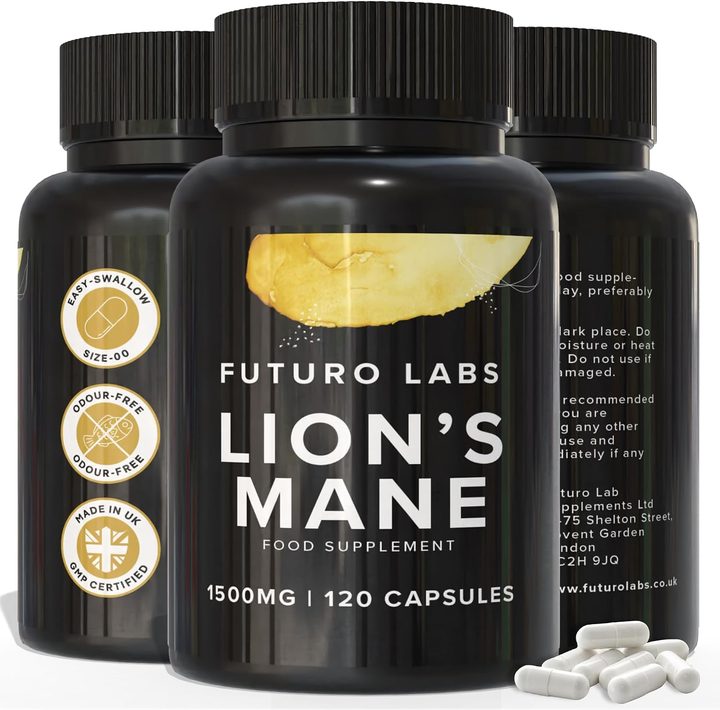
Our brand: the worked example on this page
Futuro Labs Lion's Mane
- 13p a day
- 120 capsules, 1 capsule daily
- Lab tested
- Made in the UK
A pure capsule, caffeine free by nature and label: Futuro Labs Lion's Mane on Amazon UK, 5:1 fruiting body extract only, £15.49 for 120 days at 13p, taken at any hour. Full label breakdown. The coffee formats are on the coffee page; the caffeine contest on the caffeine-versus page.
The botany that answers it, and why a fungus cannot contain what only certain plants make
The answer is a clean no with a reason worth knowing, because the reason settles every variant of the question. Caffeine is a purine alkaloid, a nitrogen compound that a limited set of plants synthesise as a chemical defence and signalling molecule, coffee, tea, cacao, guarana, yerba mate and a handful of relatives, the biosynthetic pathway being plant machinery evolved independently in a few lineages, and fungi, a separate kingdom of life entirely, possess no such pathway, so no mushroom makes caffeine, not lion's mane, not any species sold as a nootropic mushroom, the compound simply not existing in fungal chemistry. Lion's mane's own characteristic compounds are the ones its pages describe, beta-glucans in its cell walls and the hericenone and erinacine families studied in bench models, none of them stimulants, none producing the acute alertness effect caffeine produces, which is why the taking pages retire every stimulant clock, the capsule carrying no kick to time. So the pure product, a fruiting-body extract in a shell with a named bulking agent, is caffeine free by nature and by label, the worked example's ingredients list containing nothing that could contain caffeine, and the botany making that a certainty rather than a manufacturer's assurance.
The formats that sneak caffeine in, the check that catches them, and what caffeine-free does and does not license
Where caffeine enters lion's mane products is through other ingredients, and the formats deserve naming because the question is often really about them. Mushroom coffees contain caffeine for the obvious reason, they are coffee, instant grounds carrying their caffeine with a mushroom dusting added, often blended to half-strength but never to zero unless explicitly decaffeinated, the coffee page's arithmetic applying. Focus blends and nootropic stacks frequently add caffeine outright, or green tea extract, guarana or yerba mate that carry it, alongside the mushroom, so a lion's mane focus formula may be a caffeine product with a fungal passenger, the label's other ingredients deciding. Mushroom teas made with actual tea leaves carry tea's caffeine, while pure mushroom decoctions in hot water carry none. The check that catches all of them is the ingredients line read for the caffeine carriers, coffee, tea, guarana, mate, cacao, or the word caffeine itself, and a declared caffeine content in milligrams where present, the format trap dissolving in ten seconds of reading. What caffeine-free licenses, stated in both directions: it licenses evening dosing, the pure capsule being safe at any hour and late trainers needing no clock, and it licenses combining with the reader's own coffee without doubling any stimulant; and it forbids an expectation, the energy and get-up-and-go language some mushroom marketing borrows describing nothing the fungus does, no acute lift existing to feel, so anyone buying lion's mane for a stimulant effect has bought the wrong kingdom of life and should return to the kettle, where caffeine has always lived.
| The format | Caffeine? | Why |
|---|---|---|
| Pure extract capsule or powderOurs | None | No fungus makes caffeine |
| Mushroom coffee | Yes, from the coffee | Instant grounds, often half-strength, never zero unless decaf |
| Focus blends and stacks | Often, added | Caffeine, green tea, guarana or mate alongside the mushroom |
| Mushroom tea with tea leaves | Yes, from the tea | The leaf, not the fungus |
| Pure hot-water decoction | None | Mushroom and water only |
| The check | Read the ingredients line | Coffee, tea, guarana, mate, cacao, or declared milligrams |
The verdict, settled by a kingdom boundary
Does lion's mane contain caffeine: no, caffeine being a plant alkaloid made by coffee, tea, cacao and a few relatives and produced by no fungus, so a pure extract capsule is caffeine free by botany and by label, with caffeine entering only through other ingredients in mushroom coffees, focus blends and leaf teas, caught by reading the ingredients line, and caffeine-free licensing evening dosing while forbidding any expectation of a stimulant lift. The pure product, worked: Futuro Labs Lion's Mane, 5:1 fruiting body extract with a named filler in a vegan shell and nothing else, UK made, lab tested, £15.49 for 120 days at 13p a day, taken at any hour, and never mistaken for the kettle.
What to check on the label
- Know the botany: caffeine is plant chemistry, not fungal.
- Trust the pure capsule: caffeine free by nature and label.
- Suspect the formats: coffees, blends and leaf teas carry it.
- Read the ingredients line: the carriers name themselves.
- Expect no lift: caffeine-free means no stimulant, ever.
Our brand
The worked example: Futuro Labs Lion's Mane
Futuro Labs Lion's Mane: 1 capsule daily of 5:1 fruiting body extract, labelled 1500mg mushroom equivalent (about 300mg extract), 120 capsules for £15.49, 120 days at 13p a day. Vegan HPMC shell, UK made under GMP and BRC, independently lab tested, caffeine free. Lion's mane holds no authorised UK health claims; this site describes its small studies as studies.
- Extract
- fruiting body, 5:1
- Per capsule
- 1500mg mushroom equivalent
- Serving
- 1 capsule a day
- Bottle
- 120 capsules, 120 days
- Price
- £15.49 (13p a day)
- Capsule
- HPMC vegan shell, size 00
Questions people also ask
Is lion's mane a stimulant?
No: it contains no caffeine, since no fungus makes the plant alkaloid, and its own compounds, beta-glucans and the hericenone and erinacine families, produce no acute alertness effect.
Does mushroom coffee have caffeine?
Yes, from the coffee: instant grounds carry their caffeine with a mushroom dusting added, often blended to half-strength but never zero unless explicitly decaffeinated.
Why do some lion's mane products feel energising?
Check the ingredients: focus blends often add caffeine, green tea extract, guarana or yerba mate, so the lift comes from those carriers and not from the mushroom.
Can I take lion's mane in the evening?
Yes: a pure capsule is caffeine free, so late trainers need no clock and evening dosing is harmless, the one genuinely useful consequence of the botany.
How do I check a lion's mane product for caffeine?
Read the ingredients line for coffee, tea, guarana, mate, cacao or the word caffeine, and look for a declared caffeine content in milligrams where any of those appear.
Sources
- The caffeine biosynthesis literature: caffeine is a purine alkaloid synthesised by a limited set of plants including coffee, tea, cacao, guarana and yerba mate, and is not produced by fungi. PubMed record
- The medicinal mushroom labelling discussion: fruiting body versus mycelium-on-grain, extract ratios and beta-glucan content as the label facts that separate concentrated extracts from diluted powders. PubMed record
- The hericium compound literature: erinacines are characterised from mycelium and hericenones from fruiting body, both studied for nerve growth factor activity in bench and animal models, with the human trials having used fruiting-body preparations. PubMed record
- EFSA Panel on Dietetic Products, Nutrition and Allergies. Scientific Opinion on the substantiation of health claims related to magnesium. EFSA Journal 2010;8(10):1807. https://efsa.onlinelibrary.wiley.com/doi/10.2903/j.efsa.2010.1807