Ghost Fitness/Lion's mane/Lion's mane vs caffeine: which is better?
Lion's mane vs caffeine: which is better?
The short answer
They aren't rivals: caffeine has a real, measurable acute effect on alertness today, while lion's mane holds no claim and offers only a thin, slow research bet. For actual focus, caffeine wins outright; they overlap in nothing.
- Caffeinean acute, measurable alertness effect within the hour
- Lion's maneno claim, no acute effect, a thin slow research bet
- The overlapnone: a stimulant and a claim-free mushroom
- For focus todaycaffeine wins outright; they can also coexist
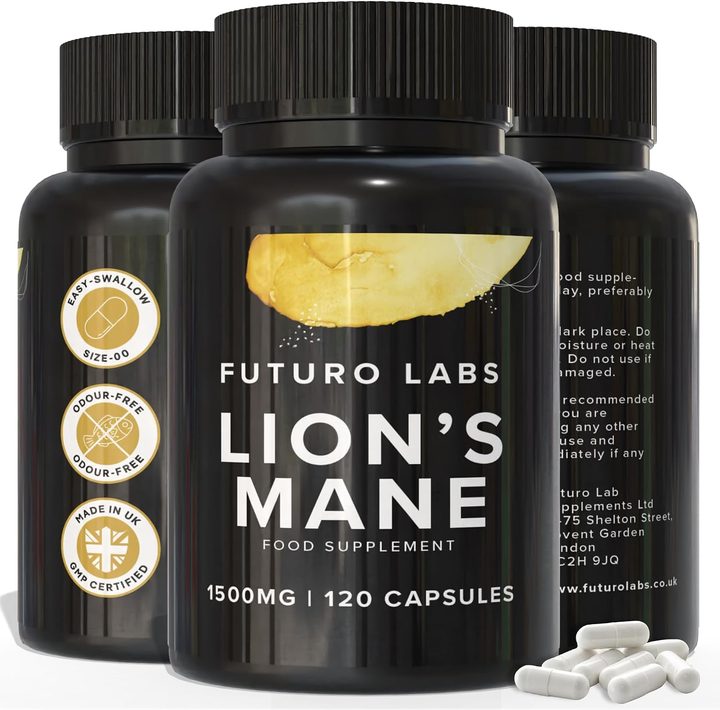
Our brand: the worked example on this page
Futuro Labs Lion's Mane
- 13p a day
- 120 capsules, 1 capsule daily
- Lab tested
- Made in the UK
The claim-free half, priced honestly: Futuro Labs Lion's Mane on Amazon UK, 5:1 fruiting body extract at 13p a day, caffeine free, no focus claim. Full label breakdown. Caffeine's ranking is on the focus page; the coffee pairing on the coffee page.
Why the matchup is a category error, and the two contestants described at their true sizes
This versus reads like a rivalry and is really a category error, because the two things do not compete on any axis a buyer cares about, and saying so is the honest answer. Caffeine is a stimulant with a real, immediate, well-evidenced acute effect: it improves alertness, attention and reaction time within roughly thirty to sixty minutes of an ordinary dose, the effect measurable in laboratory tasks and obvious in daily life, its mechanism understood, its dose controllable, its cost a kettle, the one substance the focus page ranks first among over-the-counter options precisely because it works today. Lion's mane is a claim-free mushroom with no acute effect at all: it holds no authorised UK claim, produces no measurable within-the-hour change in anything, contains no stimulant, and offers, at most, a thin and slow research bet, two small human studies on cognition and stress described as studies, a possible something over sixteen weeks that the likeliest outcome is not noticing, priced at 13p as a flat-expectations experiment. Set side by side at their true sizes, they are a sprinter and a lottery ticket, one delivering a known effect now and the other selling a small chance of an unmeasurable effect later, which is why for the question actually being asked, what should I take for focus, the answer is not a photo finish but a walkover, caffeine, and it is not close.
The honest caveats on both sides, the coexistence that dissolves the rivalry, and the verdict called plainly
Give both sides their honest caveats so the walkover is fair. Caffeine's are real and this site states them wherever it praises the stimulant: tolerance builds, the effect shrinking as habit grows; timing matters, late doses costing the sleep that outranks every focus aid; and the crash and jitter at high doses are the tax on overuse, so caffeine is best used deliberately, early and modestly, a tool rather than a drip. Lion's mane's caveat is simpler and starker: there is no acute effect to caveat, the honest warning being only against expecting one, the mushroom's caffeine-free nature meaning it can never do caffeine's job and was never built to. And the coexistence dissolves the rivalry entirely, because the framing was false from the start: these are not either-or, they share no mechanism and no clash, so the coffee pages' two-ingredient answer takes both, caffeine doing the acute focus work its file supports while the capsule rides its slow claim-free bet alongside, the pairing being complementary precisely because the two do unrelated things, and the only genuine either-or being budget and attention, whether a thin slow bet earns 13p a day beside the coffee already working. The verdict, called plainly: lion's mane versus caffeine is not a contest, caffeine winning any focus question outright as the one with a real acute effect, lion's mane offering something entirely different and much weaker, a flat-expectations research bet, and the sensible reader treating them as the unrelated tools they are, the coffee for today's focus and the 13p capsule for the long maybe, never asking one to be the other.
| The axis | Caffeine | Lion's mane |
|---|---|---|
| Acute effect | Real, measurable, within the hour | None: no within-the-hour change |
| Evidence | Strong for acute alertness | Two small studies; a thin slow bet |
| Claims held | Not a supplement claim, but a known effect | None: caffeine-free, no focus claim |
| For focus today | The clear winner | Does not do this job at all |
| The caveats | Tolerance, timing, crash at high doses | Only: expect no acute effect |
| Together | Does the acute work | Rides the slow bet alongside |
The verdict, not a contest at all
Lion's mane versus caffeine, which is better: not a real contest, because caffeine has a genuine acute effect on alertness today and lion's mane has none, so for any focus question caffeine wins outright while lion's mane offers something entirely different and far weaker, a claim-free, slow, thin research bet, the two sharing no mechanism and no clash and therefore pairing perfectly rather than competing. The claim-free half, priced for what it is: Futuro Labs Lion's Mane, 5:1 fruiting body extract, caffeine free, one capsule daily, UK made, lab tested, £15.49 for 120 days at 13p a day, a 13p long maybe beside whatever coffee is doing the actual work, which is the only sensible way to hold both.
What to check on the label
- See the category error: a stimulant versus a claim-free mushroom.
- Caffeine wins focus: a real acute effect, today.
- Lion's mane is a slow bet: no acute effect, expect none.
- They don't clash: complementary, not either-or.
- Hold both honestly: coffee for now, 13p for the long maybe.
Our brand
The worked example: Futuro Labs Lion's Mane
Futuro Labs Lion's Mane: 1 capsule daily of 5:1 fruiting body extract, labelled 1500mg mushroom equivalent (about 300mg extract), 120 capsules for £15.49, 120 days at 13p a day. Vegan HPMC shell, UK made under GMP and BRC, independently lab tested, caffeine free. Lion's mane holds no authorised UK health claims; this site describes its small studies as studies.
- Extract
- fruiting body, 5:1
- Per capsule
- 1500mg mushroom equivalent
- Serving
- 1 capsule a day
- Bottle
- 120 capsules, 120 days
- Price
- £15.49 (13p a day)
- Capsule
- HPMC vegan shell, size 00
Questions people also ask
Is lion's mane better than caffeine for focus?
No: caffeine has a real, measurable acute effect on alertness within the hour, while lion's mane has no acute effect and no focus claim, so for focus today caffeine wins outright.
Can lion's mane replace my morning coffee?
Not for the alertness: it is caffeine free and produces no stimulant effect, so it cannot do coffee's job, though it can ride alongside as a separate slow research bet.
Do lion's mane and caffeine work well together?
Yes, because they do unrelated things: caffeine handles acute focus while the capsule rides its claim-free bet, the coffee pages' two-ingredient answer combining both without clash.
Which has better evidence, lion's mane or caffeine?
Caffeine, by a distance, for acute alertness: its effect is well established and measurable, while lion's mane rests on two small studies described as a thin, slow research bet.
Is caffeine safe to rely on daily?
Used deliberately, yes: keep it early to protect sleep, modest to limit tolerance, and mind the crash at high doses, treating it as a tool rather than a constant drip.
Sources
- EFSA Panel on Dietetic Products, Nutrition and Allergies. Scientific Opinion on the substantiation of health claims related to creatine and increase in physical performance during short-term, high intensity, repeated exercise bouts. EFSA Journal 2011;9(7):2303. https://efsa.onlinelibrary.wiley.com/doi/10.2903/j.efsa.2011.2303
- The GB nutrition and health claims register, cognitive entries: iron, zinc and iodine hold normal cognitive function; B vitamins hold normal psychological function; pantothenic acid holds normal mental performance; DHA holds maintenance of normal brain function at 250mg. https://www.gov.uk/government/publications/great-britain-nutrition-and-health-claims-nhc-register
- Mori K, Inatomi S, Ouchi K, Azumi Y, Tuchida T. Improving effects of the mushroom Yamabushitake (Hericium erinaceus) on mild cognitive impairment: a double-blind placebo-controlled clinical trial. Phytotherapy Research 2009;23(3):367-372. PubMed record
- Docherty S, Doughty FL, Smith EF. The acute and chronic effects of lion's mane mushroom supplementation on cognitive function, stress and mood in young adults: a double-blind, parallel groups, pilot study. Nutrients 2023;15(22):4842. PubMed record