Ghost Fitness/Lion's mane/Lion's mane vs caffeine for focus: which is better?
Lion's mane vs caffeine for focus: which is better?
The short answer
Compare like for like: both have acute attention-task data, caffeine from decades of trials on reaction time and vigilance, lion's mane from one pilot's single faster task in forty-one people. For focus the volume gap is the verdict.
- Caffeine's attention filedecades of trials and meta-analyses: reaction time, vigilance, attention
- Lion's mane's attention fileone pilot, forty-one people, one task faster acutely
- The like-for-like pointboth files contain acute task data: the comparison is fair
- The gaporders of magnitude in trials, participants and replication
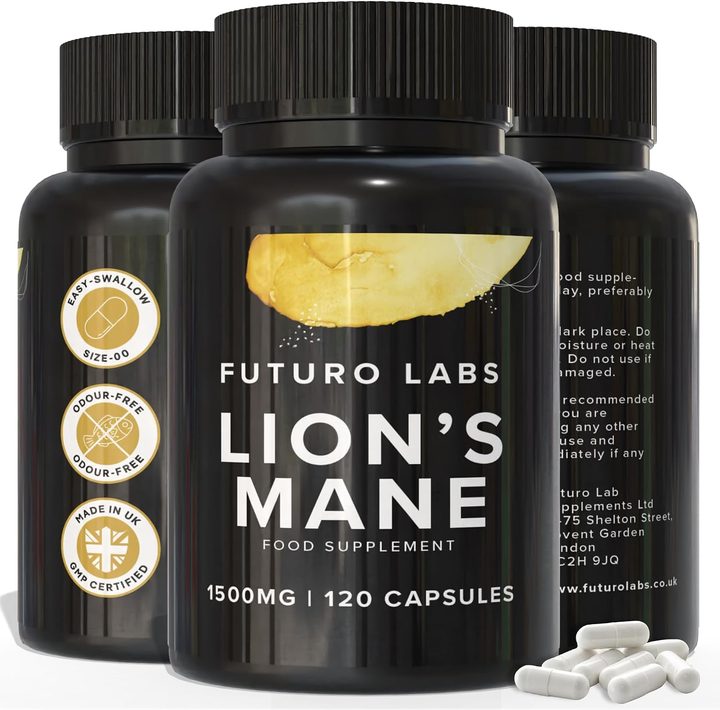
Our brand: the worked example on this page
Futuro Labs Lion's Mane
- 13p a day
- 120 capsules, 1 capsule daily
- Lab tested
- Made in the UK
The one-datapoint side, priced honestly: Futuro Labs Lion's Mane on Amazon UK, caffeine-free 5:1 fruiting body extract at 13p a day, no focus claim. Full label breakdown. The general caffeine contest is on the caffeine-versus page; the coffee reframe on the coffee page.
Why this page compares like for like, and what each side's attention-task file actually contains
The general caffeine-versus page called the matchup a category error, a stimulant against a claim-free mushroom, and that stands, but the focus-specific version deserves a fairer treatment, because lion's mane does hold one piece of acute attention data, which makes a like-for-like comparison possible for once, and the like-for-like comparison is more damning than the category error. Caffeine's attention-task file is one of the largest in nutrition science: decades of controlled trials measuring reaction time, vigilance, sustained attention and error rates after ordinary doses, meta-analyses pooling them, dose-response curves established, the effect arriving within thirty to sixty minutes and lasting hours, replicated across populations, tasks and laboratories, the file being why caffeine is the one over-the-counter substance this site says works for focus today without hedging. Lion's mane's attention-task file is one entry, and it is a real one: the Docherty 2023 pilot, forty-one healthy young adults, a single dose of lion's mane producing faster performance on one cognitive task, the Stroop-type attention measure, roughly an hour later, alongside the 28-day stress finding, a genuine acute attention datapoint, published, and this section's honest reason for not calling the mushroom's focus file empty. So the comparison the query wants can be run on the same kind of evidence, acute task performance after a dose, and run that way it reads as one small pilot's one task against a literature of hundreds of trials, a volume gap of orders of magnitude in trials, participants, tasks and replications, which is the verdict.
What the one datapoint does and does not license, the coexistence restated, and the focus verdict called on volume
What the single datapoint licenses is precise: it licenses this section to say that one small pilot found one acute task effect, described as the study it is, and it licenses a curious reader to run their own n-of-one with flat expectations at 13p, and it licenses nothing else, no claim, no replication having yet confirmed it, no dose-response established, no second task or second cohort, the pilot's own authors framing it as preliminary, so the datapoint is the beginning of a file rather than a file, and a marketing page treating it as proof has inflated one task in forty-one people into a focus supplement, the extrapolation this section refuses. The coexistence restates itself because the like-for-like comparison changes nothing about it: caffeine and lion's mane share no mechanism and no clash, the caffeine-free capsule rides beside the coffee doing the acute work, and the sensible reader holds both as unrelated tools, the kettle for today's attention and the 13p capsule for a long maybe that now includes one preliminary acute finding. The focus verdict, called on volume rather than category: caffeine, by a margin that is not a contest, its attention file replicated across decades and the mushroom's consisting of one pilot's one task, with lion's mane's honest position upgraded from empty to preliminary and its purchase unchanged, a flat-expectations bet the worked example prices at 13p, caffeine free, claim-free, and sitting beside the coffee that actually answers the question.
| The axis | Caffeine | Lion's mane |
|---|---|---|
| Acute task data | Yes: reaction time, vigilance, attention | Yes: one task, one pilot |
| Trials | Hundreds over decades; meta-analysed | One, forty-one people, 2023 |
| Replication | Across populations, tasks, labs | None yet |
| Dose-response | Established | Not established |
| What it licenses | Saying it works for focus today | Saying one pilot found one acute effect |
| The verdict | Wins on volume, not category | Preliminary, not empty; a 13p bet |
The verdict, called on the same kind of evidence
Lion's mane versus caffeine for focus: compared like for like on acute attention-task data, which both possess, caffeine wins by the volume gap, decades of replicated trials on reaction time and vigilance against one 2023 pilot's single faster task in forty-one people, the mushroom's focus file upgraded from empty to preliminary by that datapoint and licensed by it to claim nothing, the two coexisting as unrelated tools with the coffee doing today's work. The preliminary side, priced: Futuro Labs Lion's Mane, caffeine-free 5:1 fruiting body extract, one capsule daily, UK made, lab tested, £15.49 for 120 days at 13p a day, a flat-expectations bet that now includes one small acute finding, beside the kettle that answers the question outright.
What to check on the label
- Compare like for like: both hold acute task data.
- Count the volume: decades of trials against one pilot's one task.
- License the datapoint precisely: preliminary, not proof.
- Keep the coexistence: the kettle for today, the capsule beside it.
- Call the verdict on volume: caffeine, not close.
Our brand
The worked example: Futuro Labs Lion's Mane
Futuro Labs Lion's Mane: 1 capsule daily of 5:1 fruiting body extract, labelled 1500mg mushroom equivalent (about 300mg extract), 120 capsules for £15.49, 120 days at 13p a day. Vegan HPMC shell, UK made under GMP and BRC, independently lab tested, caffeine free. Lion's mane holds no authorised UK health claims; this site describes its small studies as studies.
- Extract
- fruiting body, 5:1
- Per capsule
- 1500mg mushroom equivalent
- Serving
- 1 capsule a day
- Bottle
- 120 capsules, 120 days
- Price
- £15.49 (13p a day)
- Capsule
- HPMC vegan shell, size 00
Questions people also ask
Does lion's mane have any evidence for focus at all?
One preliminary datapoint: the 2023 Docherty pilot found forty-one young adults performed one attention task faster about an hour after a single dose, a real finding awaiting replication and licensing no claim.
How does caffeine's focus evidence compare?
By orders of magnitude: decades of controlled trials and meta-analyses on reaction time, vigilance and sustained attention, replicated across populations and tasks with dose-response established.
So is the mushroom's focus file empty?
Preliminary rather than empty: one pilot's one task is the beginning of a file, not a file, and treating it as proof of a focus supplement is the extrapolation this section refuses.
Should I take lion's mane instead of caffeine for focus?
No: caffeine wins on volume and the two share no mechanism, so the sensible reader keeps the coffee for today's attention and, if curious, runs the 13p capsule beside it with flat expectations.
Could lion's mane's focus evidence grow?
It could, and this section will describe any replication as it appears; until then the honest position is one small acute finding, no dose-response, no second cohort, and no claim.
Sources
- The caffeine and attention literature: meta-analyses and decades of trials report improved reaction time, vigilance and attention after ordinary caffeine doses. PubMed record
- Docherty S, Doughty FL, Smith EF. The acute and chronic effects of lion's mane mushroom supplementation on cognitive function, stress and mood in young adults: a double-blind, parallel groups, pilot study. Nutrients 2023;15(22):4842. PubMed record
- The caffeine biosynthesis literature: caffeine is a purine alkaloid synthesised by a limited set of plants including coffee, tea, cacao, guarana and yerba mate, and is not produced by fungi. PubMed record
- Retained Regulation (EC) No 1924/2006 on nutrition and health claims made on foods, and the Great Britain nutrition and health claims register. https://www.gov.uk/government/publications/great-britain-nutrition-and-health-claims-nhc-register