Ghost Fitness/Lion's mane/What does a 10:1 lion's mane extract mean?
What does a 10:1 lion's mane extract mean?
The short answer
Ten kilos of mushroom per kilo of extract, and roughly what a full hot-water extraction of dried mushroom naturally yields, which is why 10:1 is common. Read the real milligrams behind the 3000mg-equivalent banner.
- The definitionten kilos of dried mushroom concentrated to one kilo of extract
- Why tenfull hot-water extraction yields on the order of a tenth of the starting mass
- The maths300mg of 10:1 is 3000mg mushroom equivalent
- The banner trap3000mg equivalent describes the same 300mg capsule as 1500mg on a 5:1
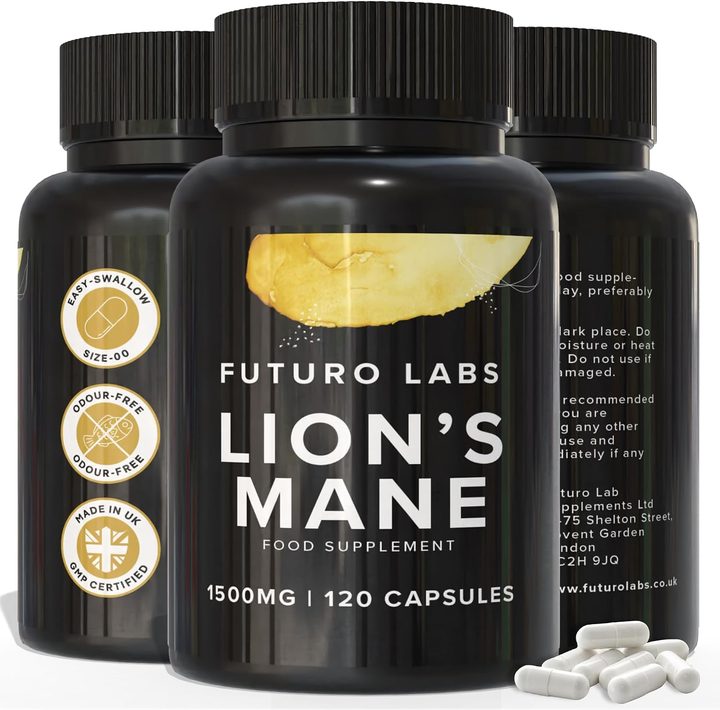
Our brand: the worked example on this page
Futuro Labs Lion's Mane
- 13p a day
- 120 capsules, 1 capsule daily
- Lab tested
- Made in the UK
A 5:1 for the comparison: Futuro Labs Lion's Mane on Amazon UK, about 300mg of extract per capsule at 1500mg equivalent, tested, 13p a day. Full label breakdown. The 8:1 audit is on the 8:1 page; the high-strength decode on the high-strength page.
The definition and the yield behind it, because ten is the natural number before it is a marketing one
A 10:1 lion's mane extract means ten kilos of dried mushroom were concentrated into one kilo of finished extract, the ratio reporting how much raw material the processing reduced, and the reason 10:1 is the market's commonest upper figure is not marketing first but chemistry: a full hot-water extraction of dried mushroom, simmered for hours, filtered and dried, typically yields on the order of a tenth of the starting mass as extract, the water-soluble fraction of a fungal fruiting body being roughly that proportion, so a 10:1 is approximately what the process naturally produces when nothing is added back, the origin of the 8:1-to-12:1 band that honest extracts cluster in, and a 5:1, by the same logic, is usually that natural extract standardised down with a carrier to a stated round ratio, the two products often being the same extraction at different dilutions rather than different qualities, which reframes the 10:1-versus-5:1 question as one about carrier and per-serving weight rather than about strength. The maths runs cleanly: dose times ratio gives mushroom equivalent, so 300mg of a 10:1 is 3000mg mushroom equivalent and 300mg of a 5:1 is 1500mg, and a 10:1 is therefore twice as concentrated per gram of extract, delivering the same equivalent from half the extract mass, honest arithmetic whenever both the ratio and the real extract milligrams are printed.
The banner the ratio lets a label print, the trap inside it, and the 10:1 read properly
The banner a 10:1 lets a label print is the trap the high-strength page named: 3000mg lion's mane in bold, an equivalent figure that reads as a large dose while describing a capsule holding perhaps 300mg of actual extract, and because equivalent figures inflate with the ratio while the capsule stays the same size, a 3000mg-equivalent 10:1 and a 1500mg-equivalent 5:1 can be identical 300mg capsules of the same extraction, one printed with a bigger number, so the reading rule is fixed, find the real extract milligrams per serving behind any equivalent banner and compare products on that and on pence per equivalent milligram, never on the banner alone. Read properly, a 10:1 is checked the way every ratio is checked: the tissue stated as fruiting body so the ten kilos were mushroom rather than grain, the real extract milligrams per serving printed so the concentration has a quantity, glucan figures published so the yield was fungal rather than starch, testing shown, and pence divided per equivalent milligram against the benchmark, at which point a 10:1 at 300mg of extract is a fine product delivering 3000mg equivalent, and a 5:1 at 600mg of extract is the same delivery in a larger capsule, the two competing on price and paperwork rather than on the number. The worked example is offered as the comparison rather than the subject: a 5:1 at about 300mg of extract, 1500mg equivalent per capsule, tested and stated at 13p, against which a 10:1 must show its real milligrams to claim to deliver more, because the ratio alone, as this page has now explained twice, inflates the banner and nothing else.
| The item | The finding | The action |
|---|---|---|
| The definition | Ten kilos of dried mushroom per kilo of extract | A concentration statement, nothing more |
| Why ten | Full hot-water extraction yields roughly a tenth | The natural number; 5:1 is usually diluted from it |
| The maths | 300mg of 10:1 is 3000mg equivalent | Honest when both numbers are printed |
| The banner trap | Equivalent inflates with ratio; the capsule doesn't | Read the real extract milligrams behind it |
| The right comparison | Pence per equivalent milligram | A 300mg 10:1 equals a 600mg 5:1 |
| The checks | Tissue, milligrams, glucans, testing, pence | The same four tests as any ratio |
The verdict, ten as a yield and not a boast
What a 10:1 lion's mane extract means: ten kilos of dried mushroom concentrated to one of extract, roughly the natural yield of a full hot-water extraction and therefore the market's common upper figure, with 5:1 products usually the same extraction diluted with a carrier, the maths giving 3000mg mushroom equivalent from 300mg of 10:1, and the trap being the banner that figure prints, since equivalent inflates with ratio while the capsule stays identical, the real extract milligrams and pence per equivalent milligram being the honest reading. The comparison, worked: Futuro Labs Lion's Mane, 5:1, about 300mg of extract at 1500mg equivalent per capsule, UK made, lab tested, £15.49 for 120 days at 13p a day, the benchmark a 10:1 must beat by showing its real milligrams, not by printing a bigger number.
What to check on the label
- Define it as concentration: ten kilos per kilo, nothing more.
- Know why ten: the natural hot-water yield.
- Run the maths: dose times ratio, both printed.
- Catch the banner: equivalent inflates; the capsule doesn't.
- Compare per equivalent milligram: the ratio-proof column.
Our brand
The worked example: Futuro Labs Lion's Mane
Futuro Labs Lion's Mane: 1 capsule daily of 5:1 fruiting body extract, labelled 1500mg mushroom equivalent (about 300mg extract), 120 capsules for £15.49, 120 days at 13p a day. Vegan HPMC shell, UK made under GMP and BRC, independently lab tested, caffeine free. Lion's mane holds no authorised UK health claims; this site describes its small studies as studies.
- Extract
- fruiting body, 5:1
- Per capsule
- 1500mg mushroom equivalent
- Serving
- 1 capsule a day
- Bottle
- 120 capsules, 120 days
- Price
- £15.49 (13p a day)
- Capsule
- HPMC vegan shell, size 00
Questions people also ask
What does 10:1 mean on a lion's mane label?
Ten kilos of dried mushroom concentrated into one kilo of extract, a concentration statement, with 300mg of a 10:1 representing 3000mg of mushroom equivalent when both numbers are printed.
Why are so many lion's mane extracts 10:1?
Yield: a full hot-water extraction of dried mushroom naturally leaves on the order of a tenth of the starting mass as extract, so 10:1 is roughly what the process produces, and 5:1 products are usually that extract diluted with a carrier.
Is a 10:1 stronger than a 5:1?
Twice as concentrated per gram of extract, but not necessarily more delivered: a 300mg 10:1 and a 600mg 5:1 both give 3000mg equivalent, so compare on pence per equivalent milligram, not on the ratio.
What is the trap with 10:1 labels?
The equivalent banner: 3000mg lion's mane in bold can describe a 300mg capsule identical to a 5:1's 1500mg one, so read the real extract milligrams per serving behind any equivalent figure.
What else should a 10:1 label state?
The same as any ratio: fruiting body as the tissue, real per-serving extract milligrams, published glucans confirming a fungal yield, testing shown, and pence that divide honestly.
Sources
- The mushroom processing literature: hot-water extraction of dried fruiting bodies typically yields on the order of a tenth of the starting mass as dried extract, the basis of the common 8:1 to 12:1 ratio band. PubMed record
- The mushroom polysaccharide analysis literature: beta-glucan content marks fungal material while high alpha-glucan readings indicate grain starch, the analytical distinction between fruiting body extracts and mycelium-on-grain powders. PubMed record
- The medicinal mushroom labelling discussion: fruiting body versus mycelium-on-grain, extract ratios and beta-glucan content as the label facts that separate concentrated extracts from diluted powders. PubMed record
- EFSA Panel on Dietetic Products, Nutrition and Allergies. Scientific Opinion on the substantiation of health claims related to magnesium. EFSA Journal 2010;8(10):1807. https://efsa.onlinelibrary.wiley.com/doi/10.2903/j.efsa.2010.1807