Ghost Fitness/Lion's mane/What should you look for in lion's mane 8:1?
What should you look for in lion's mane 8:1?
The short answer
8:1 means eight kilos of mushroom per kilo of extract, a fine concentration if two other numbers stand beside it, the tissue and the real per-serving weight. A stated 5:1 with those beats a bare 8:1 without them.
- What 8:1 meanseight kilos of mushroom concentrated per kilo of extract
- The two numbers beside itthe tissue, and the real per-serving extract weight
- The equivalent maths300mg of 8:1 is 2400mg mushroom equivalent
- The comparisona complete 5:1 beats a bare 8:1: parts beat the number
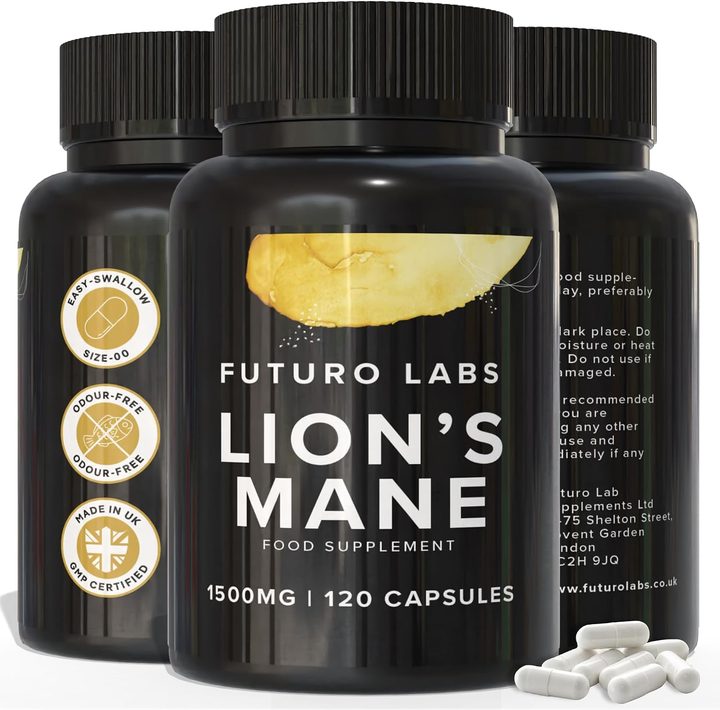
Our brand: the worked example on this page
Futuro Labs Lion's Mane
- 13p a day
- 120 capsules, 1 capsule daily
- Lab tested
- Made in the UK
A complete ratio for comparison: Futuro Labs Lion's Mane on Amazon UK, stated 5:1 fruiting body extract, 1500mg equivalent from about 300mg of extract, £15.49 for 120 days at 13p. Full label breakdown. The ratio band is on the ratio page; the three-part reading on the ratio inspection page.
What the specific number 8:1 promises, and the two numbers that must stand beside it to mean anything
A shopper searching 8:1 specifically has fixed on a number, so audit that number honestly, starting with what it promises. 8:1 means eight kilos of raw mushroom were concentrated into one kilo of extract, a concentration comfortably inside the honest 5:1-to-10:1 band, so as a starting figure it is entirely respectable, neither the thin end nor the arms-race end of the range, and its equivalent maths runs cleanly, roughly 300mg of an 8:1 extract representing about 2400mg of mushroom equivalent, a figure a label might print prominently. But a ratio is a three-part statement, the inspection page's lesson, and 8:1 alone is one part of three, so the two numbers that must stand beside it decide whether the 8:1 means anything. Number one, the tissue: 8:1 of what, fruiting body being the answer that makes it eight kilos of the studied mushroom concentrated and mycelium-on-grain being the answer that makes it eight kilos of web-and-substrate, no tissue stated meaning the impressive ratio floats free of what it condensed, so an 8:1 fruiting body extract is a real claim and a bare 8:1 extract is a number without a subject. Number two, the per-serving weight: 8:1 times how much, real extract milligrams per serving being the quantity the concentration acts on, an 8:1 in a capsule holding a token delivering a concentrated token, so the per-serving extract weight behind any equivalent figure is what turns the 8:1 into a dose, without which the number is concentration with the quantity hidden.
Whether 8:1 beats other ratios, the specific-number traps, and the audit resolved
Whether 8:1 is better than the alternatives is the comparison the searcher really wants, and the answer is the ratio page's principle applied to this specific number: a higher ratio is not automatically better, because concentration concentrates whatever is there including mediocre starting material, and because the number that matters for a buyer is compounds delivered, corroborated by glucans, not kilos reduced, so a well-made 8:1 from good fruiting body is excellent and a carelessly pushed 8:1 from poor stock is not, the ratio reporting process rather than quality. Against a 5:1, an 8:1 is more concentrated per gram and the honest comparison is pence per milligram of mushroom equivalent, normalising the two automatically, a 300mg 8:1 capsule at 2400mg equivalent and a 480mg 5:1 capsule at 2400mg equivalent delivering the same and competing on price and paperwork, so 8:1 wins nothing by its number alone, and, the point the searcher most needs, a complete 5:1, tissue stated, weight stated, glucans published, beats a bare 8:1 with none of those, the three parts beating the bigger number every time. The specific-number traps close the audit: the bare-8:1 trap, the number impressive and the tissue and weight absent, incompleteness dressed as concentration; the equivalent-only trap, a 2400mg equivalent printed with the 8:1 that explains it missing, unverifiable arithmetic; and the mycelium-8:1 trap, a high ratio on undisclosed grain, an impressive concentration of substrate, the starch tell's territory. The audit resolves into the same instruction the whole ratio family shares, aimed at this number: 8:1 is a respectable concentration and never a complete claim, so look for the tissue and the per-serving weight beside it, corroborate with glucans, compare per equivalent milligram, and prefer a complete 5:1 to a bare 8:1, because in this aisle the honest products always answered a ratio question with a sentence, and 8:1 is only the first word of it.
| The item | The finding | The action |
|---|---|---|
| 8:1 itself | Eight kilos per kilo: inside the honest band | Respectable as a starting figure |
| The tissue beside it | Fruiting body, or a number without a subject | Demand the tissue with the ratio |
| The weight beside it | Real per-serving milligrams | Read it behind the equivalent figure |
| 8:1 versus 5:1 | More concentrated, not automatically better | Compare per equivalent milligram |
| A complete 5:1 | Beats a bare 8:1 | Three parts beat the bigger number |
| The traps | Bare, equivalent-only, mycelium-8:1 | Incompleteness dressed as concentration |
The verdict, a number completed into a claim
What to look for in lion's mane 8:1: the two numbers that must stand beside the ratio, the tissue it concentrates and the real per-serving extract weight, because 8:1 is a respectable concentration inside the honest band and never a complete claim on its own, more concentrated than a 5:1 but not automatically better, compared honestly per milligram of mushroom equivalent, and beaten by a complete 5:1, tissue and weight and glucans stated, every time the bigger number arrives bare. The complete comparison, worked: Futuro Labs Lion's Mane, stated 5:1 fruiting body extract, about 300mg of real extract behind its 1500mg equivalent, testing shown, £15.49 for 120 days at 13p a day, a full three-part ratio that a bare 8:1 does not beat, since in this aisle the number was only ever the first word of the sentence.
What to check on the label
- Place 8:1 honestly: a respectable concentration in the band.
- Demand the tissue: 8:1 of what, or a number without a subject.
- Find the real weight: 8:1 times a token is a token.
- Compare per equivalent milligram: 8:1 wins nothing by its number.
- Prefer a complete 5:1: three parts beat a bare bigger number.
Our brand
The worked example: Futuro Labs Lion's Mane
Futuro Labs Lion's Mane: 1 capsule daily of 5:1 fruiting body extract, labelled 1500mg mushroom equivalent (about 300mg extract), 120 capsules for £15.49, 120 days at 13p a day. Vegan HPMC shell, UK made under GMP and BRC, independently lab tested, caffeine free. Lion's mane holds no authorised UK health claims; this site describes its small studies as studies.
- Extract
- fruiting body, 5:1
- Per capsule
- 1500mg mushroom equivalent
- Serving
- 1 capsule a day
- Bottle
- 120 capsules, 120 days
- Price
- £15.49 (13p a day)
- Capsule
- HPMC vegan shell, size 00
Questions people also ask
What does 8:1 mean on a lion's mane label?
Eight kilos of raw mushroom concentrated into one kilo of extract, a respectable concentration inside the honest 5:1-to-10:1 band, with roughly 300mg of 8:1 representing about 2400mg mushroom equivalent.
Is 8:1 better than 5:1?
More concentrated per gram, not automatically better: compare pence per milligram of mushroom equivalent, and a complete 5:1 with tissue, weight and glucans stated beats a bare 8:1 without them.
What else must an 8:1 label state?
Two numbers beside the ratio: the tissue, fruiting body making it the studied mushroom concentrated, and the real per-serving extract weight, without which the 8:1 is concentration with the quantity hidden.
Can an 8:1 be mostly grain?
Yes, if it is undisclosed mycelium: a high ratio on grain-grown substrate concentrates the grain too, which the starch tell, high alpha-glucans against low beta-glucans, exposes.
So is a higher ratio always the safer buy?
No: concentration concentrates whatever is there, including mediocre stock, so a well-disclosed complete ratio at any band figure beats a bare bigger number, the three parts mattering more than the number.
Sources
- The mushroom polysaccharide analysis literature: beta-glucan content marks fungal material while high alpha-glucan readings indicate grain starch, the analytical distinction between fruiting body extracts and mycelium-on-grain powders. PubMed record
- The medicinal mushroom labelling discussion: fruiting body versus mycelium-on-grain, extract ratios and beta-glucan content as the label facts that separate concentrated extracts from diluted powders. PubMed record
- Mori K, Inatomi S, Ouchi K, Azumi Y, Tuchida T. Improving effects of the mushroom Yamabushitake (Hericium erinaceus) on mild cognitive impairment: a double-blind placebo-controlled clinical trial. Phytotherapy Research 2009;23(3):367-372. PubMed record
- EFSA Panel on Dietetic Products, Nutrition and Allergies. Scientific Opinion on the substantiation of health claims related to magnesium. EFSA Journal 2010;8(10):1807. https://efsa.onlinelibrary.wiley.com/doi/10.2903/j.efsa.2010.1807