Ghost Fitness/Lion's mane/What should you look for in lion's mane ratio?
What should you look for in lion's mane ratio?
The short answer
Interview the ratio with five questions: what ratio, of what tissue, in how many real milligrams, proven how, and priced at what per equivalent milligram. A label answering all five is buyable; one answering only the first is a number.
- Question onewhat ratio: a figure in the honest 5:1 to 10:1 band
- Questions two and threeof what tissue, in how many real milligrams per serving
- Question fourproven how: glucans published, testing shown
- Question fivepriced at what per milligram of mushroom equivalent
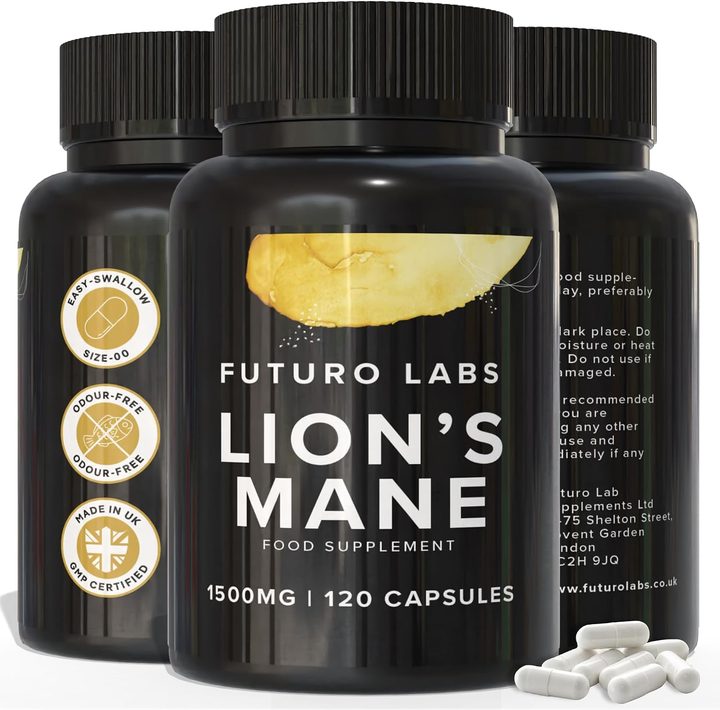
Our brand: the worked example on this page
Futuro Labs Lion's Mane
- 13p a day
- 120 capsules, 1 capsule daily
- Lab tested
- Made in the UK
A ratio that answers all five: Futuro Labs Lion's Mane on Amazon UK, 5:1, fruiting body, about 300mg of extract at 1500mg equivalent, tested, 13p a day. Full label breakdown. The band is on the ratio page; the three-part reading on the ratio inspection page.
The interview method, and the first three questions a ratio must answer to be a claim at all
The section has decoded ratios and read them as three-part statements; this page runs them as an interview, five questions asked of any ratio on any shelf, because a ratio is a witness and a good witness answers everything you ask. Question one, what ratio: the figure itself, and its honest range is the 5:1-to-10:1 band the ratio page defends, roughly what full hot-water extraction of dried mushroom yields, with figures far above it reading as the arms race rather than the process, so the first answer is a number and a check that the number sits where honest numbers sit. Question two, of what tissue: five-to-one of what, and the only answer that makes the ratio describe the studied mushroom is fruiting body stated on the panel, mycelium-on-grain making it a ratio of web and substrate, and no answer making it a number without a subject, the tissue pair the inspection page teaches. Question three, in how many real milligrams: the ratio times what, and the answer is the actual extract weight per serving, roughly 300mg on the worked example read behind its 1500mg equivalent, because concentration without quantity is half a claim and a 10:1 in a token capsule is a concentrated token, the denominator discipline the label pages drill. A ratio answering those three has become a claim, a stated concentration of a stated tissue at a stated dose, and the two remaining questions decide whether the claim is trustworthy and whether it is worth paying for.
The two questions that grade a complete ratio, the labels sorted by how many they can answer, and the interview closed
Question four, proven how: a stated ratio is checkable and a corroborated one is trustworthy, so the answer is glucan figures published, high beta-glucans against low alpha-glucans confirming the concentration is fungal rather than starch, and independent testing shown, metals and microbiology per batch for a bioaccumulator, the paperwork that turns the panel's statements into evidence, with a ratio that cannot answer this question remaining a statement awaiting proof, acceptable at the honest band's price and suspicious at a premium. Question five, priced at what: pence per milligram of mushroom equivalent, price divided by the daily equivalent dose, the metric that normalises every ratio automatically and makes a 300mg 10:1 and a 600mg 5:1 compete honestly at the same 3000mg equivalent, the 13p benchmark standing behind it, and a ratio priced above what its answers to questions one to four justify being brand tax by the quality page's definition. Sort the shelf by how many questions each label can answer and the buying rule writes itself: five answers, buyable, the complete and corroborated ratio; four answers, the ratio with glucans unpublished, buyable at band price with the certificate request sent; three answers, a complete but unproven claim, the minimum a buyer should accept and only at honest pence; two or one, not a claim but a number, the bare 8:1 or the lone equivalent figure the inspection page catalogues, walked past. The interview closes on the worked example answering in order: 5:1; fruiting body; about 300mg of extract per capsule behind 1500mg equivalent; independently tested and UK manufactured under GMP and BRC with the glucan figure unpublished and honestly unclaimed; 13p a day, four full answers and a fifth stated as far as it goes, which is why it sits on this section's benchmark line and why any brand answering all five for less would take its place.
| The question | The good answer | The failing answer |
|---|---|---|
| What ratio? | A figure in the 5:1-10:1 band | An arms-race number, or none |
| Of what tissue? | Fruiting body, stated | Unstated: a number without a subject |
| In how many real milligrams? | The per-serving extract weight, behind any equivalent | A token hidden behind a big equivalent |
| Proven how? | Glucans published; testing shown | A flash with no certificate |
| Priced at what? | Pence per equivalent milligram, near 13p | A premium the answers do not justify |
| The buying rule | Five answers buyable; three the minimum | Two or fewer: a number, walked past |
The verdict, cross-examined and priced
What to look for in a lion's mane ratio: a witness that answers five questions, what ratio in the honest band, of what tissue stated as fruiting body, in how many real milligrams per serving, proven how by glucans and testing, and priced at what per milligram of mushroom equivalent, with labels sorted by how many they can answer, five buyable, three the minimum, one or two a number rather than a claim. The witness on the benchmark line: Futuro Labs Lion's Mane, 5:1, fruiting body, about 300mg of extract behind 1500mg equivalent, independently tested, UK made, £15.49 for 120 days at 13p a day, answering the interview in full and holding its seat only until a brand answers it cheaper.
What to check on the label
- Interview, don't admire: five questions, in order.
- Get the tissue and the milligrams: questions two and three make it a claim.
- Demand proof: glucans and testing turn statements into evidence.
- Price per equivalent milligram: the ratio-proof metric.
- Walk past one-answer labels: a number is not a claim.
Our brand
The worked example: Futuro Labs Lion's Mane
Futuro Labs Lion's Mane: 1 capsule daily of 5:1 fruiting body extract, labelled 1500mg mushroom equivalent (about 300mg extract), 120 capsules for £15.49, 120 days at 13p a day. Vegan HPMC shell, UK made under GMP and BRC, independently lab tested, caffeine free. Lion's mane holds no authorised UK health claims; this site describes its small studies as studies.
- Extract
- fruiting body, 5:1
- Per capsule
- 1500mg mushroom equivalent
- Serving
- 1 capsule a day
- Bottle
- 120 capsules, 120 days
- Price
- £15.49 (13p a day)
- Capsule
- HPMC vegan shell, size 00
Questions people also ask
What is a good lion's mane ratio?
One that answers five questions: a figure in the 5:1-to-10:1 band, of stated fruiting body, in stated real milligrams per serving, proven by published glucans and shown testing, and priced honestly per milligram of mushroom equivalent.
Is the ratio number itself the most important thing?
No: it is question one of five, and a ratio without its tissue and real milligrams is a number rather than a claim, while one without glucans or testing is a claim awaiting proof.
How do I compare two products with different ratios?
Question five: pence per milligram of mushroom equivalent, dose times ratio for each, price divided by the daily equivalent, which normalises every ratio into one honest column.
What is the minimum a label should state before I buy?
Three answers: the ratio, the tissue and the real per-serving milligrams, a complete but unproven claim acceptable only at honest band pricing with the certificate request sent.
Does the worked example answer all five?
Four in full and the fifth as far as it goes: 5:1, fruiting body, about 300mg of extract per capsule, independent testing and UK GMP-and-BRC manufacture stated, glucans unpublished and unclaimed, 13p a day.
Sources
- The mushroom processing literature: hot-water extraction of dried fruiting bodies typically yields on the order of a tenth of the starting mass as dried extract, the basis of the common 8:1 to 12:1 ratio band. PubMed record
- The mushroom polysaccharide analysis literature: beta-glucan content marks fungal material while high alpha-glucan readings indicate grain starch, the analytical distinction between fruiting body extracts and mycelium-on-grain powders. PubMed record
- The medicinal mushroom labelling discussion: fruiting body versus mycelium-on-grain, extract ratios and beta-glucan content as the label facts that separate concentrated extracts from diluted powders. PubMed record
- EFSA Panel on Dietetic Products, Nutrition and Allergies. Scientific Opinion on the substantiation of health claims related to magnesium. EFSA Journal 2010;8(10):1807. https://efsa.onlinelibrary.wiley.com/doi/10.2903/j.efsa.2010.1807