Ghost Fitness/Lion's mane/What should you look for in lion's mane fruiting body and mycelium supplement?
What should you look for in lion's mane fruiting body and mycelium supplement?
The short answer
A both-tissues product must clear two inspections: each tissue's percentage and extraction stated, the mycelium's grain status declared. The erinacine rationale is real but bench-only, and full spectrum is often grain smuggled in under a spectrum word.
- The honest rationalehericenones from fruiting body plus erinacines from mycelium: real chemistry, bench-only
- The doubled inspectioneach tissue's percentage, extraction and ratio stated separately
- The grain riskmycelium-on-grain hidden inside a whole-mushroom blend
- The divisiontwo tissues in one fill: less of each
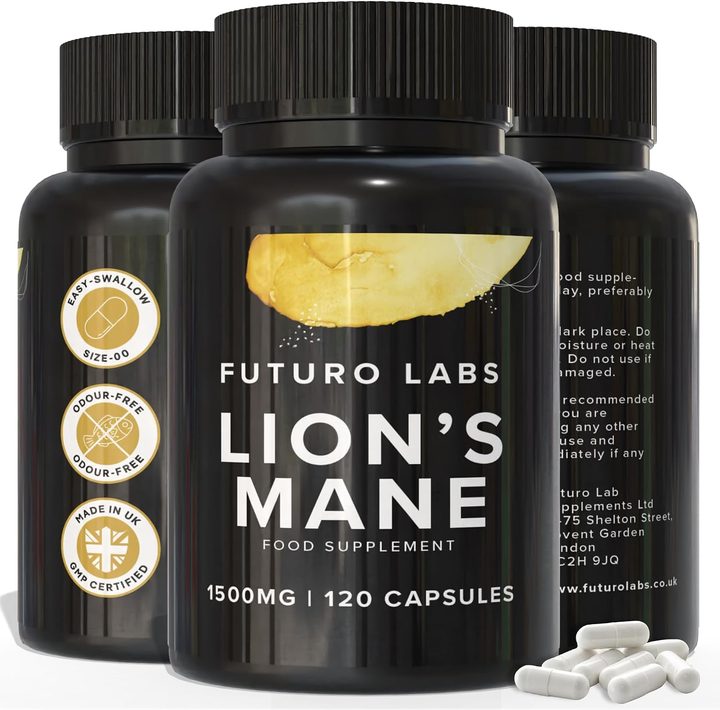
Our brand: the worked example on this page
Futuro Labs Lion's Mane
- 13p a day
- 120 capsules, 1 capsule daily
- Lab tested
- Made in the UK
The single-tissue alternative, fully stated: Futuro Labs Lion's Mane on Amazon UK, 5:1 fruiting body extract, one tissue at full dose, £15.49 for 120 days at 13p. Full label breakdown. The mycelium extract inspection is on the mycelium extract page; the bracket on the versus-everything page.
The one honest rationale for combining tissues, granted in full, and the marketing rationale separated from it
Products combining fruiting body and mycelium, sold as full-spectrum, whole-life-cycle or whole-mushroom formulas, deserve a fairer hearing than blends usually get here, because they carry the aisle's one genuinely honest rationale for combining anything: the two tissues hold different compound families, hericenones characterised from the fruiting body and erinacines from the mycelium, both studied for nerve-growth-factor activity in bench models, so a product containing both tissues can truthfully say it contains both families, a chemistry claim with real literature behind it, which is more than any multi-species blend can say. Grant that rationale in full and then attach its frame, because the frame is the whole honest story: the compound literature is cell-culture and animal work, no human trial having tested either family for any outcome, the human studies that exist having used fruiting body alone, so a both-tissues product is a bench-curiosity construction, a way of buying the famous molecules rather than the tested tissue, legitimate for a buyer who understands exactly that and never a claim to anything. Separate the marketing rationale from it: full spectrum and whole life cycle are phrases doing a different job, implying completeness and synergy, neither of which exists on any register or in any trial, the no-synergy spine running through two tissues as it runs through everything else, so the words mean, at best, both tissues present, and the inspection decides whether even that is true.
The doubled inspection a both-tissues product must pass, the grain that hides under the spectrum word, and the verdict
A product containing two tissues owes two inspections, and the doubling is where most fail. For the fruiting-body component: its percentage of the formula stated, its extraction and ratio stated, its real milligrams per serving stated, the standard tests. For the mycelium component, the harder half: its percentage stated, its cultivation declared, grain-free or liquid-fermented being the honest answer and grain-grown with a declared grain proportion the acceptable one, its extraction and ratio stated separately from the fruiting body's, and, if erinacines are the pitch, erinacine content in milligrams, the rare disclosure the rationale would justify. Then the shared checks: glucan numbers published for the whole product, high beta-glucans against low alpha-glucans corroborating that the mycelium half is fungus rather than grain, testing shown with the bioaccumulator's metals panel, and the fixed-capsule division acknowledged, two tissues in one fill meaning less of each than a single-tissue product carries, priced accordingly. The grain that hides under the spectrum word is the specific risk this doubled inspection exists to catch: a whole-mushroom formula whose mycelium half is grain-grown and undeclared has smuggled substrate into the capsule under a word that sounds like completeness, the commonest construction on the shelf and the reason full spectrum reads, on this site, as a prompt to inspect harder rather than a reassurance, the starch tell being the referee. The verdict for the format: a both-tissues product clearing the doubled inspection, both percentages, both extractions, the mycelium's grain status, glucans and testing all stated, is a legitimate bench-curiosity purchase for the erinacine-interested buyer who signs the frame, rarely sighted and welcome when it appears; a both-tissues product failing any line is the blend problem wearing a spectrum word; and the default for the evidence-led buyer remains one tissue at full stated dose, the worked example's single fruiting-body extract at 13p, the tested tissue undivided.
| The line | The pass | The fail |
|---|---|---|
| The rationale | Both compound families present: real, bench-only | Synergy or completeness implied |
| The fruiting-body half | Percentage, extraction, ratio, milligrams stated | Folded into a blend total |
| The mycelium half | Percentage, grain status, extraction stated separately | Cultivation undeclared: grain suspected |
| The compound claim | Erinacine milligrams stated, or silence | Nerve vocabulary with no figure |
| The shared checks | Glucans published; metals testing shown | Neither, at spectrum prices |
| The division | Acknowledged and priced | Two tissues sold as more than one |
The verdict, granted its rationale and held to its inspections
What to look for in a lion's mane fruiting body and mycelium supplement: the doubled inspection, each tissue's percentage, extraction and ratio stated separately, the mycelium's cultivation declared as grain-free or grain-proportioned, erinacine content stated if it is the pitch, glucans published and metals testing shown, with the honest rationale granted in full, both compound families present, and its frame attached, bench-only chemistry with the human studies having used fruiting body alone, the spectrum word treated as a prompt to inspect harder because grain so often hides beneath it. The single-tissue default: Futuro Labs Lion's Mane, 5:1 fruiting body extract, the tested tissue at full stated dose, UK made, lab tested, £15.49 for 120 days at 13p a day, undivided, which is what most buyers were looking for before the spectrum word arrived.
What to check on the label
- Grant the rationale: both compound families, bench-only.
- Inspect both halves: percentages, extractions, ratios, separately.
- Demand the mycelium's grain status: grain-free stated, or proportion declared.
- Corroborate with glucans: the spectrum word hides grain.
- Price the division: two tissues in one fill is less of each.
Our brand
The worked example: Futuro Labs Lion's Mane
Futuro Labs Lion's Mane: 1 capsule daily of 5:1 fruiting body extract, labelled 1500mg mushroom equivalent (about 300mg extract), 120 capsules for £15.49, 120 days at 13p a day. Vegan HPMC shell, UK made under GMP and BRC, independently lab tested, caffeine free. Lion's mane holds no authorised UK health claims; this site describes its small studies as studies.
- Extract
- fruiting body, 5:1
- Per capsule
- 1500mg mushroom equivalent
- Serving
- 1 capsule a day
- Bottle
- 120 capsules, 120 days
- Price
- £15.49 (13p a day)
- Capsule
- HPMC vegan shell, size 00
Questions people also ask
Is a fruiting body and mycelium combination better than either alone?
It contains both compound families, hericenones and erinacines, a real bench-level rationale, but no human trial supports either family, the human studies used fruiting body alone, and no synergy exists to claim.
What must a full-spectrum lion's mane label state?
Each tissue's percentage, extraction and ratio stated separately, the mycelium's cultivation declared as grain-free or grain-proportioned, erinacine milligrams if claimed, glucans published and metals testing shown.
What is the main risk in whole-mushroom formulas?
Grain hidden under the spectrum word: a mycelium half grown on undeclared grain smuggles substrate into the capsule, the commonest construction, caught by the glucan starch tell.
Does combining tissues mean I get more?
Less of each: a fixed capsule split between two tissues carries a smaller dose of either than a single-tissue product, a division the label should acknowledge and the price reflect.
Who should buy a both-tissues product?
The erinacine-interested buyer who signs the bench-only frame and finds a product clearing the doubled inspection, while the evidence-led default stays one tested tissue at full stated dose.
Sources
- The hericium compound literature: erinacines are characterised from mycelium and hericenones from fruiting body, both studied for nerve growth factor activity in bench and animal models, with the human trials having used fruiting-body preparations. PubMed record
- The mushroom polysaccharide analysis literature: beta-glucan content marks fungal material while high alpha-glucan readings indicate grain starch, the analytical distinction between fruiting body extracts and mycelium-on-grain powders. PubMed record
- The medicinal mushroom labelling discussion: fruiting body versus mycelium-on-grain, extract ratios and beta-glucan content as the label facts that separate concentrated extracts from diluted powders. PubMed record
- Mori K, Inatomi S, Ouchi K, Azumi Y, Tuchida T. Improving effects of the mushroom Yamabushitake (Hericium erinaceus) on mild cognitive impairment: a double-blind placebo-controlled clinical trial. Phytotherapy Research 2009;23(3):367-372. PubMed record