Ghost Fitness/Lion's mane/What is the best lion's mane extract ratio?
What is the best lion's mane extract ratio?
The short answer
No best ratio exists: 5:1 to 10:1 is the honest band, and the number describes concentration, not quality. A stated 5:1 with its equivalent maths beats any bare bigger figure, and the arms race above 10:1 is marketing.
- What the ratio describesconcentration: kilos of mushroom per kilo of extract
- The honest band5:1 to 10:1: the market's standard, checkable range
- The equivalent mathsdose times ratio: 300mg of 5:1 is 1500mg equivalent
- The arms race30:1 and up: bigger numbers, thinner disclosure
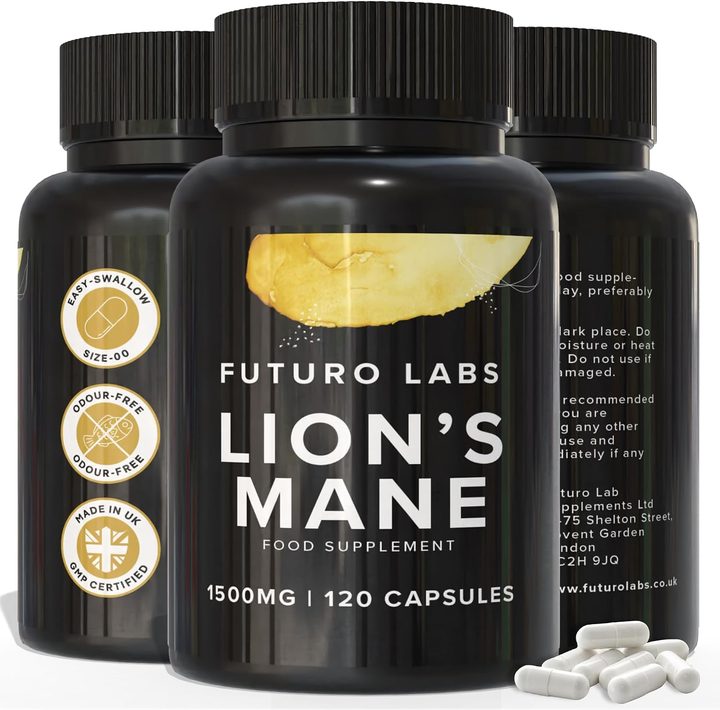
Our brand: the worked example on this page
Futuro Labs Lion's Mane
- 13p a day
- 120 capsules, 1 capsule daily
- Lab tested
- Made in the UK
A ratio stated with its maths: Futuro Labs Lion's Mane on Amazon UK, 5:1 fruiting body extract, 1500mg mushroom equivalent per capsule, £15.49 for 120 days at 13p. Full label breakdown. The glucan corroboration lives on the fruiting-body page; the four tests on the best page.
What the number actually describes, and why bigger stopped meaning better at the band's edge
Teach the number before ranking it: an extract ratio describes concentration, five kilos of mushroom reduced to one kilo of extract for a 5:1, ten for a 10:1, the figure reporting how much raw material the hot-water processing condensed and nothing else, not potency, not purity, not compound content, which is why the section's maths always travels with it, dose times ratio giving the mushroom equivalent, 300mg of a 5:1 being 1500mg equivalent, 300mg of a 10:1 being 3000mg, honest arithmetic as long as both numbers are printed and meaningless the moment either is not. Why bigger stops meaning better is the page's real teach: what a buyer wants is compounds delivered, beta-glucans and the lipophilic families, and delivery depends on the starting material and the extraction quality more than the concentration figure, a well-made 5:1 from good fruiting body outcarrying a carelessly pushed 10:1 from mediocre stock, because concentration concentrates whatever is there, including nothing much, and because aggressive processing chases a marketing number rather than a compound profile, which is why glucan figures, where published, corroborate what ratios only gesture at, the advanced curriculum's standing point, and why the practical verdict lands where the market's honest centre already sits, the 5:1-to-10:1 band being where stated ratios, stated tissue and checkable maths coexist, a band inside which the choice between 5:1 and 10:1 is a wash settled by pence-per-equivalent and the other three tests, never by the number alone.
The arms race above the band decoded, the comparisons done properly, and the ratio put back in its place
Above the band runs the arms race, and it decodes quickly: 20:1, 30:1 and the occasional 50:1 flash trade on the bigger-number instinct while disclosure thins in proportion, the towering ratios typically arriving without glucan figures, without tissue statements, sometimes without the per-dose milligrams that would let the equivalent maths run at all, and the logic of the escalation is marketing's rather than chemistry's, each seller outbidding the last on a number no certificate on the listing supports, so the buyer's rule at the top of the range is the site's oldest, stated beats implied and corroborated beats stated, a 5:1 with published glucans outranking a bare 30:1 every day of the week. The comparisons done properly close the teach, because ratio confusion is really denominator confusion in new clothes: compare tubs on pence per milligram of mushroom equivalent, price divided by daily equivalent dose, which normalises across ratios automatically, a 300mg 10:1 capsule and a 600mg 5:1 capsule delivering the same 3000mg equivalent and competing on price and paperwork alone; never compare a ratio product to a plain 1:1 powder by weight, the powder-versus page's two-powders trap; and never pay a ratio premium the equivalent maths does not justify, the bigger number buying nothing if the per-day equivalent lands the same. The ratio, put back in its place, is test two of four, necessary and never sufficient, and the best lion's mane extract ratio is therefore any honestly stated one inside the standard band, sitting on stated fruiting body, shown testing and honest pence, the worked example's 5:1 with its 1500mg-equivalent maths being the demonstration this section has used from its first page, not because five is a magic number, but because every number around it is printed.
| The item | The finding | The action |
|---|---|---|
| What ratio measures | Concentration of raw material, nothing else | Never read it as potency or purity |
| The equivalent maths | Dose times ratio, both printed | 300mg of 5:1 is 1500mg equivalent |
| The honest band | 5:1 to 10:1: stated, checkable, standard | Choose inside it by pence and paperwork |
| The arms race | 20:1 and up, disclosure thinning | Stated beats implied; corroborated beats stated |
| The right comparison | Pence per milligram of equivalent | Normalises every ratio automatically |
| The ratio's rank | Test two of four | Necessary, never sufficient |
The verdict, banded rather than crowned
The best lion's mane extract ratio: any honestly stated one in the 5:1-to-10:1 band, the number describing concentration alone, the equivalent maths making tubs comparable, glucan figures corroborating what ratios only gesture at, and the arms race above the band trading bigger figures for thinner disclosure, with pence per milligram of equivalent as the comparison that settles everything inside the band. The demonstration as ever: Futuro Labs Lion's Mane, 5:1 fruiting body extract, 1500mg mushroom equivalent per capsule with the maths printed, UK made, lab tested, £15.49 for 120 days at 13p a day, a ratio ranked exactly where ratios belong, second of four tests and never the crown.
What to check on the label
- Read ratio as concentration: never potency, never purity.
- Run the equivalent maths: dose times ratio, both printed.
- Stay in the honest band: 5:1 to 10:1, settled by pence.
- Distrust the arms race: bigger numbers, thinner disclosure.
- Compare per equivalent milligram: the ratio-proof metric.
Our brand
The worked example: Futuro Labs Lion's Mane
Futuro Labs Lion's Mane: 1 capsule daily of 5:1 fruiting body extract, labelled 1500mg mushroom equivalent (about 300mg extract), 120 capsules for £15.49, 120 days at 13p a day. Vegan HPMC shell, UK made under GMP and BRC, independently lab tested, caffeine free. Lion's mane holds no authorised UK health claims; this site describes its small studies as studies.
- Extract
- fruiting body, 5:1
- Per capsule
- 1500mg mushroom equivalent
- Serving
- 1 capsule a day
- Bottle
- 120 capsules, 120 days
- Price
- £15.49 (13p a day)
- Capsule
- HPMC vegan shell, size 00
Questions people also ask
Is a 10:1 lion's mane extract stronger than a 5:1?
More concentrated per gram, not necessarily better: delivery depends on starting material and extraction quality, and a well-made 5:1 with published glucans outranks a bare bigger number.
How do I compare products with different ratios?
Pence per milligram of mushroom equivalent: multiply each dose by its ratio, divide price by the daily equivalent, and every ratio normalises into one honest column.
Are 30:1 lion's mane extracts worth the premium?
Rarely: the arms race above 10:1 typically arrives without glucan figures, tissue statements or even per-dose milligrams, trading disclosure for a number no certificate supports.
What does 1500mg mushroom equivalent actually mean?
The maths of a stated ratio: about 300mg of actual 5:1 extract in the capsule, describing five times that weight of raw mushroom concentrated down, honest whenever both numbers are printed.
Does the ratio tell me the beta-glucan content?
No: ratio reports concentration of raw material while glucans report composition, which is why published glucan figures are the corroboration the advanced pages teach buyers to request.
Sources
- The mushroom polysaccharide analysis literature: beta-glucan content marks fungal material while high alpha-glucan readings indicate grain starch, the analytical distinction between fruiting body extracts and mycelium-on-grain powders. PubMed record
- The medicinal mushroom labelling discussion: fruiting body versus mycelium-on-grain, extract ratios and beta-glucan content as the label facts that separate concentrated extracts from diluted powders. PubMed record
- Mori K, Inatomi S, Ouchi K, Azumi Y, Tuchida T. Improving effects of the mushroom Yamabushitake (Hericium erinaceus) on mild cognitive impairment: a double-blind placebo-controlled clinical trial. Phytotherapy Research 2009;23(3):367-372. PubMed record
- EFSA Panel on Dietetic Products, Nutrition and Allergies. Scientific Opinion on the substantiation of health claims related to magnesium. EFSA Journal 2010;8(10):1807. https://efsa.onlinelibrary.wiley.com/doi/10.2903/j.efsa.2010.1807