Ghost Fitness/Lion's mane/Lion's mane extract vs lion's mane: which is better?
Lion's mane extract vs lion's mane: which is better?
The short answer
Extraction is what makes a dose statable: dried mushroom simmered, filtered and concentrated breaks the chitin and yields a ratio. Plain lion's mane skips all of it, fine as food, unquantifiable as a supplement. Buy the extract.
- What extraction doesbreaks chitin, dissolves compounds, concentrates, yields a ratio
- What plain lion's mane isthe fresh food, or dried and milled powder at 1:1
- Why extract wins as a supplementa statable, comparable dose
- Why plain wins as dinnerthe delicacy on the plate, claims-free
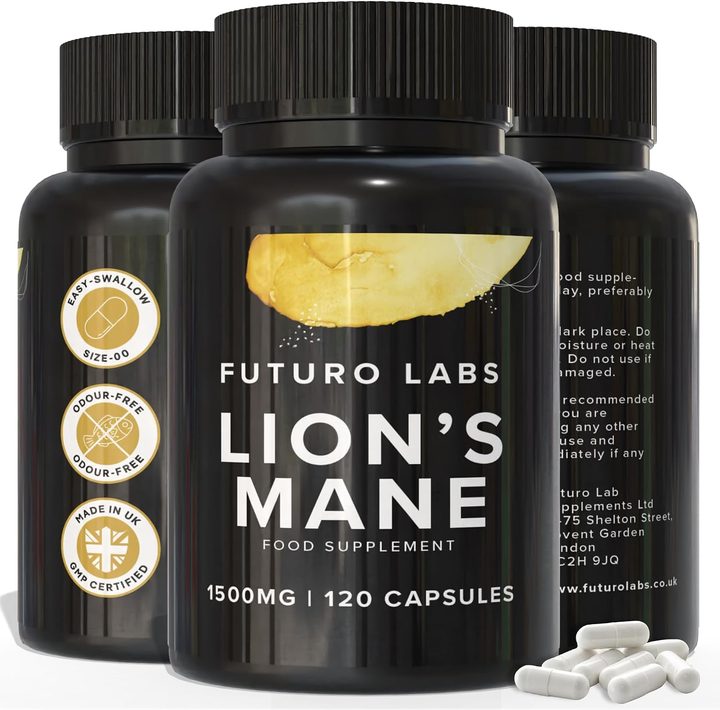
Our brand: the worked example on this page
Futuro Labs Lion's Mane
- 13p a day
- 120 capsules, 1 capsule daily
- Lab tested
- Made in the UK
The extract, with its process on the label: Futuro Labs Lion's Mane on Amazon UK, 5:1 hot-water fruiting body extract, 1500mg equivalent per capsule, £15.49 for 120 days at 13p. Full label breakdown. The two-powders trap is on the powder-versus page; the dual-solvent version on the dual extract page.
The factory walked through, because extract is a process and the process is the difference
Extract versus plain is a question about a process, so walk through the process rather than assert its result. Step one, the raw material: fruiting bodies, harvested and dried, the water that makes up most of a fresh mushroom driven off, leaving a dense, chitin-walled tissue with its compounds locked inside cell walls built of the same polymer as insect shells, which is why raw mushroom tissue, fresh or milled, delivers a fraction of its contents to digestion, the chitin lesson from the fruiting-body curriculum. Step two, hot-water extraction: the dried material simmered in water for hours at industrial scale, the heat and time breaking the chitin and dissolving the water-soluble compounds, the beta-glucans above all, into the liquid, the domestic version being the long-simmered decoction the consume page describes. Step three, filtration: the spent solids removed, the liquid now carrying the dissolved fraction. Step four, concentration: the liquid reduced and spray-dried into a powder, and the arithmetic of that reduction is the ratio, roughly ten kilos of dried mushroom yielding a kilo of dried extract in a full hot-water process, the origin of the common 8:1-to-12:1 band, with a 5:1 typically being that extract standardised with a carrier to a stated ratio, and a dual extract adding an alcohol stage for the lipophilic compounds, the dual page's territory. Plain lion's mane skips every step after the first: fresh, it is the delicacy on the plate; dried and milled, it is a 1:1 powder of chitin-locked tissue, food-grade and honest as a culinary ingredient, and sold as a supplement it is the two-powders trap, raw tissue wearing extract pricing.
What the process buys a buyer, what it costs, and the verdict split between the plate and the capsule
What extraction buys is the thing this whole section trades in, a statable dose: because the process concentrates a known mass of mushroom into a known mass of extract, a label can print a ratio, a per-serving extract weight and a mushroom-equivalent figure, three numbers a buyer can compare across products and divide into pence, and because the process dissolves the compounds out of their walls, the extract delivers what its numbers describe rather than what a chitin cage permits, which is why every human study this site describes used extracted or otherwise processed preparations rather than raw powder, and why the four tests all presume an extract, the ratio test being unanswerable for a 1:1. What extraction costs is two honest things: the compounds a given solvent does not dissolve, hot water leaving the lipophilic hericenones and erinacines largely behind unless an alcohol stage is added, so single hot-water extracts are polysaccharide products and dual extracts are broader, a choice rather than a flaw; and the processing premium in the price, the quality page's bill of materials, five-to-ten kilos of mushroom per kilo of extract being the raw-material line no plain powder carries. The verdict splits where this section always splits it: as a supplement, the extract, stated, ratio'd and tested, wins outright over plain lion's mane because only the extract can state a dose, plain powder being unquantifiable however honest, the worked example demonstrating the extracted product at 13p; and as food, plain lion's mane wins the plate without contest, the fresh fruiting body dry-seared being the reason the species has a culinary reputation, the two answers never competing because a delicacy and a dose were never the same purchase.
| The step | What happens | What it means for the buyer |
|---|---|---|
| Raw material | Fruiting bodies harvested and dried | Chitin-locked tissue: compounds caged |
| Hot-water extraction | Hours of simmering breaks chitin, dissolves glucans | The compounds become available |
| Filtration | Spent solids removed | The dissolved fraction kept |
| Concentration | Reduced and spray-dried: ~10:1 by mass | A ratio and a statable dose exist |
| Plain lion's mane | Skips every step after drying | Food, or an unquantifiable 1:1 powder |
| The verdict | Extract for the capsule; plain for the plate | A dose and a delicacy were never the same purchase |
The verdict, processed and plated
Lion's mane extract versus lion's mane, which is better: as a supplement the extract, because extraction, simmering, filtering and concentrating dried mushroom into a known fraction, is what breaks the chitin and yields the ratio, the per-serving weight and the equivalent figure that make a dose statable and comparable, plain lion's mane skipping all of it and remaining unquantifiable however honest, while as food plain lion's mane wins the plate outright. The extract, worked: Futuro Labs Lion's Mane, 5:1 hot-water fruiting body extract, 1500mg mushroom equivalent from about 300mg of extract per capsule, UK made, lab tested, £15.49 for 120 days at 13p a day, a process printed as numbers, which is the only form a supplement can honestly take.
What to check on the label
- Understand extraction as a process: dry, simmer, filter, concentrate.
- Know what it buys: a statable, comparable dose.
- Know what it leaves: lipophilic compounds, unless dual-extracted.
- Refuse plain powder as a supplement: honest food, unquantifiable dose.
- Keep the plate for plain: the delicacy never needed a ratio.
Our brand
The worked example: Futuro Labs Lion's Mane
Futuro Labs Lion's Mane: 1 capsule daily of 5:1 fruiting body extract, labelled 1500mg mushroom equivalent (about 300mg extract), 120 capsules for £15.49, 120 days at 13p a day. Vegan HPMC shell, UK made under GMP and BRC, independently lab tested, caffeine free. Lion's mane holds no authorised UK health claims; this site describes its small studies as studies.
- Extract
- fruiting body, 5:1
- Per capsule
- 1500mg mushroom equivalent
- Serving
- 1 capsule a day
- Bottle
- 120 capsules, 120 days
- Price
- £15.49 (13p a day)
- Capsule
- HPMC vegan shell, size 00
Questions people also ask
What does lion's mane extract mean?
Dried fruiting bodies simmered in hot water for hours, filtered and concentrated into a dried powder at a stated ratio, the process that breaks the chitin cell walls and makes the compounds available and the dose statable.
Is plain lion's mane powder worthless?
As food, no, it is an honest culinary ingredient; as a supplement, it is chitin-locked 1:1 tissue with no statable dose, the two-powders trap when sold at extract prices.
Why is a 10:1 ratio so common?
Yield: a full hot-water extraction of dried mushroom naturally leaves on the order of a tenth of the starting mass as extract, the origin of the 8:1-to-12:1 band, with 5:1 products typically standardised with a carrier.
Does hot-water extraction capture everything?
No: it dissolves the water-soluble beta-glucans and leaves the lipophilic hericenones and erinacines largely behind unless an alcohol stage is added, which is what dual extraction means.
Should I eat lion's mane or take the extract?
Both, for different reasons: the extract is the only form that can state a supplement dose, and the fresh fruiting body dry-seared is the delicacy, a dose and a dinner being different purchases.
Sources
- The mushroom processing literature: hot-water extraction of dried fruiting bodies typically yields on the order of a tenth of the starting mass as dried extract, the basis of the common 8:1 to 12:1 ratio band. PubMed record
- The mushroom polysaccharide analysis literature: beta-glucan content marks fungal material while high alpha-glucan readings indicate grain starch, the analytical distinction between fruiting body extracts and mycelium-on-grain powders. PubMed record
- Mori K, Inatomi S, Ouchi K, Azumi Y, Tuchida T. Improving effects of the mushroom Yamabushitake (Hericium erinaceus) on mild cognitive impairment: a double-blind placebo-controlled clinical trial. Phytotherapy Research 2009;23(3):367-372. PubMed record
- The medicinal mushroom labelling discussion: fruiting body versus mycelium-on-grain, extract ratios and beta-glucan content as the label facts that separate concentrated extracts from diluted powders. PubMed record