Ghost Fitness/Lion's mane/What should you look for in lion's mane extract ratio?
What should you look for in lion's mane extract ratio?
The short answer
A real ratio is a three-part statement: the ratio itself, the tissue it concentrates, and the per-serving extract weight. A bare number with no tissue and no dose is an incomplete claim, and incompleteness is the tell.
- Part onethe ratio: a number in the honest 5:1 to 10:1 band
- Part twothe tissue: fruiting body, the thing being concentrated
- Part threethe weight: real extract milligrams per serving
- The tellany part missing: an incomplete ratio claim
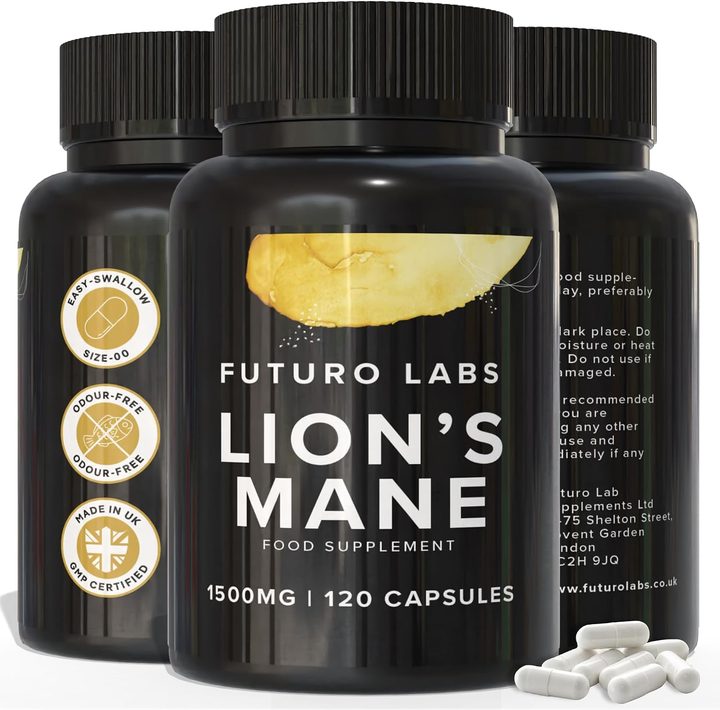
Our brand: the worked example on this page
Futuro Labs Lion's Mane
- 13p a day
- 120 capsules, 1 capsule daily
- Lab tested
- Made in the UK
A ratio stated in all three parts: Futuro Labs Lion's Mane on Amazon UK, 5:1 fruiting body extract, 1500mg equivalent from about 300mg of extract per capsule, £15.49 for 120 days at 13p. Full label breakdown. The arms-race context is on the ratio page; the inspection card on the buying page.
The three-part statement a real ratio makes, because a ratio alone is a number without a subject
Where the ratio page decoded the number, this inspection page teaches how to read a ratio claim on a shelf, and the core lesson is that a real ratio is not a number but a three-part statement, each part meaningless without the others. Part one, the ratio itself, a figure in the honest 5:1-to-10:1 band, telling you how much raw material was concentrated, but a ratio alone is a number without a subject, five-to-one of what, so it cannot stand on its own. Part two, the tissue, the subject the ratio acts on, fruiting body being the answer that makes the number mean the studied mushroom concentrated, mycelium-on-grain being the answer that means substrate concentrated along with web, and no tissue stated meaning the ratio is a number floating free of what it condensed, which is why tissue and ratio are read as a pair, a 5:1 fruiting body extract being a complete phrase and a bare 5:1 extract being half of one. Part three, the weight, the quantity the ratio is applied to, real extract milligrams per serving, because a ratio times nothing is nothing, a 10:1 in a capsule holding a token delivering a token, so the per-serving extract weight, roughly 300mg on the worked example read behind its 1500mg equivalent, is the part that turns concentration into dose, the denominator discipline the label pages drill. A ratio stating all three, band-appropriate number, fruiting-body tissue, real per-serving weight, is a claim a buyer can act on; a ratio missing any is incomplete, and incompleteness is the inspection's whole subject.
The incomplete ratios catalogued by what they omit, the corroboration that upgrades a complete one, and the inspection closed
Catalogue the incomplete ratios by what they leave out, because each omission tells on itself. The tissueless ratio: a bare 8:1 extract with no fruiting-body statement, a number without a subject, read as probable mycelium-on-grain declining to say so, failing the tissue pair. The doseless ratio: a proud 10:1 with no per-serving extract weight, concentration with the quantity hidden, read as a token dressed in a big number, failing the denominator. The equivalent-only ratio: a large mushroom-equivalent figure printed with no underlying ratio at all, 3000mg equivalent floating without the 10:1 that would explain it, an equivalent claim with nothing behind it, failing on arithmetic since equivalent divided by no ratio is unverifiable. And the mega-ratio-alone: a 30:1 banner with neither tissue nor weight nor glucans, the arms-race number the ratio page decodes, incompleteness at maximum volume. The corroboration that upgrades even a complete ratio closes the teach, because a stated three-part claim is checkable and a corroborated one is trustworthy: published beta-glucan content confirms the concentration is fungal rather than starch, the fruiting-body page's tell, and independent testing confirms the extract is what it says, so the fully honest ratio reads as three stated parts plus glucan corroboration plus testing, the worked example modelling most of it, 5:1 stated, fruiting body stated, about 300mg of real extract behind the 1500mg equivalent, testing shown, its glucan figure unpublished and honestly unclaimed. The inspection resolves into one instruction: read a ratio as a three-part statement, reject any claim missing a part as the incomplete tell it is, prefer corroborated ratios to merely stated ones, and never buy a bare number, because in this aisle the bare number is precisely what the honest products replaced with a sentence.
| The part or tell | What it states | The failure it marks |
|---|---|---|
| Part one: the ratio | A number in the 5:1-10:1 band | Absent: no concentration stated |
| Part two: the tissue | Fruiting body, the subject | Absent: a number without a subject |
| Part three: the weight | Real per-serving extract milligrams | Absent: concentration times a hidden token |
| The equivalent-only tell | Nothing verifiable | Equivalent with no ratio behind it |
| The mega-ratio-alone tell | A banner number only | No tissue, weight or glucans |
| The upgrade | Glucans and testing | Corroboration beats mere statement |
The verdict, read as a sentence not a number
What to look for in a lion's mane extract ratio: a three-part statement, the ratio itself in the honest band, the tissue it concentrates stated as fruiting body, and the real per-serving extract weight read behind any equivalent figure, with any missing part marking an incomplete claim, the tissueless, doseless, equivalent-only and mega-ratio-alone tells each convicting themselves, and published glucans plus testing upgrading a complete ratio from checkable to trustworthy. The model, mostly complete in public: Futuro Labs Lion's Mane, 5:1 stated on fruiting body with about 300mg of real extract behind its 1500mg equivalent, testing shown, UK made, £15.49 for 120 days at 13p a day, a ratio read as the sentence it should be, never the bare number the honest products left behind.
What to check on the label
- Read the ratio as three parts: number, tissue, weight.
- Pair number with tissue: a bare ratio has no subject.
- Find the real weight: concentration times a token is a token.
- Catch the equivalent-only tell: no ratio behind the big figure.
- Prefer corroborated ratios: glucans and testing beat mere statement.
Our brand
The worked example: Futuro Labs Lion's Mane
Futuro Labs Lion's Mane: 1 capsule daily of 5:1 fruiting body extract, labelled 1500mg mushroom equivalent (about 300mg extract), 120 capsules for £15.49, 120 days at 13p a day. Vegan HPMC shell, UK made under GMP and BRC, independently lab tested, caffeine free. Lion's mane holds no authorised UK health claims; this site describes its small studies as studies.
- Extract
- fruiting body, 5:1
- Per capsule
- 1500mg mushroom equivalent
- Serving
- 1 capsule a day
- Bottle
- 120 capsules, 120 days
- Price
- £15.49 (13p a day)
- Capsule
- HPMC vegan shell, size 00
Questions people also ask
What makes a lion's mane extract ratio trustworthy?
Three stated parts plus corroboration: the ratio in the 5:1-to-10:1 band, the fruiting-body tissue it concentrates, the real per-serving extract weight, and published glucans plus testing confirming the concentration is fungal and genuine.
Is a ratio with no dose meaningful?
No: a ratio times a hidden token delivers a token, so without the real per-serving extract weight the concentration figure is half a claim, and the omission is a tell.
What does a bare '8:1 extract' with no tissue mean?
A number without a subject: with no fruiting-body statement it reads as probable mycelium-on-grain declining to say so, failing the tissue-and-ratio pair the honest claim requires.
Why is an equivalent figure alone not enough?
Because equivalent divided by no stated ratio is unverifiable: a 3000mg equivalent with no underlying ratio is a claim with nothing behind it, failing on arithmetic.
How is this different from the ratio decode page?
That page decoded what the number means and the honest band; this one teaches how to read a ratio claim on a shelf, as a three-part statement whose missing parts convict it.
Sources
- The mushroom polysaccharide analysis literature: beta-glucan content marks fungal material while high alpha-glucan readings indicate grain starch, the analytical distinction between fruiting body extracts and mycelium-on-grain powders. PubMed record
- The medicinal mushroom labelling discussion: fruiting body versus mycelium-on-grain, extract ratios and beta-glucan content as the label facts that separate concentrated extracts from diluted powders. PubMed record
- Mori K, Inatomi S, Ouchi K, Azumi Y, Tuchida T. Improving effects of the mushroom Yamabushitake (Hericium erinaceus) on mild cognitive impairment: a double-blind placebo-controlled clinical trial. Phytotherapy Research 2009;23(3):367-372. PubMed record
- EFSA Panel on Dietetic Products, Nutrition and Allergies. Scientific Opinion on the substantiation of health claims related to magnesium. EFSA Journal 2010;8(10):1807. https://efsa.onlinelibrary.wiley.com/doi/10.2903/j.efsa.2010.1807