Ghost Fitness/Lion's mane/What should you look for in high strength lion's mane?
What should you look for in high strength lion's mane?
The short answer
High strength means nothing on its own: no regulated definition exists, so decode it into numbers, a stated ratio, a real per-day extract dose, published glucans and honest pence. A bare high-strength banner over a silent panel is the tell.
- The phrase's statushigh strength: marketing language, no regulated definition
- Decode onethe ratio: a stated 5:1 to 10:1, with equivalent maths
- Decode twothe per-day dose: real milligrams of extract, not equivalent alone
- Decode threeglucans published, and pence divided honestly
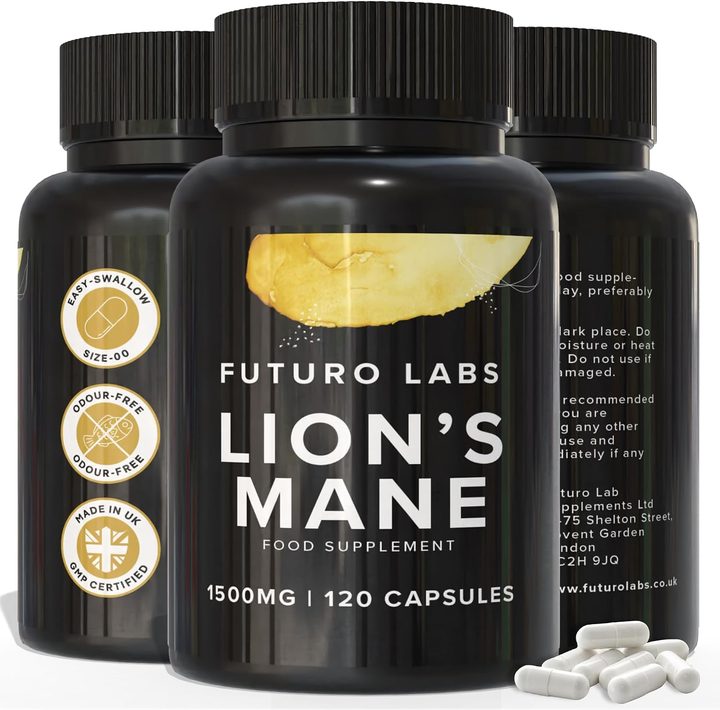
Our brand: the worked example on this page
Futuro Labs Lion's Mane
- 13p a day
- 120 capsules, 1 capsule daily
- Lab tested
- Made in the UK
A panel that states its strength in numbers: Futuro Labs Lion's Mane on Amazon UK, 5:1 fruiting body extract, 1500mg mushroom equivalent per capsule, £15.49 for 120 days at 13p. Full label breakdown. The ratio arms race is on the ratio page; the quality pyramid on the quality page.
The phrase decoded before it is trusted, because high strength is a banner, not a specification
High strength is a phrase with no regulated meaning in the supplement world, printable by anyone on anything, so the only useful response is to refuse the banner and demand the numbers it should stand for, four of them, each a specification the phrase gestures at and none guaranteed by the words alone. Number one, the ratio, the phrase's most literal reading: strength most honestly means concentration, so a high-strength claim should sit on a stated extract ratio, a 5:1 to 10:1 with its mushroom-equivalent maths printed, the ratio page's honest band, and a high-strength banner with no ratio beneath it has already failed its own adjective. Number two, the per-day extract dose in real milligrams, because concentration without quantity is half a claim: a 10:1 sounds strong and delivers little if the capsule holds a token, so the number that matters is actual extract per daily serving, roughly 300mg on the worked example's 5:1, read behind the equivalent figure rather than instead of it, the denominator discipline the label pages drill. Number three, the glucan content where published, the compound behind the concentration, high beta-glucans corroborating that the strength is fungal rather than starch, the fruiting-body page's tell working here as everywhere. Number four, the pence, because a strength premium unjustified by the first three numbers is brand tax, priced against the 13p benchmark. Decoded into those four, high strength becomes checkable; left as a banner, it stays decoration.
The strength illusions caught, the honest reading assembled, and the phrase put in its place
Catch the illusions the banner creates, because each is a way strength lies. The equivalent illusion: a 1500mg or 3000mg mushroom-equivalent figure printed large reads as high strength while describing modest extract behind a high ratio, so read the ratio and back out the real milligrams before believing the size. The count illusion: high strength claimed on a per-bottle or per-two-capsule basis inflating a per-capsule figure, the serving-denominator trap the label pages catch, resolved by dividing to per-capsule always. The mega-ratio illusion: a 30:1 banner presented as maximum strength while dropping the glucan figures and tissue statements that would corroborate anything, the arms race the ratio page decodes, stated-and-corroborated beating bare-and-big. And the stimulant illusion, specific to this audience: high strength misread as high stimulation, when lion's mane is caffeine-free and produces no acute kick at any concentration, strength here meaning extract density and never a felt jolt, a distinction worth stating so nobody buys concentration expecting a pre-workout. The honest reading assembled: a genuinely high-strength lion's mane states a ratio in the honest band, prints real per-day extract milligrams behind the equivalent, publishes or offers glucan numbers, and prices its concentration fairly, the four decodes together being what the banner claims and separately being what buyers must check, with the worked example demonstrating the honest version, 5:1 stated, 1500mg equivalent with about 300mg of real extract, testing shown, 13p, strength expressed as arithmetic. High strength, put in its place, is not a grade to seek but a claim to audit, best lion's mane strength being whatever the four numbers actually support, and the banner alone supporting nothing at all.
| The claim | The number it needs | The illusion to catch |
|---|---|---|
| Concentration | A stated 5:1 to 10:1 ratio | A banner with no ratio beneath it |
| Quantity | Real per-day extract milligrams | Equivalent figures hiding token extract |
| Composition | Published beta-glucan content | Mega-ratios dropping the glucan numbers |
| Value | Pence divided against 13p | A strength premium the numbers don't justify |
| The count trap | Per-capsule, always | Per-bottle figures inflating the headline |
| The stimulant trap | None: it is caffeine free | Strength misread as a felt kick |
The verdict, audited rather than admired
What to look for in high-strength lion's mane: the four numbers the phrase gestures at and never guarantees, a stated ratio in the 5:1-to-10:1 band, real per-day extract milligrams read behind the equivalent figure, published glucan content, and honest pence, with the equivalent, count, mega-ratio and stimulant illusions caught on the way, high strength being a claim to audit rather than a grade to chase. The audited example: Futuro Labs Lion's Mane, 5:1 fruiting body extract, 1500mg equivalent and about 300mg of real extract per capsule, UK made, lab tested, £15.49 for 120 days at 13p a day, strength expressed as arithmetic a buyer can check, which is the only strength the banner ever honestly meant.
What to check on the label
- Refuse the banner: high strength has no regulated meaning.
- Demand the ratio: concentration stated in the honest band.
- Back out real milligrams: extract per day, behind the equivalent.
- Corroborate with glucans: fungal strength, not starch.
- Never expect a kick: it is caffeine free at any strength.
Our brand
The worked example: Futuro Labs Lion's Mane
Futuro Labs Lion's Mane: 1 capsule daily of 5:1 fruiting body extract, labelled 1500mg mushroom equivalent (about 300mg extract), 120 capsules for £15.49, 120 days at 13p a day. Vegan HPMC shell, UK made under GMP and BRC, independently lab tested, caffeine free. Lion's mane holds no authorised UK health claims; this site describes its small studies as studies.
- Extract
- fruiting body, 5:1
- Per capsule
- 1500mg mushroom equivalent
- Serving
- 1 capsule a day
- Bottle
- 120 capsules, 120 days
- Price
- £15.49 (13p a day)
- Capsule
- HPMC vegan shell, size 00
Questions people also ask
What does high strength mean on a lion's mane label?
On its own, nothing: the phrase has no regulated definition, so decode it into a stated ratio, real per-day extract milligrams, published glucans and honest pence, or treat it as decoration.
Is a higher ratio always higher strength?
Only if the quantity holds up: a 10:1 with a token extract dose delivers less than a 5:1 at a real one, so read the per-day milligrams behind any equivalent figure.
Does high-strength lion's mane feel stronger?
No: it is caffeine free and produces no acute kick at any concentration, so strength means extract density, never a felt jolt, and buying it as a stimulant will disappoint.
How do I know a high-strength claim is genuine?
Four numbers: a stated ratio in the 5:1-to-10:1 band, real per-day extract milligrams, published beta-glucan content, and pence that divide fairly against the 13p benchmark.
Why do some high-strength products cost so much more?
Often brand tax: a strength premium unjustified by the ratio, dose and glucan numbers buys photography and banners rather than more mushroom.
Sources
- The mushroom polysaccharide analysis literature: beta-glucan content marks fungal material while high alpha-glucan readings indicate grain starch, the analytical distinction between fruiting body extracts and mycelium-on-grain powders. PubMed record
- The medicinal mushroom labelling discussion: fruiting body versus mycelium-on-grain, extract ratios and beta-glucan content as the label facts that separate concentrated extracts from diluted powders. PubMed record
- Mori K, Inatomi S, Ouchi K, Azumi Y, Tuchida T. Improving effects of the mushroom Yamabushitake (Hericium erinaceus) on mild cognitive impairment: a double-blind placebo-controlled clinical trial. Phytotherapy Research 2009;23(3):367-372. PubMed record
- EFSA Panel on Dietetic Products, Nutrition and Allergies. Scientific Opinion on the substantiation of health claims related to magnesium. EFSA Journal 2010;8(10):1807. https://efsa.onlinelibrary.wiley.com/doi/10.2903/j.efsa.2010.1807