Ghost Fitness/Lion's mane/What does lion's mane 500mg 10:1 extract mean?
What does lion's mane 500mg 10:1 extract mean?
The short answer
500mg of extract concentrated ten to one: 5,000mg of mushroom equivalent per serving, above the trials' 3 grams and three times the worked example's capsule. Check the tissue is stated, and compare on pence per equivalent milligram, not the banner.
- The parse500mg of extract, at a 10:1 concentration ratio
- The equivalent500 times 10: 5,000mg of dried mushroom represented
- Against the referencesabove the Mori trial's ~3,000mg; three times the worked example's 1,500mg
- The two checksthe tissue stated; the price per equivalent milligram
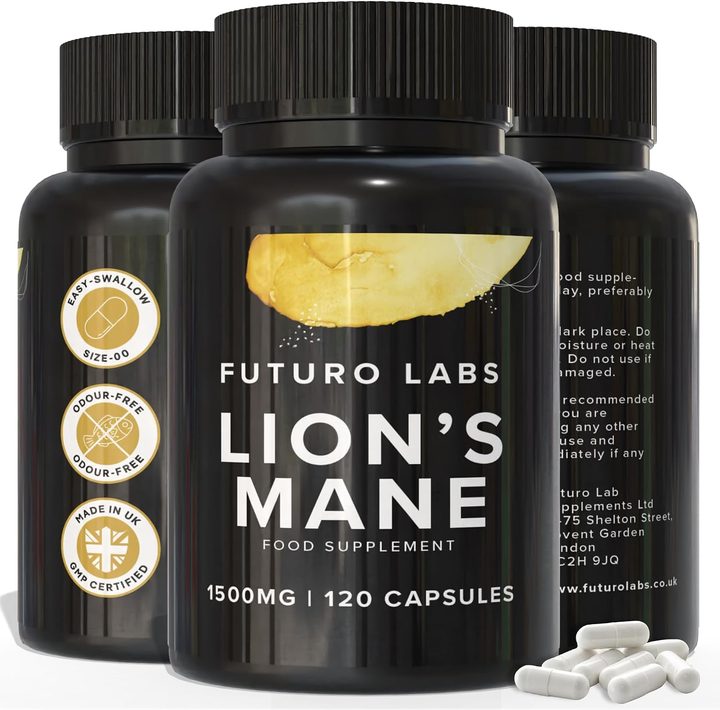
Our brand: the worked example on this page
Futuro Labs Lion's Mane
- 13p a day
- 120 capsules, 1 capsule daily
- Lab tested
- Made in the UK
The comparison point at 5:1: Futuro Labs Lion's Mane on Amazon UK, about 300mg of 5:1 extract at 1500mg equivalent, £15.49 for 120 days at 13p. Full label breakdown. The 10:1 yield teach is on the 10:1 page; the three-part ratio reading on the ratio inspection page.
The label string parsed word by word, and the equivalent it implies
Lion's mane 500mg 10:1 extract is a label string with three parts, and parsing it in order turns a banner into a number. Part one, 500mg: the mass of extract powder in the serving, the real milligrams, the figure the factory filled to, and the denominator every honest comparison needs, so this label has stated the quantity, which many do not. Part two, 10:1: the concentration ratio, ten kilos of dried mushroom reduced to one kilo of extract by hot-water processing, roughly the natural yield of a full extraction and therefore the market's common upper figure, the 10:1 page's teach, so this label has stated the ratio, the second of the three-part statement's parts. Part three, extract: the processing word, meaning the chitin was broken and the compounds concentrated, as opposed to plain milled powder, so this is a concentrated product rather than the two-powders trap. Multiply the first two parts and the equivalent appears: 500mg of extract at 10:1 represents 5,000mg of dried mushroom, five grams of mushroom equivalent per serving, which is a large figure by the section's references, above the Mori trial's roughly three grams of dried fruiting body daily, well above the Docherty pilot's 1.8, and about three and a third times the worked example's single capsule at 1,500mg equivalent, so on the parse this is a substantial serving, more than any human study used, offered as context against references and never as a target, no dose being established.
The two checks that decide whether the parse is honest, the banner trap, and the string filed
A parsed label is a claim, and two checks decide whether the claim is honest. Check one, the tissue: 10:1 of what, and the string as written does not say, fruiting body making the five grams the studied mushroom concentrated and mycelium-on-grain making it web and substrate, so the reader looks for fruiting body stated beside the string and treats its absence as the inspection page's tissueless-ratio tell, a number without a subject, the ratio's impressiveness unchanged and its meaning unknown until the tissue appears, with published glucan figures the corroboration that the ten kilos were fungus rather than grain starch. Check two, the price per equivalent milligram: the honest comparison across ratios divides the daily price by the daily mushroom equivalent, so a 500mg 10:1 serving at 5,000mg equivalent is compared with a 300mg 5:1 capsule at 1,500mg equivalent on pence per thousand milligrams of equivalent, the normalisation that makes a bigger ratio buy something only if the pence agree, and the reader who compares on the banner alone, five grams against one and a half, has compared advertising rather than value. The banner trap named because this string is built for it: 5,000mg lion's mane in bold on the front is the equivalent inflated by the ratio, describing a 500mg capsule, and a 10:1 label printing the equivalent large and the extract small has done the arithmetic in the direction that flatters, the high-strength page's trap in its purest form. The string filed: lion's mane 500mg 10:1 extract means five grams of mushroom equivalent from half a gram of concentrated extract per serving, a substantial serving above the trials, honest if the tissue is stated and the glucans corroborate, priced honestly only per equivalent milligram, and compared with the worked example's 300mg 5:1 at 1,500mg equivalent as a larger serving at whatever its pence turn out to be, with no dose established to make larger mean better.
| The item | The finding | The action |
|---|---|---|
| 500mg | The real extract milligrams per serving | The denominator: stated, which many labels omit |
| 10:1 | Ten kilos of dried mushroom per kilo of extract | The natural full-extraction yield, in the honest band |
| Extract | Chitin broken, compounds concentrated | Not plain powder |
| The equivalent | 5,000mg of dried mushroom per serving | Above the trials; three times the worked example |
| Check one: tissue | Not stated in the string | Find fruiting body beside it, or treat as unknown |
| Check two: price | Pence per equivalent milligram | Compare value, not the banner |
The verdict, a banner turned into a number and then into a question
What lion's mane 500mg 10:1 extract means: 500mg of concentrated extract at a ten-to-one ratio, representing 5,000mg of dried mushroom per serving, a substantial figure above the Mori trial's three grams and three times the worked example's capsule, honest as a claim only when the tissue is stated beside it and the glucans corroborate a fungal yield, and honest as a price only when compared per equivalent milligram rather than by the five-gram banner the ratio lets a label print. The comparison point: Futuro Labs Lion's Mane, about 300mg of 5:1 extract at 1,500mg equivalent per capsule, fruiting body stated, UK made, lab tested, £15.49 for 120 days at 13p a day, a smaller serving with its tissue named and its pence divided, which is the only basis on which the larger one can be judged.
What to check on the label
- Parse the three parts: milligrams, ratio, extract.
- Multiply to the equivalent: 500 times 10 is 5,000mg.
- Find the tissue: 10:1 of what, or a number without a subject.
- Compare per equivalent milligram: never by the banner.
- Remember no dose is established: larger is not better, only larger.
Our brand
The worked example: Futuro Labs Lion's Mane
Futuro Labs Lion's Mane: 1 capsule daily of 5:1 fruiting body extract, labelled 1500mg mushroom equivalent (about 300mg extract), 120 capsules for £15.49, 120 days at 13p a day. Vegan HPMC shell, UK made under GMP and BRC, independently lab tested, caffeine free. Lion's mane holds no authorised UK health claims; this site describes its small studies as studies.
- Extract
- fruiting body, 5:1
- Per capsule
- 1500mg mushroom equivalent
- Serving
- 1 capsule a day
- Bottle
- 120 capsules, 120 days
- Price
- £15.49 (13p a day)
- Capsule
- HPMC vegan shell, size 00
Questions people also ask
How much mushroom is in a 500mg 10:1 lion's mane capsule?
The equivalent of 5,000mg of dried mushroom: 500mg of extract at a ten-to-one concentration, five grams of mushroom represented per serving, above the human trials' three grams and three times the worked example's 1,500mg.
Is 500mg 10:1 a strong dose?
A substantial serving by the only references, above what any human study used, with no dose established as effective, so larger means larger rather than better, and the label's portion remains the instruction.
What is missing from the string 500mg 10:1 extract?
The tissue: 10:1 of fruiting body or of mycelium-on-grain is the difference between the studied mushroom concentrated and web-and-substrate concentrated, so look for fruiting body stated beside the ratio and glucans published.
How do I compare a 500mg 10:1 with a 300mg 5:1?
Per equivalent milligram: 5,000mg against 1,500mg equivalent, each divided into its daily price, so the bigger ratio buys something only if the pence per thousand milligrams agree, never by the banner.
Why do 10:1 labels print such big numbers?
The equivalent inflates with the ratio while the capsule stays the same size, so a 5,000mg banner describes a 500mg capsule, the arithmetic run in the direction that flatters, which is why the extract milligrams are read first.
Sources
- Mori K, Inatomi S, Ouchi K, Azumi Y, Tuchida T. Improving effects of the mushroom Yamabushitake (Hericium erinaceus) on mild cognitive impairment: a double-blind placebo-controlled clinical trial. Phytotherapy Research 2009;23(3):367-372. PubMed record
- The mushroom polysaccharide analysis literature: beta-glucan content marks fungal material while high alpha-glucan readings indicate grain starch, the analytical distinction between fruiting body extracts and mycelium-on-grain powders. PubMed record
- The medicinal mushroom labelling discussion: fruiting body versus mycelium-on-grain, extract ratios and beta-glucan content as the label facts that separate concentrated extracts from diluted powders. PubMed record
- Docherty S, Doughty FL, Smith EF. The acute and chronic effects of lion's mane mushroom supplementation on cognitive function, stress and mood in young adults: a double-blind, parallel groups, pilot study. Nutrients 2023;15(22):4842. PubMed record