Ghost Fitness/Lion's mane/Does lion's mane coffee contain caffeine?
Does lion's mane coffee contain caffeine?
The short answer
Yes, from the coffee: the mushroom adds none. Regular-base blends carry a normal cup's caffeine, half-caff designs roughly half, decaf bases a trace. Read the declared milligrams per serving, and if cutting caffeine, buy decaf, not mushrooms.
- The sourcethe coffee: the mushroom contributes zero caffeine
- Regular-base blendsa normal cup's worth, typically 60-100mg a serving
- Half-caff designsroughly half: the common mushroom-coffee construction
- Decaf basesa trace, a few milligrams: the caffeine-cutter's real option
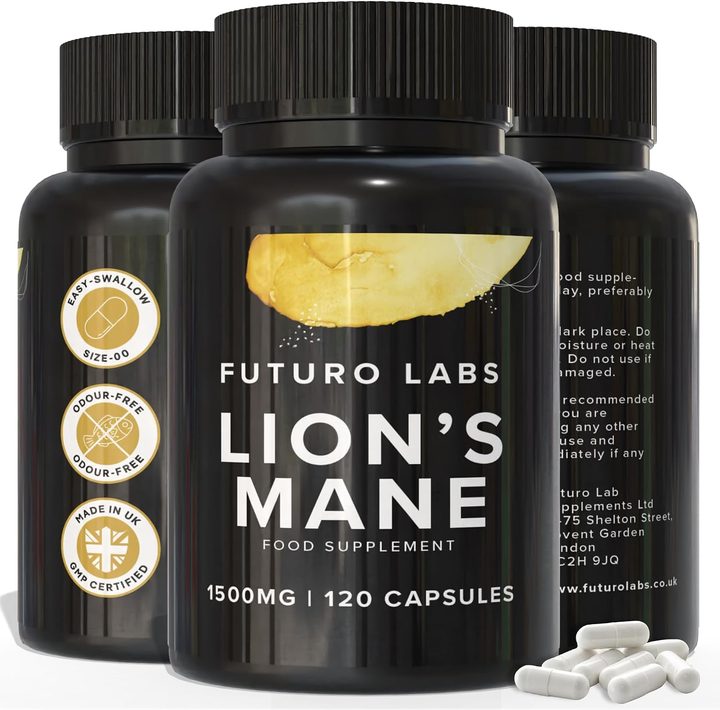
Our brand: the worked example on this page
Futuro Labs Lion's Mane
- 13p a day
- 120 capsules, 1 capsule daily
- Lab tested
- Made in the UK
The zero-caffeine ingredient, sold on its own: Futuro Labs Lion's Mane on Amazon UK, 5:1 fruiting body extract, caffeine free, beside any coffee at any strength, £15.49 for 120 days at 13p. Full label breakdown. The cup arithmetic is on the coffee page; the botany on the caffeine page.
The source settled and the three bases sorted, because the answer depends entirely on the coffee half
Yes, lion's mane coffee contains caffeine, and every milligram of it comes from the coffee, the mushroom contributing none, caffeine being a plant alkaloid no fungus produces, the caffeine page's botany, so the useful question is how much, and that depends entirely on which coffee base the product was built on, three constructions covering the market. Regular-base blends: ordinary instant or ground coffee with a mushroom extract dusting, carrying a normal cup's caffeine, typically somewhere in the 60-to-100mg-per-serving range depending on the coffee and the serving size, a full-strength coffee that happens to have a fungus in it. Half-caff designs: the most common mushroom-coffee construction, the coffee blended down to roughly half a normal cup's caffeine, either by mixing decaf and regular grounds or by using a smaller coffee dose padded with other ingredients, the reduced caffeine being the feature most of the format's calm marketing actually rests on, the mushroom the passenger. Decaf bases: built on decaffeinated coffee, carrying a trace, a few milligrams at most, the construction that genuinely suits a caffeine-cutter and the least common of the three because the ritual's remaining caffeine is part of what most buyers want. Sorted that way, the question answers itself off the packet, and the mushroom's role in the answer is to be irrelevant to it.
The declaration to read, the reader who is really asking, and the verdict priced against the two-ingredient alternative
The declaration to read is the caffeine content per serving in milligrams, which better products print and which any product built on coffee should be able to state, with the ingredients line as the fallback, coffee, instant coffee or decaffeinated coffee naming the base, and the absence of any figure being a small tell, a brand selling reduced caffeine as a feature having every reason to quantify it and no reason to stay vague. The reader really asking this question is usually one of two people. The caffeine-cutter, worried about jitters or sleep, is answered directly: mushroom coffee is not a caffeine-free product unless built on decaf, the half-caff designs still carrying enough to matter for a sensitive sleeper, and the honest path is decaf or half-strength within ordinary coffee, an earlier cut-off, or a decaf-based mushroom coffee if the ritual matters, the mushroom itself adding no calming effect to offset the caffeine it did not remove. The caffeine-seeker, wanting the morning lift, is warned the other way: a half-caff mushroom coffee delivers half the usual kick for more than the usual price, and the two-ingredient recipe, the reader's own full-strength coffee plus a caffeine-free 13p capsule, delivers all the caffeine they wanted and more stated extract than most sachets carry, at a fraction of the cost, the coffee page's arithmetic. The verdict prices itself: yes, mushroom coffee contains caffeine, as much as its base does and not a milligram from the mushroom, read the declared figure or the base ingredient, and let the two-ingredient alternative, coffee at whatever strength you actually want beside a capsule that never had any, answer both readers at once.
| The base | Caffeine per serving | Who it suits |
|---|---|---|
| Regular coffee | A normal cup: typically 60-100mg | Nobody specifically: it is coffee with a dusting |
| Half-caff | Roughly half a cup's worth | The calm marketing rests here; still matters to sensitive sleepers |
| Decaf | A trace, a few milligrams | The genuine caffeine-cutter, if the ritual matters |
| The mushroom | Zero, in every base | Irrelevant to the caffeine question |
| The declaration | Milligrams per serving, or the base named | Vagueness is a tell |
| The alternative | Your own coffee at chosen strength plus a capsule | Both readers, cheaper |
The verdict, read off the base
Does lion's mane coffee contain caffeine: yes, exactly as much as its coffee base carries and none from the mushroom, regular-base blends holding a normal cup's worth, half-caff designs roughly half, and decaf bases a trace, with the per-serving milligram declaration or the base ingredient answering any specific packet, the caffeine-cutter routed to decaf or reduced-strength coffee rather than to any fungus, and both readers served by coffee at their chosen strength beside a capsule that never had any. The caffeine-free ingredient, sold honestly: Futuro Labs Lion's Mane, 5:1 fruiting body extract, caffeine free by botany and label, UK made, lab tested, £15.49 for 120 days at 13p a day, stirred into or swallowed beside whatever coffee the reader actually wants.
What to check on the label
- Blame the coffee: every milligram is the base's, none the mushroom's.
- Sort the base: regular, half-caff or decaf.
- Read the declaration: milligrams per serving, or the base ingredient.
- Route the cutter to decaf: not to a fungus that removed nothing.
- Price the two-ingredient answer: chosen-strength coffee plus a capsule.
Our brand
The worked example: Futuro Labs Lion's Mane
Futuro Labs Lion's Mane: 1 capsule daily of 5:1 fruiting body extract, labelled 1500mg mushroom equivalent (about 300mg extract), 120 capsules for £15.49, 120 days at 13p a day. Vegan HPMC shell, UK made under GMP and BRC, independently lab tested, caffeine free. Lion's mane holds no authorised UK health claims; this site describes its small studies as studies.
- Extract
- fruiting body, 5:1
- Per capsule
- 1500mg mushroom equivalent
- Serving
- 1 capsule a day
- Bottle
- 120 capsules, 120 days
- Price
- £15.49 (13p a day)
- Capsule
- HPMC vegan shell, size 00
Questions people also ask
How much caffeine is in mushroom coffee?
As much as its base: regular-coffee blends carry a normal cup's worth, typically 60 to 100mg a serving, half-caff designs roughly half, and decaf bases a trace, with the mushroom adding none.
Is mushroom coffee caffeine free?
Only if built on decaf: most products are half-caff designs, and the reduced caffeine, not the mushroom, is what the calm marketing rests on.
Does the lion's mane in the coffee add or offset caffeine?
Neither: no fungus makes caffeine and the mushroom produces no calming effect to offset the caffeine the coffee still carries.
How do I check a specific mushroom coffee's caffeine?
Read the declared milligrams per serving, or the ingredients line for coffee, instant coffee or decaffeinated coffee naming the base, treating vagueness as a small tell.
I'm cutting caffeine, is mushroom coffee the answer?
Not unless decaf-based: decaf or half-strength within ordinary coffee and an earlier cut-off do the job, and a caffeine-free capsule beside decaf gives the mushroom without the milligrams.
Sources
- The caffeine biosynthesis literature: caffeine is a purine alkaloid synthesised by a limited set of plants including coffee, tea, cacao, guarana and yerba mate, and is not produced by fungi. PubMed record
- The medicinal mushroom labelling discussion: fruiting body versus mycelium-on-grain, extract ratios and beta-glucan content as the label facts that separate concentrated extracts from diluted powders. PubMed record
- The sleep and memory consolidation literature: newly learned material is consolidated during sleep, with sleep deprivation after study measurably impairing retention, the foundation of study-schedule advice. PubMed record
- EFSA Panel on Dietetic Products, Nutrition and Allergies. Scientific Opinion on the substantiation of health claims related to magnesium. EFSA Journal 2010;8(10):1807. https://efsa.onlinelibrary.wiley.com/doi/10.2903/j.efsa.2010.1807