Ghost Fitness/Collagen/What are the symptoms of too much collagen?
What are the symptoms of too much collagen?
The short answer
Checked against the trial tables: fullness, bloating and a taste are real at scoop doses; heartburn plausible; headaches and rashes did not beat placebo; high calcium came from calcium in old formulas, not collagen; oxalate is a stone-former footnote.
- Real at scoop dosesfullness, bloating, a lingering aftertaste: twenty grams of protein in a glass
- Plausibleheartburn in a reader prone to it, fasted or late
- Not above placebo, or misattributedheadaches and rashes; high calcium from old calcium-carrying formulas
- The footnote and the ceilingurinary oxalate for calcium stone formers; no upper level, trials stop at 15g
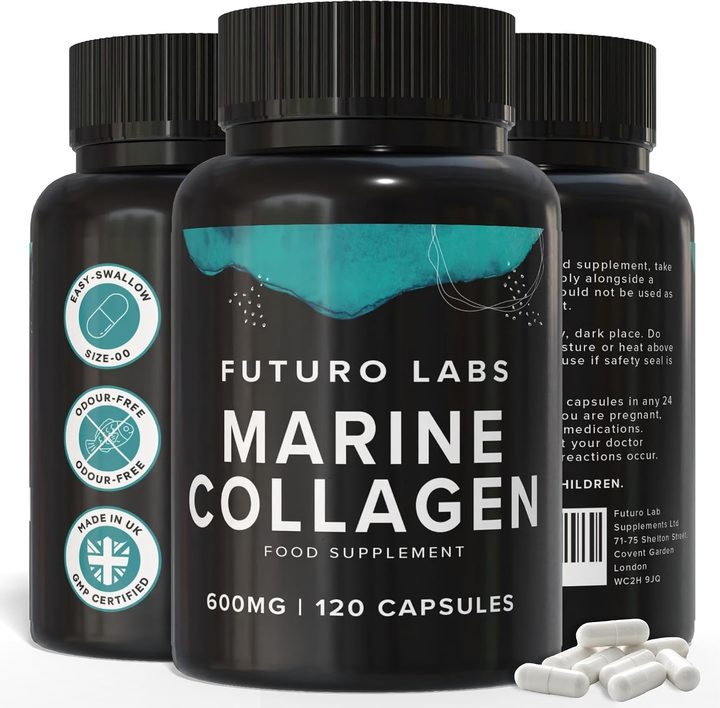
Our brand: the worked example on this page
Futuro Labs Marine Collagen
- 28p a day
- 120 capsules, 2 capsules daily
- Lab tested
- Made in the UK
A dose too small to produce any line on this list: Futuro Labs Marine Collagen on Amazon UK, 2 capsules, 1200mg hydrolysed type 1 marine collagen with 12mg vitamin C at 15% NRV plus zinc, 120 for £16.99, 28p a day, lab tested and UK made, below the 2.5 to 15g research band and taken for the vitamin C line, marine, so bovine for fish allergy. Full label breakdown. The numbers that bracket safe are on the how many mg is safe page; the ranked downsides on the downside of collagen page.
The list checked: what is real at scoop doses and what is plausible
What are the symptoms of too much collagen is answered on most of the internet with a list of eight or so, and the honest page checks the list against the only evidence that can check it, the adverse event tables of the trials that gave hydrolysed collagen at 2.5 to 15 grams a day for eight weeks to a year, because a symptom that appears in those tables above the placebo arm is a symptom of collagen and one that does not is a symptom of something else. Real at scoop doses: fullness, bloating and a lingering aftertaste. A twenty-gram scoop is twenty grams of protein in a glass of water, and twenty grams of any protein taken fasted or shortly before lying down sits heavily in some readers, with fullness, a little bloating and the occasional loose stool, the supplement tolerance literature filing collagen among the mild ones, and a faint fishy or gelatinous aftertaste in some marine powders taken in water. These are dose-dependent in the plain sense, present at scoop doses, faint at a dessertspoon of ten grams, and absent at capsule doses, and the fix is the dessertspoon, the meal or the capsule. Plausible but not proven: heartburn. A protein drink taken fasted, or late in the evening in a reader who already gets reflux, can provoke it, as any protein drink can, and the trial tables do not separate it out above placebo, so the honest filing is plausible for the reader prone to it and fixed by taking the dose with a meal. That is the whole of the list that survives the check at the top, and it is the ordinary profile of a protein powder rather than anything specific to collagen, which is what a reader taking twenty grams of anything in water should expect.
The list checked: what did not beat placebo, what was misattributed, the footnote, and the ceiling
Not above placebo: headaches and rashes. Both appear on the internet's list and both appear in the trial tables, in the placebo arms as often as the collagen arms, which is the signature of a symptom that people have anyway over twelve weeks and attribute to whatever they started, so neither is a symptom of too much collagen. The one real rash on this page is an allergy, not an excess: marine collagen is hydrolysed fish skin and scale protein, the allergen a fish allergy reacts to, so a reader who develops hives or swelling after starting a marine collagen has a fish allergy to discuss with an allergist, stops the marine product and chooses bovine, and has not taken too much of anything. Misattributed: high blood calcium. This one has a history worth printing, because older collagen products made from bone and cartilage, and some marine products made from whole fish rather than skin, carried meaningful calcium along with the collagen, and case reports of raised calcium from very high intakes of those products became, on the internet, a symptom of collagen itself; hydrolysed collagen from skin carries almost no calcium, and a reader worried about it reads the label's mineral line, where a skin-derived hydrolysate shows none worth listing. The footnote: hydroxyproline, around a tenth of collagen, is metabolised partly to oxalate, and the gelatin feeding studies show urinary oxalate rising after large loads, which is not a symptom, since a reader does not feel their urinary oxalate, but is a note for the reader who has formed calcium oxalate stones, who keeps collagen modest and asks. Not a symptom at all: weight gain, since collagen is four calories a gram and a scoop is a small apple's worth, added weight coming only from a surplus and not from the protein; and the muscle or strength the shelf implies, since collagen builds neither. Then the ceiling, which is the real answer to too much: no authority has set an upper level for collagen, because it is a food protein without a toxicity to set one against, so too much is not defined by a symptom but by two practical limits, the fullness that arrives around a scoop and the fifteen grams a day past which the trials simply have no data, so a reader above fifteen grams is not poisoned but is off the map, paying for protein that is neither studied nor complete. The worked example is a dose too small to produce any line on this list: two capsules, 1200mg hydrolysed type 1 marine collagen with 12mg vitamin C plus zinc, 120 for £16.99 at 28p a day, lab tested and UK made, below the research band and taken for vitamin C's collagen formation sentence, marine, so the fish-allergic reader chooses bovine. The symptoms of too much collagen, checked: fullness, bloating and a taste at scoop doses, possibly heartburn, and nothing else the trials can find.
| The listed symptom | The verdict | The reason |
|---|---|---|
| Fullness and bloating | Real at scoop doses | Twenty grams of protein in a glass; absent at capsule doses |
| Aftertaste | Real in some marine powders in water | Fixed by a hot drink, a smoothie or a capsule |
| Heartburn | Plausible in a reader prone to it | Any protein drink fasted or late; take with a meal |
| Headaches | Not above placebo | Appears in placebo arms as often over twelve weeks |
| Rash | Not above placebo; fish allergy is different | Hives with marine collagen are an allergy, not an excess: choose bovine |
| High blood calcium | Misattributed | Came from older bone- and whole-fish products carrying calcium; skin hydrolysate carries almost none |
| Raised urinary oxalate | A footnote, not a symptom | For calcium oxalate stone formers: keep it modest and ask |
| Weight gain | Not a symptom | Four calories a gram; a scoop is a small apple |
| The worked exampleOurs | Too small to produce any line | Two capsules, 1200mg marine collagen with 12mg vitamin C, 28p a day |
What to check on the label
- Expect fullness at a scoop: drop to a dessertspoon or take with food.
- Treat a rash on marine as allergy: stop, choose bovine, ask an allergist.
- Ignore the calcium story: read the mineral line; skin hydrolysate carries none worth listing.
- Stone formers keep it modest: the oxalate footnote.
- Know the ceiling is data, not toxicity: no upper level; trials stop at 15g.
Our brand
The worked example: Futuro Labs Marine Collagen
Futuro Labs Marine Collagen: 2 capsules daily, 1200mg hydrolysed type 1 marine collagen with 12mg vitamin C and 1.5mg zinc (15% NRV each), 120 capsules for £16.99, 60 days at 28p a day, lab-tested, UK GMP made. Slim veggie-shell capsules, odour free. Fish derived: pescatarian, not vegetarian or vegan.
- Collagen per serving
- 1200mg hydrolysed type 1 marine (fish)
- Co-factors
- vitamin C 12mg (15% NRV), zinc 1.5mg (15% NRV)
- Serving
- 2 capsules a day
- Bottle
- 120 capsules, 60 days
- Price
- £16.99 (28p a day)
- Capsule
- slim size 00, veggie shell, odour free
Questions people also ask
Can you overdose on collagen?
Not in any toxic sense: no authority has set an upper level for collagen, trials gave up to fifteen grams a day for months without toxicity, and the practical limits are the fullness that arrives around a scoop and the fifteen grams past which the trials have no data, so above that a reader is off the map rather than in danger.
What happens if you take too much collagen in a day?
At scoop doses, fullness, bloating, perhaps a lingering taste and in a reader prone to it heartburn, the ordinary effects of twenty grams of protein in a glass, which pass with the meal and are fixed by a dessertspoon or by taking the dose with food; nothing else appears in the trial tables above placebo.
Does collagen cause high calcium?
Hydrolysed collagen from skin does not: the raised calcium reports came from older bone- and cartilage-derived and whole-fish products that carried calcium alongside the collagen at very high intakes, so a reader worried about it reads the label's mineral line, where a skin hydrolysate shows none worth listing.
Why did I get a rash after starting marine collagen?
Consider fish allergy rather than excess: marine collagen is hydrolysed fish skin and scale protein, the allergen a fish allergy reacts to, so hives or swelling after starting it are a reason to stop, choose a bovine collagen and discuss the reaction with an allergist.
Are headaches a symptom of too much collagen?
The trials say no: headaches appear in the placebo arms of the collagen trials as often as in the collagen arms over twelve weeks, the signature of a symptom people have anyway and attribute to whatever they started, so a headache after collagen is looked for elsewhere.
Sources
- The supplement gastrointestinal tolerance literature: oral iron produces nausea, constipation and upper abdominal pain in a large share of users, magnesium oxide and high magnesium doses loosen stools, zinc taken fasted causes nausea, creatine at loading doses causes bloating in some, whey concentrate causes lactose symptoms, and fish oil at standard doses causes belching and, rarely, nausea when taken fasted, with loose stools only at gram doses. PubMed record
- The collagen peptide trial literature: randomised controlled studies of hydrolysed collagen supplementation across skin, joint and connective-tissue outcomes, typically at 2.5g to 15g daily, with small effects and frequent industry funding. PubMed record
- The fish allergy and fish oil literature: fish allergy is to fish proteins, and refined fish oil contains little or no protein, so most fish-allergic people tolerate fish oil supplements, but the allergy guidance is to discuss it with an allergist and to prefer an algal oil where doubt exists. PubMed record
- The hydroxyproline and urinary oxalate literature: gelatin and collagen are rich in hydroxyproline, which the liver metabolises partly to oxalate, and feeding studies show a rise in urinary oxalate after large gelatin loads, a note for people who form calcium oxalate kidney stones and no concern at ordinary intakes in others. PubMed record