Ghost Fitness/Collagen/What is the downside of collagen?
What is the downside of collagen?
The short answer
Ranked by frequency: cost per gram above whey, incomplete protein crowding out complete protein, fullness or mild stomach upset, a fishy aftertaste, an oxalate note for calcium stone formers, and fish allergy with marine. No upper level exists.
- Downside one, universalcost per gram above whey for a protein that builds less muscle per gram
- Downside two, commona scoop counted as the day's protein: no tryptophan, almost no leucine
- Downsides three and fourfullness or mild upset at scoop doses; a fishy aftertaste in some marine powders
- Downsides five and sixoxalate note for calcium stone formers; fish allergy with marine collagen
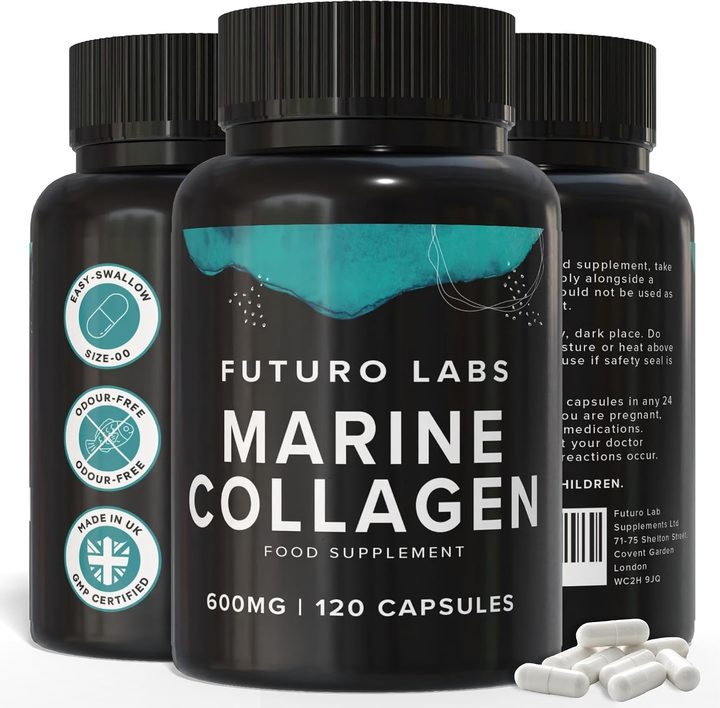
Our brand: the worked example on this page
Futuro Labs Marine Collagen
- 28p a day
- 120 capsules, 2 capsules daily
- Lab tested
- Made in the UK
A capsule that sidesteps downsides three and four: Futuro Labs Marine Collagen on Amazon UK, 2 capsules, 1200mg hydrolysed type 1 marine collagen with 12mg vitamin C at 15% NRV plus zinc, 120 for £16.99, 28p a day, lab tested and UK made, a modest dose below the 2.5 to 15g research band that carries the vitamin C line. Full label breakdown. The protein ledger is on the does collagen count page; the safe ceiling on the how many mg is safe page.
The first three downsides: cost, displacement and fullness, the ones that happen to most readers
What is the downside of collagen is usually asked expecting a side effect and the honest answer ranks the downsides by how often they actually happen, which puts the money and the maths above anything medical. Downside one, and the only universal one: cost. Hydrolysed collagen costs more per gram than whey concentrate at the same shelf, and per gram it does less of what most lifters buy protein for, since the whey versus collagen muscle synthesis trials show whey raising muscle protein synthesis where collagen barely moves it, so every pound spent on collagen instead of whey buys a weaker protein, which is a fine trade for a reader with a specific reason, the tendon protocol or the joint trials or the skin trials or the vitamin C line, and a poor one for a reader who bought collagen because the tub said protein. Downside two, common: displacement. A twenty-gram scoop is a meal's worth of protein by weight and a reader who counts it as the day's protein has counted protein with no tryptophan, near zero on the completeness scale and around a third of whey's leucine, and so has crowded out the complete protein a 1.6 grams per kilo target is written in, the protein ledger's finding that collagen counts on the label and not toward muscle, and the fix is to book the scoop separately and eat the day's complete protein as if the scoop were not there. Downside three, dose-dependent: fullness and mild stomach upset. Twenty grams of any protein in a glass of water sits heavily in some readers, more so fasted or late at night, and the supplement tolerance literature files collagen among the mild ones, with fullness, a little bloating and the occasional loose stool at scoop doses and nothing at capsule doses, so the reader who notices it drops to a dessertspoon, around ten grams, the middle of the research band, or moves the dose after a meal. Three downsides so far and none of them a side effect in the medical sense, which is the pattern the rest of the list keeps.
The last three downsides: aftertaste, oxalate and fish allergy, and what is not on the list
Downside four, marine-specific and a matter of taste: some marine collagen powders carry a faint fishy aftertaste, more noticeable in water than in coffee or a smoothie, and the fix is the vehicle, a hot drink or a flavoured liquid, or the capsule, which has no taste at all. Downside five, specific to a group: hydroxyproline, the amino acid that makes up around a tenth of collagen and is found in almost nothing else, is metabolised in the liver partly to oxalate, and the gelatin feeding studies show urinary oxalate rising after large loads, so a reader who has formed calcium oxalate kidney stones treats collagen and gelatin as a modest food rather than a daily twenty grams and asks whoever manages the stones, while a reader who has never formed a stone has no reason to think about it. Downside six, rare: fish allergy. Marine collagen is hydrolysed fish skin and scale protein, and fish allergy is to fish proteins, so unlike refined fish oil, which carries little protein and is tolerated by most fish-allergic people, marine collagen is the allergen itself in a capsule, and the fish-allergic reader chooses bovine and the unsure reader asks first. That is the list, and the honest page prints what is not on it: toxicity, since none has appeared at up to fifteen grams a day for months in trials; an upper level, since no authority has needed to set one; drug interactions, since collagen is a food protein with no documented interactions with medicines; and the side effects the search phrasing implies, headaches and rashes and the rest, which the trial adverse event tables do not show above placebo. One more downside deserves a line of its own because it is the one the shelf never mentions: collagen holds no authorised claim of any kind, so every benefit on a tub is either the vitamin C line borrowed from the ingredient beside it, or a phrasing the register does not permit, and a reader buying collagen is buying research, the trials at 2.5 to 15 grams, and not a sentence the law has checked. The worked example takes downsides three and four off the table by being a capsule, and states its own terms plainly: two capsules, 1200mg hydrolysed type 1 marine collagen with 12mg vitamin C plus zinc, 120 for £16.99 at 28p a day, lab tested and UK made, a dose below the research band that carries the vitamin C line, and a fish protein the fish-allergic reader swaps for bovine. Six downsides ranked, the first two arithmetic, the next two comfort, the last two specific, and none of them the side effect the question expected.
| Rank | The downside | Who it happens to | The fix |
|---|---|---|---|
| 1 | Cost per gram above whey for a weaker protein | Everyone | Buy it for a specific reason or buy whey |
| 2 | A scoop counted as the day's protein | Anyone tracking protein | Book it separately; eat complete protein as usual |
| 3 | Fullness or mild upset at scoop doses | Some readers, fasted or late | A dessertspoon, or after a meal |
| 4 | A fishy aftertaste | Some marine powders in water | Coffee, a smoothie, or a capsule |
| 5 | Hydroxyproline to oxalate | Calcium oxalate stone formers | Keep it modest and ask |
| 6 | Fish allergy | Fish-allergic readers with marine | Choose bovine |
| Not on the list | Toxicity, an upper level, drug interactions | Nobody in the trials | None needed |
| The worked exampleOurs | Two capsules, 1200mg marine collagen with 12mg vitamin C, 28p a day | Sidesteps ranks 3 and 4 | On its true terms |
What to check on the label
- Know why you are paying more than whey: a reason, or buy whey.
- Book the scoop separately: it is not the day's protein.
- Drop to a dessertspoon if it sits heavily: or take it after a meal.
- Change the vehicle for the aftertaste: coffee or a capsule.
- Stone formers and fish allergy read their footnote: modest and ask; bovine.
Our brand
The worked example: Futuro Labs Marine Collagen
Futuro Labs Marine Collagen: 2 capsules daily, 1200mg hydrolysed type 1 marine collagen with 12mg vitamin C and 1.5mg zinc (15% NRV each), 120 capsules for £16.99, 60 days at 28p a day, lab-tested, UK GMP made. Slim veggie-shell capsules, odour free. Fish derived: pescatarian, not vegetarian or vegan.
- Collagen per serving
- 1200mg hydrolysed type 1 marine (fish)
- Co-factors
- vitamin C 12mg (15% NRV), zinc 1.5mg (15% NRV)
- Serving
- 2 capsules a day
- Bottle
- 120 capsules, 60 days
- Price
- £16.99 (28p a day)
- Capsule
- slim size 00, veggie shell, odour free
Questions people also ask
Does collagen have side effects?
In the medical sense almost none: the trials at up to fifteen grams a day for months show fullness and mild stomach upset at scoop doses and nothing above placebo in the adverse event tables, no toxicity, no upper level and no documented drug interactions, with the two specific notes being oxalate for calcium stone formers and fish allergy with marine collagen.
What is the biggest downside of taking collagen?
Cost for what it does: hydrolysed collagen costs more per gram than whey and builds less muscle per gram, lacking tryptophan and most of whey's leucine, so a reader without a specific reason, the tendon protocol, the joint or skin trials or the vitamin C line, is paying more for a weaker protein.
Is there a downside to taking marine collagen specifically?
Two: a faint fishy aftertaste in some powders taken in water, fixed by a hot drink or a capsule, and fish allergy, since marine collagen is hydrolysed fish skin and scale protein, the allergen itself, so fish-allergic readers choose bovine.
Can taking collagen every day be bad for you?
Not for a healthy adult at research doses: 2.5 to 15 grams a day ran for months in trials without toxicity, no authority has set an upper level, and the daily downsides are the cost, the displacement of complete protein if the scoop is counted as the day's protein, and fullness at scoop doses.
Who should not take collagen?
Fish-allergic readers should not take marine collagen, calcium oxalate stone formers keep collagen and gelatin modest and ask whoever manages the stones, anyone with kidney disease asks their kidney team before any protein supplement, and this site gives no supplement guidance for anyone under eighteen.
Sources
- The direct comparison trials: randomised studies pitting whey against collagen peptides on muscle protein synthesis and lean mass, in which whey consistently produced the greater anabolic response. PubMed record
- The supplement gastrointestinal tolerance literature: oral iron produces nausea, constipation and upper abdominal pain in a large share of users, magnesium oxide and high magnesium doses loosen stools, zinc taken fasted causes nausea, creatine at loading doses causes bloating in some, whey concentrate causes lactose symptoms, and fish oil at standard doses causes belching and, rarely, nausea when taken fasted, with loose stools only at gram doses. PubMed record
- The hydroxyproline and urinary oxalate literature: gelatin and collagen are rich in hydroxyproline, which the liver metabolises partly to oxalate, and feeding studies show a rise in urinary oxalate after large gelatin loads, a note for people who form calcium oxalate kidney stones and no concern at ordinary intakes in others. PubMed record
- The fish allergy and fish oil literature: fish allergy is to fish proteins, and refined fish oil contains little or no protein, so most fish-allergic people tolerate fish oil supplements, but the allergy guidance is to discuss it with an allergist and to prefer an algal oil where doubt exists. PubMed record