Ghost Fitness/Collagen/Is 1000 mg of collagen a day too much?
Is 1000 mg of collagen a day too much?
The short answer
Draw the ruler. 20mg: a misprint, a fiftieth of a capsule. 1000 to 2000mg: the capsule habit, below the band. 2.5 to 10g: the trials. 15g: the tendon protocol. Diet supplies grams daily; no upper limit. Small, not too much.
- 20mga fiftieth of one capsule; a misread label or a mistyped gram
- 1000 to 2000mgthe capsule habit; below the 2.5g floor of the research band
- 2.5 to 15gthe skin and joint trials from 2.5g, the tendon protocol at 15g; no upper intake level exists
- The diet and the bodyseveral grams a day from meat, skin, stock and gelatin; kilograms held in the body
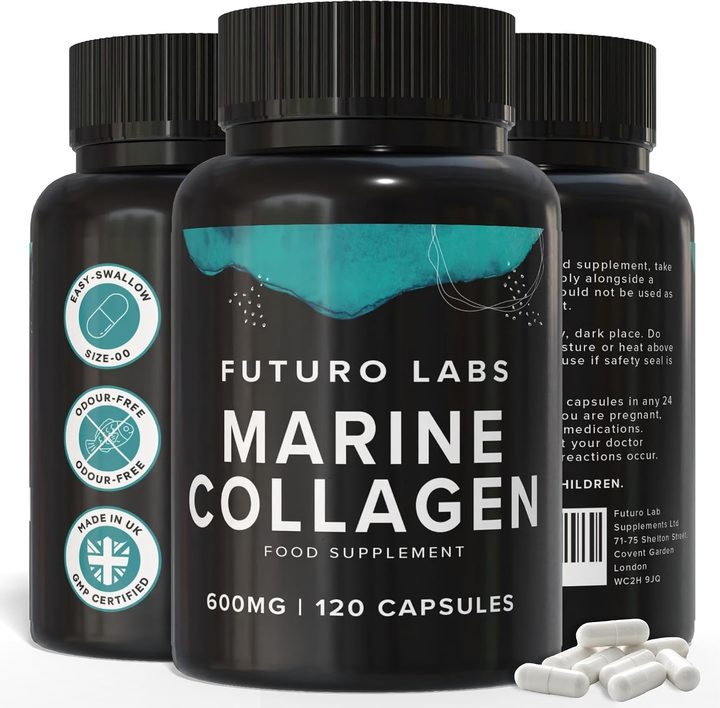
Our brand: the worked example on this page
Futuro Labs Marine Collagen
- 28p a day
- 120 capsules, 2 capsules daily
- Lab tested
- Made in the UK
The 1200mg habit stated on its true terms: Futuro Labs Marine Collagen on Amazon UK, 2 capsules, 1200mg hydrolysed type 1 marine collagen with 12mg vitamin C at 15% NRV plus zinc, 120 for £16.99, 28p a day, lab tested and UK made, below the 2.5 to 15g research band and carrying vitamin C's collagen formation sentence. Full label breakdown. Who owns the verbs at 1000mg is on the 1000mg of collagen page; enough for what on the is 1000mg enough page; the kidney and oxalate question on the collagen and kidney side effects page.
The ruler, from a misprint to the body's own stock
Is 1000 mg of collagen a day too much is a question that cannot be answered without a scale, because too much is a comparison and the asker has not said with what, so the honest page draws the ruler every collagen dose sits on and places 1000mg at its mark. The ruler starts at 20mg, the figure in one version of the question, and the first job is to say what 20mg is: a fiftieth of a single ordinary capsule, less collagen than a teaspoon of stock, a quantity no product sells and no trial has used, so a reader who has read 20mg somewhere has read a misprinted label, a mistyped gram or a different ingredient's line, and the question dissolves. The next marks are 1000 and 2000mg, one and two grams, which are the capsule habits: two capsules of a typical product deliver 1000 to 1200mg, four deliver 2000 to 2400mg, and both marks sit below the 2.5g floor of the research band, which means they are too little to be the trial dose rather than too much of anything. From 2.5g to 10g runs the trial band proper: the skin trials, mostly at 2.5 to 10g for eight to twelve weeks, measuring elasticity and hydration by instrument, with 2.5g and 10g producing changes of similar size and no trial showing more at the higher dose; the joint trials at 5 to 10g over twelve to twenty-four weeks, with modest score changes. At 15g sits the tendon protocol, gelatin or hydrolysed collagen with vitamin C taken about an hour before loading, the dose that doubled a synthesis marker, and the longer trials of hydrolysed collagen have run to a year at 10g. Beside the ruler the honest page draws two reference bars that the shelf never does. The first is the ordinary diet: a reader who eats meat, chicken with the skin, a slow-cooked cut, a stock or gravy, a gelatin dessert or a handful of gummy sweets takes in several grams of collagen and gelatin a day without anyone calling it a dose, a bar that already sits above the whole capsule habit and inside the trial band. The second is the body itself, which holds collagen as its most abundant protein, a quarter to a third of all the protein in it, kilograms in a lifter, turning over on timescales of months to years, so that a gram a day is a small fraction of a percent of the stock it joins. On that ruler 1000mg is a short mark near the bottom, below the diet, below the trials, far below the body's own turnover, and the word too much has nothing to attach to.
Why no upper limit exists, the two cautions, and what the small dose honestly does
Why there is no mark on the ruler labelled too much is the next thing to explain, because readers expect one, having seen upper limits for vitamins and minerals. Those limits exist because nutrients have toxicity: too much vitamin D raises calcium, too much iron damages the liver, too much zinc blocks copper, so a tolerable upper intake level is set below the dose where harm begins. Collagen is not a nutrient of that kind; it is a food protein, digested to amino acids and small peptides like the protein in a steak, and a protein has no toxicity threshold in the way a mineral does, so no upper intake level has been set for collagen by any authority and none is expected. The safety record matches: hydrolysed collagen has been given at 2.5 to 15g a day in trials of up to a year with adverse events no different from placebo, mostly mild digestive complaints at the same rate in both arms, and the quantities people eat as gelatin and connective tissue in ordinary diets have never been treated as a hazard. Two cautions are recorded and they are the whole of the too-much conversation. The first is allergy to the source animal, fish for marine and beef for bovine, where any dose is too much because the protein is present and declared. The second is the hydroxyproline to oxalate pathway: collagen is rich in hydroxyproline, which the liver partly converts to oxalate, and large gelatin doses raise urinary oxalate in feeding studies, so a reader who forms calcium oxalate kidney stones raises a high-dose habit with their doctor; at 1000mg the oxalate contribution is small beside an ordinary diet's, and the caution belongs to the 10 to 15g end of the ruler. Having cleared too much, the honest page says what 1000mg does, because a dose that is safe is not thereby a dose that works. At 1000 to 1200mg the collagen itself sits below every trial band, so it does what a gram of swallowed protein does, digests, supplies glycine, proline and hydroxyproline to the pool, and makes no claim, since collagen holds no authorised sentence in the UK at any dose; the lawful sentence on such a capsule belongs to the vitamin C beside it, which contributes to normal collagen formation for the normal function of skin, cartilage and bones, and to the zinc, which contributes to normal protein synthesis. A reader who wants the skin trial band moves to 2.5g and above, which is a powder or a lot of capsules; a reader who wants the tendon protocol moves to 15g before loading; a reader content with the habit takes the 1000mg for the vitamin C's sentence and the small daily collagen top-up and knows which it is. The worked example states this plainly: two capsules, 1200mg hydrolysed type 1 marine collagen with 12mg vitamin C at 15% of its reference value plus zinc, 120 for £16.99 at 28p a day, lab tested and UK made, below the 2.5 to 15g research band and said to be. Is 1000mg of collagen a day too much: no, and 2000mg is not either; both are small marks on a ruler with no top, and the question that matters is enough for what.
| The mark | What it is | Too much? | What it does |
|---|---|---|---|
| 20mg | A fiftieth of a capsule; a misread label or a mistyped gram | No; not a real dose | Nothing measurable |
| 1000 to 1200mg | The two-capsule habit | No; below the research band | Digests; the lawful sentence is the vitamin C's |
| 2000 to 2400mg | Four capsules | No; still below the band | The same, one notch up |
| 2.5 to 10g | The skin and joint trial band | No; trials to a year at 10g, adverse events like placebo | Instrument skin changes; modest joint score changes |
| 15g | The tendon protocol before loading | No; the Baar trial dose | Doubled a synthesis marker beside loading |
| Several grams a day | An ordinary diet's collagen and gelatin from meat, skin, stock and sweets | Nobody calls it a dose | Eaten daily by most people |
| Kilograms | The body's own collagen stock, its most abundant protein | The scale the ruler sits against | Turns over on months to years |
| The worked exampleOurs | Two capsules, 1200mg marine collagen with 12mg vitamin C plus zinc, 28p a day | No | Stated as below the band, with vitamin C's sentence |
What to check on the label
- Place the dose on the ruler: 1000mg sits below the research band.
- Treat 20mg as a misprint: a fiftieth of a capsule.
- Expect no upper limit: a food protein, not a nutrient with toxicity.
- Check the two cautions: source allergy; oxalate stones at high doses.
- Ask enough for what: 2.5g for the skin band, 15g for the protocol.
Our brand
The worked example: Futuro Labs Marine Collagen
Futuro Labs Marine Collagen: 2 capsules daily, 1200mg hydrolysed type 1 marine collagen with 12mg vitamin C and 1.5mg zinc (15% NRV each), 120 capsules for £16.99, 60 days at 28p a day, lab-tested, UK GMP made. Slim veggie-shell capsules, odour free. Fish derived: pescatarian, not vegetarian or vegan.
- Collagen per serving
- 1200mg hydrolysed type 1 marine (fish)
- Co-factors
- vitamin C 12mg (15% NRV), zinc 1.5mg (15% NRV)
- Serving
- 2 capsules a day
- Bottle
- 120 capsules, 60 days
- Price
- £16.99 (28p a day)
- Capsule
- slim size 00, veggie shell, odour free
Questions people also ask
Is 2000 mg of collagen a day too much?
No. Two grams sits below the 2.5g floor of the research band and far below the 10 to 15g used in trials to a year without excess adverse events; collagen is a food protein with no upper intake level, and the only cautions are allergy to the source animal and the oxalate pathway in stone formers at much higher doses.
Is 20 mg of collagen a day too much?
Twenty milligrams is a fiftieth of a single ordinary capsule and is not a quantity any product sells or any trial has used, so the figure is almost certainly a misread label or a mistyped gram; at that amount the question of too much or too little does not arise because the dose is not real.
Is there a maximum safe dose of collagen?
No tolerable upper intake level has been set, because collagen is a food protein rather than a nutrient with toxicity; trials have given up to 15g a day and 10g for a year with adverse events no different from placebo, and the practical ceiling is digestive comfort, the oxalate caution for stone formers, and the fact that nothing above 15g has been studied.
Does 1000 mg of collagen do anything?
It digests to amino acids and small peptides like any gram of protein and sits below every trial band, so it makes no claim of its own; on a capsule paired with vitamin C the lawful sentence is vitamin C's, normal collagen formation for the normal function of skin, cartilage and bones, which is what an honest 1000 to 1200mg habit is for.
How much collagen do we eat in a normal diet?
Several grams a day for most people, from meat and its connective tissue, chicken skin, slow-cooked cuts, stock and gravy, gelatin desserts and gummy sweets, a quantity above the whole capsule habit and inside the trial band that nobody calls a dose, and against which a 1000mg capsule is a small addition.
Sources
- The oral collagen safety record: hydrolysed collagen has been given at 2.5 to 15 grams a day in trials of up to a year with adverse events no different from placebo, is consumed in gram quantities from meat, skin and gelatin in ordinary diets, carries no tolerable upper intake level because it is a food protein rather than a nutrient with toxicity, and the recorded cautions are allergy to the source animal and the hydroxyproline to oxalate pathway in those who form calcium oxalate stones. PubMed record
- The collagen skin trial dose comparison: across the oral collagen skin trials, doses of 2.5 grams and 10 grams a day over eight to twelve weeks produced instrument changes of similar size, with no trial showing a proportional gain from the higher dose, consistent with fibroblast synthesis being rate-limited by the cell rather than by substrate supply once a modest intake is met. PubMed record
- The collagen biology literature: collagen is the most abundant protein in the body, around a quarter to a third of total protein, with type I forming the fibres of skin, tendon, ligament and bone, type II the cartilage matrix and type III the finer fibres of skin, vessels and healing tissue, made by fibroblasts and related cells from glycine, proline and lysine, hydroxylated with vitamin C as the enzyme cofactor, and turned over on timescales from months to years by tissue. PubMed record
- The hydroxyproline and urinary oxalate literature: gelatin and collagen are rich in hydroxyproline, which the liver metabolises partly to oxalate, and feeding studies show a rise in urinary oxalate after large gelatin loads, a note for people who form calcium oxalate kidney stones and no concern at ordinary intakes in others. PubMed record