Ghost Fitness/Collagen/What are the side effects of collagen on the kidney?
What are the side effects of collagen on the kidney?
The short answer
Two halves. General: collagen is protein, and higher protein intakes have not damaged healthy kidneys; kidney disease brings protein limits set by a kidney team, so ask first. Specific: hydroxyproline raises urinary oxalate, a note for calcium stone formers.
- The general half, healthy adultshigher protein: a small adaptive rise in filtration, no harm in trial meta-analyses
- The general half, kidney diseaseprotein is restricted and set clinically: ask the kidney team before any protein supplement
- The specific halfhydroxyproline to oxalate: urinary oxalate rises after large gelatin loads
- Who has the footnotecalcium oxalate stone formers keep it modest and ask; everyone else has none
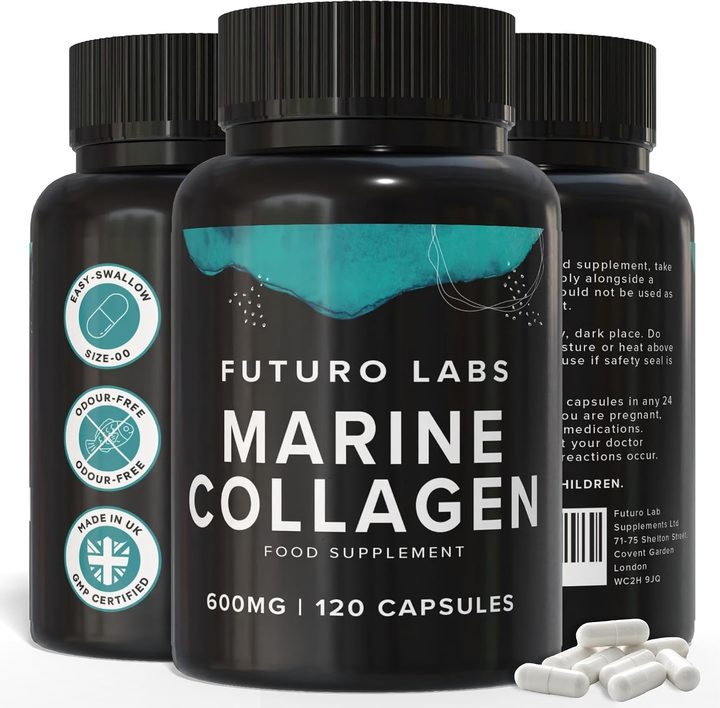
Our brand: the worked example on this page
Futuro Labs Marine Collagen
- 28p a day
- 120 capsules, 2 capsules daily
- Lab tested
- Made in the UK
A dose that adds little to either half: Futuro Labs Marine Collagen on Amazon UK, 2 capsules, 1200mg hydrolysed type 1 marine collagen with 12mg vitamin C at 15% NRV plus zinc, 120 for £16.99, 28p a day, lab tested and UK made, just over a gram of protein and below the 2.5 to 15g research band, taken for the vitamin C line. Full label breakdown. The safe ceiling is on the how many mg is safe page; the full downside list on the downside of collagen page.
The general half: collagen is protein, and what the protein trials say for two different readers
What are the side effects of collagen on the kidney is a question with a general half and a specific half, and the honest page answers both, because a reader searching it is either worried about protein and kidneys in general or has a specific reason, stones or a kidney diagnosis, and the two need different answers. The general half first: collagen is protein, and a ten-gram dose adds ten grams to the day's protein intake, so the kidney question about collagen is the kidney question about protein, which has been asked properly. The meta-analyses of randomised trials of higher protein intakes in adults without kidney disease find that glomerular filtration rate rises slightly on a higher protein diet, which is the kidney's normal adaptive response to a protein load, the way the heart rate rises on a walk, and they find no evidence that this harms kidney function over the trial periods, so the old worry that protein wears the kidneys out has not held up in people whose kidneys were healthy to begin with. The collagen trials themselves, at 2.5 to 15 grams a day for eight weeks to a year, recorded no kidney adverse events above placebo, and no authority has set an upper level for collagen because none has been needed. For a healthy adult, then, the kidney side effects of collagen are the kidney side effects of a small protein serving, which is to say a filtration rate doing its job and nothing else recorded. The same general half read for a different reader gives a different answer and the honest page says so plainly: in established chronic kidney disease, protein intake is restricted and set clinically, because the damaged kidney handles the nitrogen load differently, and a collagen scoop is protein whether or not it builds muscle, so a reader with a kidney diagnosis does not add a collagen powder, a whey powder or any protein supplement without asking the kidney team who set the protein target, and this page gives that reader no number, since the number is theirs to set. That is not a side effect of collagen; it is the general rule that a protein supplement is a protein supplement, and that a restricted intake is restricted.
The specific half: hydroxyproline and oxalate, who has the footnote, and the halves totalled
The specific half is the one thing about collagen that is different from other proteins, and it deserves to be stated exactly rather than either hidden or inflated. Collagen is around a tenth hydroxyproline by weight, an amino acid found in almost no other food protein, and hydroxyproline is metabolised in the liver partly to oxalate, which the kidneys excrete; the gelatin feeding studies gave large gelatin loads and measured urinary oxalate rising afterwards, which is a real and reproducible finding. What it means depends entirely on who is reading. For a reader who has never formed a kidney stone, a rise in urinary oxalate after a collagen dose is a number in a feeding study and nothing more, since oxalate is excreted and the healthy urinary tract clears it, and the collagen trials recorded no stones. For a reader who has formed calcium oxalate kidney stones, the commonest kind, urinary oxalate is one of the variables whoever manages the stones is already watching, and a daily twenty-gram collagen scoop is a daily hydroxyproline load that pushes that variable the wrong way, so that reader treats collagen and gelatin as a modest food rather than a daily habit and asks before adding a dose, the same conversation they would have about spinach, rhubarb and almonds, the high-oxalate foods on the list they were given. That is the whole of the specific half: a footnote for one group, not a side effect for everyone, and not a reason for a reader without stones to think about their kidneys at all. The halves totalled: for a healthy adult, collagen is a small protein serving and the kidney does what it does with protein, which the trials show is adapt and not suffer; for a reader with kidney disease, protein is set clinically and the kidney team is asked before any protein supplement; for a calcium oxalate stone former, hydroxyproline is a footnote worth a conversation. The worked example adds little to either half: two capsules, 1200mg hydrolysed type 1 marine collagen with 12mg vitamin C plus zinc, 120 for £16.99 at 28p a day, lab tested and UK made, just over a gram of protein and around 120mg of hydroxyproline, a dose below the 2.5 to 15g research band taken for vitamin C's collagen formation sentence, the register's only collagen line, and the vitamin C at 12mg is well below the levels at which vitamin C itself enters the oxalate conversation. The kidney question answered: no recorded kidney side effect in healthy adults, a clinical question in kidney disease, and an oxalate footnote for stone formers.
| The half | The reader | What the evidence says | What to do |
|---|---|---|---|
| General | A healthy adult | Higher protein raises filtration slightly, adaptively, with no harm in trial meta-analyses; no kidney events in collagen trials | Nothing: a collagen dose is a small protein serving |
| General | A reader with kidney disease | Protein intake is restricted and set clinically; collagen is protein | Ask the kidney team before any protein supplement |
| Specific | A calcium oxalate stone former | Hydroxyproline is metabolised partly to oxalate; urinary oxalate rises after large gelatin loads | Keep collagen and gelatin modest; ask |
| Specific | Everyone else | The oxalate is excreted; no stones recorded in trials | No footnote |
| The dose | Any reader | 10g collagen is ~1g hydroxyproline; 1.2g collagen is ~120mg | Scale the footnote to the dose |
| The worked exampleOurs | Two capsules, 1200mg marine collagen with 12mg vitamin C, 28p a day | Just over a gram of protein, below the band | On its true terms |
What to check on the label
- Healthy kidneys, healthy protein: the trials show adaptation, not harm.
- Kidney disease: ask before any protein supplement: the target is clinical.
- Stone formers read the hydroxyproline footnote: modest, and ask.
- Scale the footnote to the dose: a gram of collagen is a tenth of a gram of hydroxyproline.
- Ignore the kidney myth otherwise: no upper level, no recorded events.
Our brand
The worked example: Futuro Labs Marine Collagen
Futuro Labs Marine Collagen: 2 capsules daily, 1200mg hydrolysed type 1 marine collagen with 12mg vitamin C and 1.5mg zinc (15% NRV each), 120 capsules for £16.99, 60 days at 28p a day, lab-tested, UK GMP made. Slim veggie-shell capsules, odour free. Fish derived: pescatarian, not vegetarian or vegan.
- Collagen per serving
- 1200mg hydrolysed type 1 marine (fish)
- Co-factors
- vitamin C 12mg (15% NRV), zinc 1.5mg (15% NRV)
- Serving
- 2 capsules a day
- Bottle
- 120 capsules, 60 days
- Price
- £16.99 (28p a day)
- Capsule
- slim size 00, veggie shell, odour free
Questions people also ask
Is collagen hard on the kidneys?
Not in healthy adults: collagen is protein, the meta-analyses of higher protein intakes in adults without kidney disease show a small adaptive rise in filtration rate and no harm, and the collagen trials at up to fifteen grams a day for months recorded no kidney adverse events, so a collagen dose is a small protein serving.
Can I take collagen if I have kidney disease?
Ask the kidney team first: in chronic kidney disease protein intake is restricted and set clinically, a collagen scoop is protein whether or not it builds muscle, and this page gives no number for that reader because the number is theirs to set.
Does collagen cause kidney stones?
Not in the trials, but it carries a footnote: hydroxyproline, around a tenth of collagen, is metabolised partly to oxalate and urinary oxalate rises after large gelatin loads, so a reader who has formed calcium oxalate stones keeps collagen and gelatin modest and asks whoever manages the stones, while a reader without stones has no footnote.
Is marine collagen different for the kidneys?
No: marine and bovine collagen are the same protein from a different animal, with the same hydroxyproline content and the same oxalate footnote, so the kidney answer is identical and the marine difference is fish allergy, not kidneys.
How much hydroxyproline is in a collagen dose?
Around a tenth by weight: a ten-gram scoop carries about a gram of hydroxyproline and two 600mg capsules about 120mg, so the oxalate footnote scales with the dose and a capsule dose adds very little to a stone former's ledger, though the conversation is still worth having.
Sources
- The dietary protein and kidney function literature: meta-analyses of randomised trials in adults without kidney disease find that higher protein intakes raise glomerular filtration rate slightly, a normal adaptive response, without evidence of harm to kidney function, while in established chronic kidney disease protein intake is restricted and set clinically, so the two populations are answered separately. PubMed record
- The hydroxyproline and urinary oxalate literature: gelatin and collagen are rich in hydroxyproline, which the liver metabolises partly to oxalate, and feeding studies show a rise in urinary oxalate after large gelatin loads, a note for people who form calcium oxalate kidney stones and no concern at ordinary intakes in others. PubMed record
- The collagen peptide trial literature: randomised controlled studies of hydrolysed collagen supplementation across skin, joint and connective-tissue outcomes, typically at 2.5g to 15g daily, with small effects and frequent industry funding. PubMed record
- The vitamin C safety assessment: the nutrient reference value is 80mg a day, absorption saturates at a few hundred milligrams with the excess excreted, doses above around one to two grams a day cause loose stools and gastrointestinal upset, the safe level for supplements is set around a gram a day in UK guidance, and high doses raise urinary oxalate in people prone to kidney stones and increase iron absorption, a note for iron overload conditions. https://www.gov.uk/government/publications/vitamin-c-safe-upper-levels