Ghost Fitness/Collagen/What are the side effects of collagen on skin?
What are the side effects of collagen on skin?
The short answer
On the skin itself, nothing above placebo in the trials: no breakouts, no dryness, no rash. Two real events are misfiled: hives on marine collagen are fish allergy, and the acne story belongs to whey and dairy, not collagen.
- The trial tablesskin at 2.5 to 10g for 8 to 12 weeks: nothing above placebo on the skin itself
- The acne storywhey and dairy through insulin and IGF-1 signalling; collagen is non-dairy and absent from that literature
- The rash storyfish allergy to marine collagen: an allergy, stop and choose bovine
- The purging and dryness storiesskincare vocabulary; hydration moved up by a few percent on the corneometer
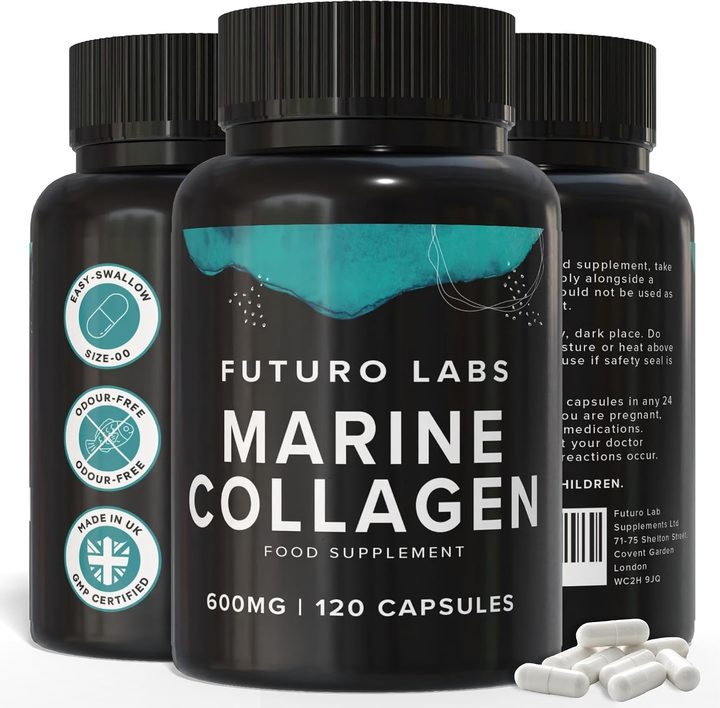
Our brand: the worked example on this page
Futuro Labs Marine Collagen
- 28p a day
- 120 capsules, 2 capsules daily
- Lab tested
- Made in the UK
On its true terms: Futuro Labs Marine Collagen on Amazon UK, 2 capsules, 1200mg hydrolysed type 1 marine collagen with 12mg vitamin C at 15% NRV plus zinc, 120 for £16.99, 28p a day, lab tested and UK made, below the 2.5 to 10g skin trial doses and taken for vitamin C's collagen formation sentence and zinc's normal skin line; marine, so bovine for fish allergy. Full label breakdown. What the skin trials measured is on the does collagen help skin page; the full symptom audit on the symptoms of too much collagen page.
What the skin trials' adverse event tables show, and the acne story traced to whey
What are the side effects of collagen on skin is a question with an unusually good evidence base, because skin is the tissue the oral collagen trials watched most closely, measuring it by cutometer, corneometer, ultrasound and profilometry over eight to twelve weeks at 2.5 to 10 grams a day, and recording adverse events alongside, so the honest page starts with those tables and then traces the four skin stories the internet tells to where each actually comes from. The tables first: on the skin itself, nothing above placebo. The trials record no excess of breakouts, dryness, rashes, itching or any dermatological event in the collagen arms over the placebo arms, in populations of mostly women aged thirty-five to sixty-five taking the doses for two to three months, and the instrument readings moved, where they moved, in the direction of more hydration and elasticity by a few percent, small, mostly industry-funded trials read by devices. So the direct answer is that collagen has no recorded side effect on skin, and the rest of the page is about why readers believe otherwise. The first story is acne, and it is the most useful to trace because it has a real source in the wrong place. Dairy intake and whey protein supplements are associated with acne in some adolescents and young adults in observational studies and case series, and the proposed mechanism is insulin and IGF-1 signalling driven by dairy proteins, whey above all, which is why the lifter who started a whey shake and broke out has a literature behind the suspicion. Collagen is not dairy, carries no such signalling profile, and is absent from the acne literature, but it is very often added to the same shake, so the lifter who broke out after adding collagen to a whey shake has two new things in the glass and one suspect in the literature, and the honest experiment is to drop the whey for a month and keep the collagen, not the other way round. A reader on collagen alone who breaks out has the ordinary causes of adult acne to look at, and the tub is not among them.
The rash, purging and dryness stories, and the worked example on its true terms
The second story is the rash, and it is real and misfiled: hives, itching, lip or facial swelling or a wheezy chest after starting a marine collagen are the picture of fish allergy, since marine collagen is hydrolysed fish skin and scale protein, the very protein a fish allergy reacts to, unlike refined fish oil which carries little protein and is tolerated by most fish-allergic people. That is an allergy rather than a side effect, the distinction mattering because a side effect is dose-related and passes while an allergy does not and escalates, so the reader with hives on marine collagen stops it, discusses the reaction with an allergist, and chooses bovine if they choose collagen at all. The third story is purging, and it is vocabulary rather than physiology: purging is the skincare term for the temporary flare some topical actives produce by speeding cell turnover, retinoids and acids especially, as blocked pores surface faster, and the term has migrated onto swallowed collagen with nothing to carry it, since an oral protein is digested to amino acids and small peptides distributed wherever the body needs protein, reaching the dermis, if at all, by the bloodstream and by no route that could bring anything to the surface of a pore, so collagen cannot purge and a flare in the first weeks of collagen is something else, usually the whey, the season or the ordinary cycle of adult skin. The fourth story is dryness, and it has no source at all: no trial records it, the mechanism does not exist, and the corneometer readings in the trials moved hydration up by a few percent rather than down, so a reader whose skin dried after starting collagen looks at the weather, the heating, the cleanser and the water intake before the tub. Stories traced, the honest page files the two real events where they belong, whey for the acne and fish allergy for the rash, and the two others in the bin. The register's line for completeness: collagen holds no authorised claim for skin, so the tub's skin sentences are vitamin C's, that it contributes to normal collagen formation for the normal function of skin, and zinc and biotin's maintenance of normal skin, borrowed from the ingredients beside it. The worked example on its true terms: two capsules, 1200mg hydrolysed type 1 marine collagen with 12mg vitamin C plus zinc, 120 for £16.99 at 28p a day, lab tested and UK made, below the 2.5 to 10 grams the skin trials gave, taken for vitamin C's and zinc's sentences, marine, so the fish-allergic reader chooses bovine, and with no skin side effect in any table to report. The side effects of collagen on skin: none recorded, one allergy misfiled as one, and one dairy story wearing the wrong label.
| The story | What is claimed | Where it really comes from | What to do |
|---|---|---|---|
| The trial tables | The baseline | Skin at 2.5 to 10g for 8 to 12 weeks: nothing above placebo | Expect no skin side effect |
| Acne | Collagen causes breakouts | Whey and dairy through insulin and IGF-1 signalling; collagen is non-dairy and absent from that literature | Drop the whey for a month, keep the collagen |
| Rash | Collagen causes hives | Fish allergy to marine collagen, the fish protein itself | Stop, see an allergist, choose bovine |
| Purging | Collagen makes skin worse before better | Skincare vocabulary for topical actives; a swallowed protein cannot purge | Look for the real cause |
| Dryness | Collagen dries the skin | No source; corneometer hydration moved up by a few percent | Weather, heating, cleanser, water |
| The register | The tub's skin sentences | Vitamin C's collagen formation line; zinc and biotin's normal skin lines | Read them as the cofactors', not collagen's |
| The worked exampleOurs | Two capsules, 1200mg marine collagen with 12mg vitamin C plus zinc, 28p a day | Below the skin trial doses; no skin event in any table | On its true terms; bovine for fish allergy |
What to check on the label
- Trust the trial tables: nothing above placebo on skin.
- Suspect the whey for acne: not the collagen in the same shake.
- Treat hives on marine as allergy: stop, allergist, bovine.
- Ignore purging: a swallowed protein cannot.
- Look elsewhere for dryness: hydration went up in the trials.
Our brand
The worked example: Futuro Labs Marine Collagen
Futuro Labs Marine Collagen: 2 capsules daily, 1200mg hydrolysed type 1 marine collagen with 12mg vitamin C and 1.5mg zinc (15% NRV each), 120 capsules for £16.99, 60 days at 28p a day, lab-tested, UK GMP made. Slim veggie-shell capsules, odour free. Fish derived: pescatarian, not vegetarian or vegan.
- Collagen per serving
- 1200mg hydrolysed type 1 marine (fish)
- Co-factors
- vitamin C 12mg (15% NRV), zinc 1.5mg (15% NRV)
- Serving
- 2 capsules a day
- Bottle
- 120 capsules, 60 days
- Price
- £16.99 (28p a day)
- Capsule
- slim size 00, veggie shell, odour free
Questions people also ask
Can collagen cause acne or breakouts?
The trials say no and the literature points elsewhere: dairy and whey protein are associated with acne in some young adults through insulin and IGF-1 signalling, collagen is a non-dairy protein absent from that literature, and a lifter who broke out after adding collagen to a whey shake has the whey as the suspect.
Why did I get a rash after starting collagen?
If it was a marine collagen, consider fish allergy: marine collagen is hydrolysed fish skin and scale protein, the allergen a fish allergy reacts to, so hives, itching or swelling are an allergy rather than a side effect, a reason to stop, discuss it with an allergist and choose bovine.
Does collagen cause skin purging?
No: purging is a skincare term for the temporary flare some topical actives cause by speeding pore turnover, and a swallowed protein digested to amino acids and peptides reaches the skin, if at all, through the bloodstream by no route that could bring anything to a pore's surface.
Can collagen make your skin dry?
No trial records it and the instruments moved the other way: corneometer hydration rose by a few percent in the skin trials at 2.5 to 10 grams a day, so dryness after starting collagen is looked for in the weather, heating, cleanser and water intake rather than the tub.
What skin changes did the collagen trials actually find?
Gains of a few percent in elasticity by cutometer and hydration by corneometer, with dermal density by ultrasound and wrinkle depth by profilometry in some trials, at 2.5 to 10 grams a day over eight to twelve weeks, in small and mostly industry-funded trials, with no adverse skin event above placebo.
Sources
- The collagen and skin trial literature: randomised studies of oral collagen peptides on skin elasticity and hydration, mostly small, short and industry funded, with no authorised claim resulting. PubMed record
- The dairy, whey and acne literature: observational studies and case series associate dairy intake and whey protein supplements with acne in some adolescents and young adults, a proposed mechanism through insulin and IGF-1 signalling from dairy proteins, with collagen, a non-dairy protein without that signalling profile, absent from the acne literature. PubMed record
- The fish allergy and fish oil literature: fish allergy is to fish proteins, and refined fish oil contains little or no protein, so most fish-allergic people tolerate fish oil supplements, but the allergy guidance is to discuss it with an allergist and to prefer an algal oil where doubt exists. PubMed record
- The skin measurement literature: oral collagen trials assess skin by instrument, elasticity by cutometer suction, hydration by corneometer capacitance, dermal density by high-frequency ultrasound and wrinkle depth by profilometry, changes of a few percent that are detectable by the device and generally below what a person sees in a mirror. PubMed record