Ghost Fitness/Collagen/What are the side effects of collagen on the liver?
What are the side effects of collagen on the liver?
The short answer
The liver reads collagen twice, as protein and as hydroxyproline, and neither reading is an injury: protein nitrogen goes through the urea cycle, and hydroxyproline becomes some oxalate, a kidney footnote. Collagen appears in no liver injury case series.
- Reading one, proteinsurplus amino acids deaminated, nitrogen to urea: adaptive, no injury in higher-protein trials
- Reading two, hydroxyprolinea tenth of collagen, metabolised partly to oxalate: made in the liver, lands in the kidney
- The case seriesname botanical extracts and excess vitamin A; do not name collagen, gelatin or protein
- Liver diseaseprotein set by the team, not restricted by default; ask before any supplement
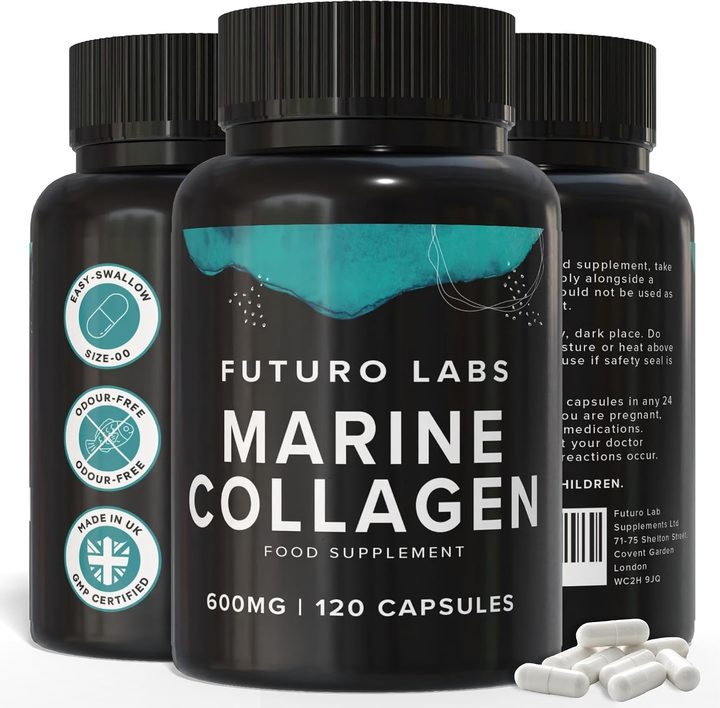
Our brand: the worked example on this page
Futuro Labs Marine Collagen
- 28p a day
- 120 capsules, 2 capsules daily
- Lab tested
- Made in the UK
Just over a gram of protein and no botanical: Futuro Labs Marine Collagen on Amazon UK, 2 capsules, 1200mg hydrolysed type 1 marine collagen with 12mg vitamin C at 15% NRV plus zinc, 120 for £16.99, 28p a day, lab tested and UK made, below the 2.5 to 15g research band and taken for the vitamin C line. Full label breakdown. The kidney half of this question is on the collagen and kidney page; the symptoms the trials can find on the symptoms of too much collagen page.
Reading one: collagen as protein, the urea cycle, and what the higher-protein trials found
What are the side effects of collagen on the liver is best answered by following the dose through the organ, because the liver makes two readings of a collagen dose and a reader worried about the liver wants to know what each reading does, and the honest page follows both to their ends. Reading one is collagen as protein. Hydrolysed collagen is digested to amino acids and small peptides, absorbed and carried first to the liver, which does with them what it does with the protein from every meal: it releases what the body needs for its own protein synthesis, and it deaminates the surplus, stripping the nitrogen from amino acids that will be burned or turned to glucose and disposing of that nitrogen through the urea cycle, urea leaving in the urine. Urea production rises with protein intake, so a reader eating more protein makes more urea, and this is an adaptive process rather than a strain, the same way a reader who walks more breathes more, and the trials of higher protein intakes in adults without liver disease, including the sports nutrition intakes of 1.6 grams per kilo and above, show no evidence of liver injury, the liver enzymes that would flag damage staying where they were. Collagen is an unusual protein in composition, a third glycine with proline and hydroxyproline and no tryptophan, but the liver's handling of its nitrogen is not unusual, and ten grams of collagen is ten grams of protein to the urea cycle, less than a chicken breast. A different reader needs a different sentence and the honest page prints it: a reader with liver disease has protein intake set by their team, and the current position in that field is generally not to restrict protein by default, since muscle loss is a bigger problem than nitrogen in most liver disease, but the number is theirs to set and a collagen scoop is protein, so that reader asks before adding any supplement and this page gives no number for them. For everyone else, reading one ends in urea and nothing else.
Reading two: hydroxyproline and oxalate, what the case series do and do not name, and the register's liver sentence
Reading two is collagen as hydroxyproline, the amino acid that makes collagen collagen, around a tenth of it by weight and found in almost no other food protein. The liver metabolises hydroxyproline through a pathway that ends partly in glyoxylate and then oxalate, and the gelatin feeding studies show urinary oxalate rising after large gelatin loads, which means the collagen aisle's one metabolic footnote is made in the liver and lands in the kidney, as oxalate in the urine, where it is a note for people who form calcium oxalate stones and nothing for anyone else. It is not a liver effect: the liver making oxalate from hydroxyproline is the liver doing ordinary metabolism, not the liver being harmed by it, and no liver marker moves. That is the end of reading two, and the honest page turns to what the liver injury literature does say about the supplement aisle, because it says a good deal and none of it is about collagen. The case series of supplement-associated liver injury, collected by hepatologists over decades, name botanical extracts above all, green tea extract at high doses, ashwagandha, kava, certain traditional herbal mixtures and a changing list of others, along with excess preformed vitamin A from very high-dose supplements and cod liver oil taken far beyond the label, and anabolic steroids sold as supplements; they do not name collagen, gelatin, whey or protein powders, which is the finding a reader searching this page wants and rarely finds stated plainly. The register adds the last line: the only authorised liver sentence in the UK claims register belongs to choline, which contributes to the maintenance of normal liver function, and no collagen tub may say anything about the liver, so a tub that implies liver support is borrowing or inventing. The worked example on this page is just over a gram of protein, around 120mg of hydroxyproline, no botanical extract and no vitamin A: two capsules, 1200mg hydrolysed type 1 marine collagen with 12mg vitamin C plus zinc, 120 for £16.99 at 28p a day, lab tested and UK made, below the 2.5 to 15g research band and taken for vitamin C's collagen formation sentence, the register's only collagen line, a dose the liver reads as a very small protein serving and forgets. The side effects of collagen on the liver: none recorded, two readings that end in urea and in a kidney footnote, and an aisle whose liver risks live on other shelves.
| The item | What the liver does | The outcome |
|---|---|---|
| Reading one: protein | Uses what is needed, deaminates the surplus, nitrogen to urea | Adaptive; no liver injury in higher-protein trials |
| Reading two: hydroxyproline | Metabolises a tenth of the dose partly to glyoxylate and oxalate | Urinary oxalate: a kidney footnote for stone formers, not a liver effect |
| Liver disease | Protein set by the team, generally not restricted by default | Ask before any supplement; no number here |
| The case series | Name botanical extracts, excess vitamin A, steroids sold as supplements | Do not name collagen, gelatin or protein powders |
| The register | One liver sentence, for choline | No collagen tub may mention the liver |
| The worked exampleOurs | Two capsules, 1200mg marine collagen with 12mg vitamin C, 28p a day | Just over a gram of protein, ~120mg hydroxyproline, no botanical, no vitamin A |
What to check on the label
- Count it as protein to the liver: urea, adaptively.
- Place the oxalate footnote in the kidney: made in the liver, harmless to it.
- Liver disease: ask the team first: protein is theirs to set.
- Look for liver risk on other shelves: botanicals and excess vitamin A.
- Ignore any liver line on a collagen tub: choline holds the only one.
Our brand
The worked example: Futuro Labs Marine Collagen
Futuro Labs Marine Collagen: 2 capsules daily, 1200mg hydrolysed type 1 marine collagen with 12mg vitamin C and 1.5mg zinc (15% NRV each), 120 capsules for £16.99, 60 days at 28p a day, lab-tested, UK GMP made. Slim veggie-shell capsules, odour free. Fish derived: pescatarian, not vegetarian or vegan.
- Collagen per serving
- 1200mg hydrolysed type 1 marine (fish)
- Co-factors
- vitamin C 12mg (15% NRV), zinc 1.5mg (15% NRV)
- Serving
- 2 capsules a day
- Bottle
- 120 capsules, 60 days
- Price
- £16.99 (28p a day)
- Capsule
- slim size 00, veggie shell, odour free
Questions people also ask
Is collagen bad for your liver?
No liver effect is recorded: the liver handles collagen as protein, deaminating the surplus and disposing of the nitrogen through the urea cycle adaptively, higher-protein trials in adults without liver disease show no liver injury, and collagen, gelatin and protein powders do not appear in the supplement-associated liver injury case series.
Can I take collagen if I have a fatty liver or liver disease?
Ask the team managing it before adding any supplement: protein intake in liver disease is set clinically, generally not restricted by default in the current position but theirs to set, and a collagen scoop is protein, so this page gives no number for that reader.
Does collagen raise liver enzymes?
Not in the trials: hydrolysed collagen at 2.5 to 15 grams a day for eight weeks to a year recorded no rise in liver enzymes above placebo, and the higher-protein trials at sports nutrition intakes show the same, the enzymes that would flag liver damage staying where they were.
Which supplements are actually linked to liver damage?
The case series name botanical extracts above all, high-dose green tea extract, ashwagandha, kava and various herbal mixtures, along with excess preformed vitamin A from very high-dose supplements and anabolic steroids sold as supplements; they do not name collagen, whey or protein powders.
Does the liver turn collagen into oxalate?
Partly, from one amino acid: hydroxyproline, around a tenth of collagen, is metabolised in the liver through glyoxylate to oxalate, which is excreted in urine, so the footnote is made in the liver and matters in the kidney, for calcium oxalate stone formers, and is ordinary metabolism rather than a liver effect.
Sources
- The dietary protein and liver literature: the liver deaminates surplus amino acids and disposes of the nitrogen through the urea cycle, urea production rising with protein intake as a normal adaptive response, with higher protein intakes in adults without liver disease showing no evidence of liver injury, and protein intake in liver disease set clinically rather than restricted by default. PubMed record
- The hydroxyproline and urinary oxalate literature: gelatin and collagen are rich in hydroxyproline, which the liver metabolises partly to oxalate, and feeding studies show a rise in urinary oxalate after large gelatin loads, a note for people who form calcium oxalate kidney stones and no concern at ordinary intakes in others. PubMed record
- The herb-induced liver injury literature: documented case reports of liver injury associated with botanical supplements including ashwagandha and high-dose green tea extract, rare but recognised in hepatology. PubMed record
- The GB claims register, choline entry: choline contributes to the maintenance of normal liver function, the register's one liver-worded authorised claim. https://www.gov.uk/government/publications/great-britain-nutrition-and-health-claims-nhc-register