Ghost Fitness/Collagen/What are the side effects of collagen protein powder?
What are the side effects of collagen protein powder?
The short answer
Three powders. Whey: lactose bloating, a dairy acne link. Plant: fermentable fibre gas, more heavy metals in testing. Collagen: neither, only fullness at scoop doses, an oxalate footnote, fish allergy with marine, and the wrong protein for muscle.
- Whey powderlactose bloating in the intolerant, less in isolate; a dairy acne association; complete and leucine-rich
- Plant powderfermentable fibre and oligosaccharide gas; detectable heavy metals more often in testing; completeness by blend
- Collagen powderno lactose, no fibre; fullness at scoop doses; oxalate footnote; fish allergy with marine; nothing above placebo
- The non-side-effectincomplete: no tryptophan, a third of whey's leucine; the wrong protein for muscle
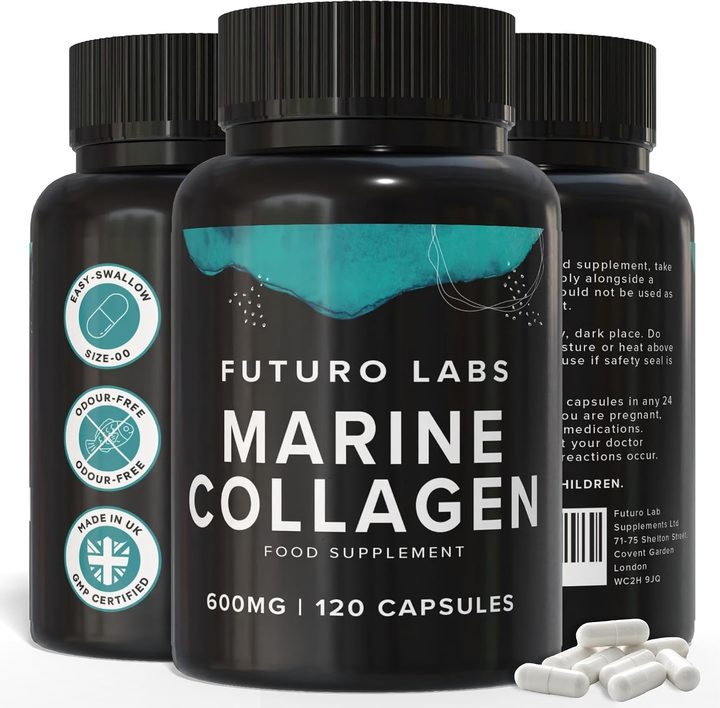
Our brand: the worked example on this page
Futuro Labs Marine Collagen
- 28p a day
- 120 capsules, 2 capsules daily
- Lab tested
- Made in the UK
The capsule that sidesteps the powder lines: Futuro Labs Marine Collagen on Amazon UK, 2 capsules, 1200mg hydrolysed type 1 marine collagen with 12mg vitamin C at 15% NRV plus zinc, 120 for £16.99, 28p a day, lab tested for purity and UK made, no scoop, no lactose, no fibre, at a dose below the research band and stated so; marine, so bovine for fish allergy. Full label breakdown. The powder format audit is on the downside of collagen powder page; the whey comparison on the collagen versus whey page.
The shelf read side by side: whey's list and plant protein's list
What are the side effects of collagen protein powder is a question best answered by putting it back on the shelf it came from, because collagen protein powder is one of three kinds of protein powder a lifter buys and its side effects only make sense beside the other two, so the honest page reads the three lists side by side and then says which protein does which job. Whey first, the powder most lifters own. Whey concentrate carries lactose, several grams a scoop, so in the lactose-intolerant, a large share of adults of many ancestries, it produces bloating, gas and loose stools within hours, the commonest protein powder complaint in the aisle, and whey isolate, filtered further, strips most of the lactose and most of the complaint with it; whey and dairy generally carry an association with acne in some adolescents and young adults through insulin and IGF-1 signalling from dairy proteins, an observational and case series finding rather than a trial one; and whey is a complete, leucine-rich protein that does the protein powder's usual job, raising muscle protein synthesis after training, better than anything else on the shelf, which is the reason its side effects are tolerated. Plant protein second, pea, rice, hemp, soya and their blends. Plant powders carry fermentable fibre and oligosaccharides from the source plant, so in some users they produce gas by the same colonic fermentation route as beans, a grittier texture and an earthier taste that flavouring is added to hide, and independent testing programmes have repeatedly reported detectable lead and cadmium in a share of protein powders with plant-based ones more often and at higher levels than whey, since plants draw metals from soil, a manufacturing side effect answered by a batch certificate and a heavy-metals panel rather than by the protein itself; completeness depends on the blend, single-source pea or rice being low in one essential amino acid or another and blends correcting it, so plant powders do the muscle job adequately when blended and less well alone. Two lists, then, before collagen's: whey's is lactose and a dairy story, offset by the best muscle protein available; plant's is fibre gas and a metals question, offset by a dairy-free complete protein when blended.
Collagen powder's list, the non-side-effect that matters most, and the three powders placed
Collagen powder third, and its list begins with two absences. It carries no lactose, being an animal protein from hide or fish skin rather than milk, so the lactose-intolerant lifter who bloats on whey concentrate does not bloat on collagen for that reason; and it carries no fibre or oligosaccharides, being a purified protein hydrolysate, so the fermentation gas of plant powders does not occur. What it does carry is the ordinary list of a protein taken in a glass: fullness and mild bloating at scoop doses of twenty grams in the first days, twenty grams of any protein sitting heavily especially fasted or late, fading over one to two weeks as the gut adapts and absent at a dessertspoon or a capsule; a faint taste in plain water from some marine powders, the powder's property and fixed by the drink; the hydroxyproline to oxalate footnote, urinary oxalate rising after large gelatin loads, a note for readers who form calcium oxalate stones and nothing for anyone else; and fish allergy with marine collagen, hives or swelling being the allergen and a reason to stop and choose bovine, the mirror of whey's dairy allergy and of soya's. On heavy metals, collagen sits between the two: marine collagen concentrates what the sea carried, so its manufacturing document is a heavy-metals panel like plant protein's, and bovine's is a traceability statement, both answered by the batch certificate a reader should be shown. The trial tables at up to fifteen grams a day for a year show nothing above placebo beyond the early fullness, no liver, kidney or blood marker moving, and no skin event. Then the non-side-effect that matters most on this shelf, because it is the one a protein powder buyer needs to hear: collagen is an incomplete protein, lacking tryptophan entirely, near zero on the completeness scale and carrying around a third of whey's leucine, so it does the protein powder's usual job, raising muscle protein synthesis and counting toward 1.6 grams per kilo, poorly, and a lifter who swapped whey for collagen to avoid the lactose has avoided the lactose and lost the muscle protein, when whey isolate or a blended plant powder would have avoided the lactose and kept it. The three powders placed: whey for muscle, with isolate for the lactose-intolerant; plant for dairy-free muscle, blended and certified; collagen for connective tissue research at trial doses and for vitamin C's collagen formation sentence, booked separately and never as the day's protein. The worked example sidesteps the powder lines at a modest dose: two capsules, 1200mg hydrolysed type 1 marine collagen with 12mg vitamin C plus zinc, 120 for £16.99 at 28p a day, lab tested for purity and UK made, no scoop, no lactose, no fibre, below the research band and stated so, marine, so bovine for fish allergy. What are the side effects of collagen protein powder: fewer than whey's and plant's on the gut, the same footnotes as any collagen, and one large non-side-effect, that it is not the protein a protein powder is bought for.
| The line | Whey | Plant | Collagen |
|---|---|---|---|
| Gut | Lactose bloating, gas, loose stools in the intolerant; isolate strips most | Fermentable fibre and oligosaccharide gas in some | Neither; fullness at scoop doses, fading over a fortnight |
| Skin | A dairy acne association in some young adults | None documented | Nothing above placebo; marine hives are fish allergy |
| Allergy | Milk protein allergy | Soya allergy in soya blends | Fish allergy with marine; alpha-gal with bovine, rarely |
| Heavy metals | Rarely detected | Detected more often in independent testing | Marine needs a metals panel; bovine a traceability line |
| Footnotes | None specific | None specific | Oxalate for calcium stone formers |
| Completeness | Complete, leucine-rich: builds muscle | Complete when blended | Incomplete: no tryptophan, a third of whey's leucine |
| The job | Muscle | Dairy-free muscle | Connective tissue research; the vitamin C line; not the day's protein |
| The worked exampleOurs | Not this | Not this | Two capsules, 1200mg marine collagen with 12mg vitamin C, 28p a day; no scoop, lactose or fibre |
What to check on the label
- Bloating on whey: try isolate: the lactose, not the protein.
- Gas on plant powder: it is the fibre: and check the metals panel.
- Fullness on collagen: drop the scoop: a dessertspoon or a capsule.
- Never swap whey for collagen to dodge lactose: you lose the muscle protein.
- Read every powder's certificate: metals and content, whatever the source.
Our brand
The worked example: Futuro Labs Marine Collagen
Futuro Labs Marine Collagen: 2 capsules daily, 1200mg hydrolysed type 1 marine collagen with 12mg vitamin C and 1.5mg zinc (15% NRV each), 120 capsules for £16.99, 60 days at 28p a day, lab-tested, UK GMP made. Slim veggie-shell capsules, odour free. Fish derived: pescatarian, not vegetarian or vegan.
- Collagen per serving
- 1200mg hydrolysed type 1 marine (fish)
- Co-factors
- vitamin C 12mg (15% NRV), zinc 1.5mg (15% NRV)
- Serving
- 2 capsules a day
- Bottle
- 120 capsules, 60 days
- Price
- £16.99 (28p a day)
- Capsule
- slim size 00, veggie shell, odour free
Questions people also ask
Does collagen protein powder cause bloating like whey?
Not for whey's reason: whey concentrate carries lactose, which bloats the lactose-intolerant, and collagen carries none, so the only fullness from collagen powder is that of twenty grams of any protein in a glass at scoop doses, fading over a fortnight and absent at a dessertspoon or a capsule.
Is collagen protein powder better tolerated than plant protein?
On the gut, usually: plant powders carry fermentable fibre and oligosaccharides that produce gas by the same route as beans, and collagen is a purified hydrolysate with none, but plant powders blended are complete proteins that build muscle and collagen is not, so tolerance is bought at the cost of the job.
Can I replace whey with collagen if I am lactose intolerant?
You can avoid the lactose that way and you lose the muscle protein: collagen lacks tryptophan and most of whey's leucine and barely raises muscle protein synthesis, so the lactose-intolerant lifter keeps the muscle job with whey isolate, which strips most of the lactose, or a blended plant powder, and books collagen separately if wanted.
Does collagen protein powder contain heavy metals?
It can, as any protein from a natural source can: marine collagen concentrates what the sea carried, so its safety document is a heavy-metals panel, bovine's is a traceability statement, and the answer for every powder on the shelf, plant powders most often flagged in independent testing, is a batch certificate from an independent laboratory.
What are the actual side effects of collagen protein powder?
Fullness and mild bloating at scoop doses fading over a fortnight, a taste in water from some marine powders, the hydroxyproline to oxalate footnote for calcium stone formers, fish allergy with marine collagen, nothing above placebo in trials at up to fifteen grams for a year, and the non-side-effect that matters most, that it is an incomplete protein and the wrong one for muscle.
Sources
- The protein powder tolerance comparison: whey concentrate carries lactose and produces bloating and loose stools in lactose-intolerant users, whey isolate less so, plant protein powders carry fermentable fibre and oligosaccharides that produce gas, and independent testing programmes have reported detectable heavy metals more often in plant-based powders, while collagen powder carries neither lactose nor fibre and its reported effects are fullness at large doses. PubMed record
- The protein powder contaminant literature: independent testing programmes report detectable lead and cadmium in a share of protein powders, higher on average in plant-based and chocolate-flavoured products than in whey and vanilla, with most results below regulatory limits. PubMed record
- The dairy, whey and acne literature: observational studies and case series associate dairy intake and whey protein supplements with acne in some adolescents and young adults, a proposed mechanism through insulin and IGF-1 signalling from dairy proteins, with collagen, a non-dairy protein without that signalling profile, absent from the acne literature. PubMed record
- Comparative protein research: the leucine content of a protein drives its muscle protein synthesis response, with whey outperforming collagen in direct comparisons. PubMed record