Ghost Fitness/Collagen/How much collagen per day for a woman?
How much collagen per day for a woman?
The short answer
No dose anywhere is sexed: the habit runs 1 to 2g with cofactors aboard, the skin trials used 2.5 to 10g on mostly female participants, and the protocol runs 15g. The same numbers serve any adult.
- The habit dose1 to 2g daily, bought for the cofactors at 15% NRV
- The trial band2.5 to 10g in the skin studies, recruited mostly from women
- The protocol doseroughly 15g with vitamin C before loading work
- The female columndoes not exist: no study or claim ever sexed a dose
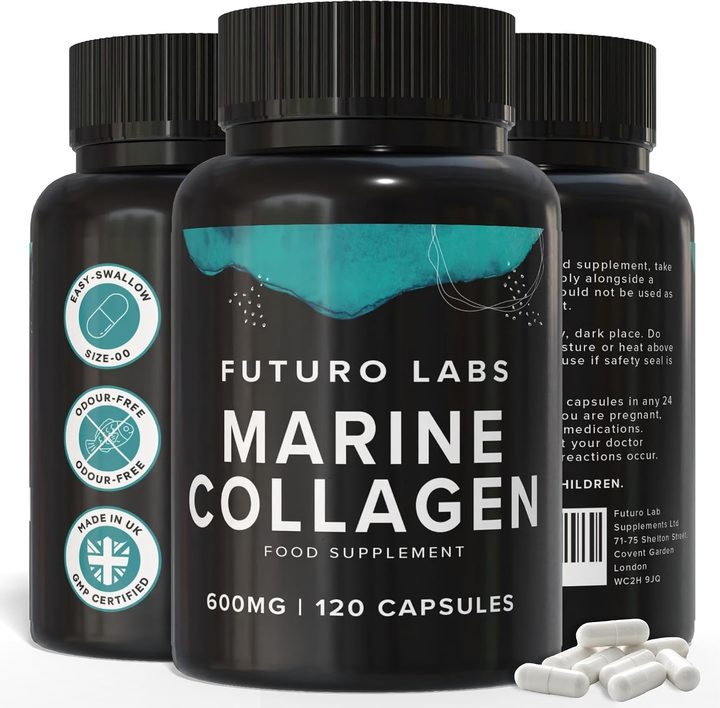
Our brand: the worked example on this page
Futuro Labs Marine Collagen
- 28p a day
- 120 capsules, 2 capsules daily
- Lab tested
- Made in the UK
The habit dose, unsexed and metered: Futuro Labs Marine Collagen on Amazon UK, 1200mg hydrolysed type 1 per two-capsule serving with vitamin C and zinc at 15% NRV, £16.99 for 60 days at 28p. Full label breakdown. The is-1000mg-enough decomposition is on the enough page; the women's five-reasons audit on the for-women page.
The table drawn with the column the question expects, and why that column is empty
Draw the table this query is asking for, a men's column and a women's column, and the honest version prints the same numbers twice, because no collagen dose anywhere in the evidence or the law is sexed: the register's only relevant thresholds, vitamin C and zinc at 15% NRV, are set per adult, not per sex; the skin-trial literature that generated the 2.5-to-10g band recruited its participants overwhelmingly from women, meaning the evidence base a woman asks about is already, as it happens, largely built on women, doses chosen by researchers for effect windows and never adjusted by sex within or between studies; the tendon protocol's roughly 15g with vitamin C was developed on mixed and male-heavy athletic cohorts with, again, no sex adjustment anywhere in its papers; and no manufacturer's honest label prints a women's serving because none could cite a reason to. So the three real numbers, stated once for any adult: the habit dose, 1-to-2g daily, the scale at which collagen is honestly bought for the cofactor sentences riding it, the worked example's 1200mg being exactly this lane; the trial band, 2.5-to-10g, the powder-scale window the skin studies measured their instruments across, participation territory rather than promise territory; and the protocol dose, roughly 15g with C about an hour before loading sessions, the connective-tissue lane's arithmetic, powder by necessity. A woman choosing between them chooses by purpose, exactly as anyone does, and the milligram variant answers itself inside the same table, 1000-to-2000mg being the habit lane restated in smaller units.
What genuinely is female-relevant around the unsexed numbers, and the plan that respects it
The honest female-specific content of this question sits around the doses, not in them, and deserves its own paragraph rather than a fictional column. First, the label's own gate, quoted on every product page this site writes: collagen supplements are not for pregnant or nursing women without medical advice, the one place where sex and life stage genuinely change the answer, and it changes it to ask first, not to a different gram count. Second, the context the marketing exploits and the guard pages correct: from the menopause transition, bone loss accelerates as oestrogen declines, and the response that evidence supports is the bone programme, protein adequacy from complete sources, dietary calcium, vitamin D per UK guidance, resistance and impact training, a programme in which collagen's grams never count toward the protein line and its only lawful contribution is vitamin C's collagen-formation sentence for normal bones, riding at 15% NRV. Third, the deficit case many searchers of this exact query are running: in a calorie deficit a woman's guards, complete protein kept high and training kept up, matter more rather than less per the pink-tub pages, and no collagen dose at any hour participates in them. The plan that respects all of it: pick the lane by purpose, habit at 1-to-2g with cofactors verified, trial-band participation at 2.5g-plus with expectations flat, or the protocol at 15g beside a physio-framed loading programme; run the pregnancy gate and any medication question past the professional first; and spend the saved worry on the programme lines that are actually sexed by evidence, the bone and deficit guards, where the answer was never in this aisle.
| The lane | For women | For men |
|---|---|---|
| The cofactor habit | 1 to 2g daily, cofactors at 15% NRV | 1 to 2g daily, cofactors at 15% NRV |
| The skin-trial band | 2.5 to 10g: the studied window | 2.5 to 10g: the studied window |
| The tendon protocol | ~15g with C before loading | ~15g with C before loading |
| The evidence base | Largely built on female cohorts already | The same studies, unadjusted |
| The genuine gates | Pregnancy and nursing: advice first | Medication questions: advice first |
| The sexed programmes | Bone and deficit guards, outside this aisle | The same guards, differently weighted |
The verdict, printed once for everyone
How much collagen per day for a woman: the same three numbers any adult gets, because none was ever sexed, 1-to-2g for the cofactor habit, 2.5-to-10g as the skin trials' studied band, built largely on women in the first place, and roughly 15g with vitamin C for the pre-loading protocol, with the genuinely female-relevant lines sitting around the doses, the pregnancy-and-nursing gate that changes the answer to ask first, and the menopause-era bone programme whose real levers live outside this aisle entirely. The worked example serves the habit lane at its honest scale: Futuro Labs Marine Collagen, 1200mg hydrolysed type 1 per two-capsule serving with 12mg vitamin C and 1.5mg zinc at 15% NRV, lab tested, UK made, £16.99 for 60 days at 28p a day, one dose, printed once, for anyone.
What to check on the label
- No dose is sexed: the women's column prints the men's numbers.
- Three lanes, three numbers: 1-2g habit, 2.5-10g trial band, 15g protocol.
- The evidence was mostly women anyway: the skin cohorts skewed female.
- The real gates are life-stage: pregnancy and nursing mean advice first.
- The sexed programmes live elsewhere: bone and deficit guards, not grams.
Our brand
The worked example: Futuro Labs Marine Collagen
Futuro Labs Marine Collagen: 2 capsules daily, 1200mg hydrolysed type 1 marine collagen with 12mg vitamin C and 1.5mg zinc (15% NRV each), 120 capsules for £16.99, 60 days at 28p a day, lab-tested, UK GMP made. Slim veggie-shell capsules, odour free. Fish derived: pescatarian, not vegetarian or vegan.
- Collagen per serving
- 1200mg hydrolysed type 1 marine (fish)
- Co-factors
- vitamin C 12mg (15% NRV), zinc 1.5mg (15% NRV)
- Serving
- 2 capsules a day
- Bottle
- 120 capsules, 60 days
- Price
- £16.99 (28p a day)
- Capsule
- slim size 00, veggie shell, odour free
Questions people also ask
What is the recommended collagen dose for women?
The same as for anyone: 1 to 2g daily for the cofactor habit, 2.5 to 10g as the skin trials' band, or roughly 15g with vitamin C for the pre-loading protocol. No study or claim sexes a dose.
How many mg of collagen should a woman take daily?
The habit lane in smaller units: 1000 to 2000mg with vitamin C and zinc at 15% NRV aboard, the worked example's 1200mg sitting exactly there.
Do women need more collagen after menopause?
No dose changes: what changes is the bone programme, complete protein, calcium, vitamin D and resistance training, in which collagen's only lawful part is vitamin C's bone-related sentence.
Can pregnant or breastfeeding women take collagen?
Only with medical advice first: the category's standing label warning makes pregnancy and nursing the one place sex and life stage genuinely change the answer.
Is marine collagen dosed differently for women?
No: marine and bovine are the same peptides, and every lane's number, habit, trial band or protocol, applies to either source and either sex unchanged.
Sources
- The collagen and skin trial literature: randomised studies of oral collagen peptides on skin elasticity and hydration, mostly small, short and industry funded, with no authorised claim resulting. PubMed record
- The gelatin and vitamin C pre-exercise research (Shaw, Baar and colleagues): 15g gelatin with vitamin C taken about an hour before loading, studied for markers of collagen synthesis, the protocol behind the tendon-training conversation. PubMed record
- The menopause and bone literature: the decline in oestrogen around menopause accelerates bone loss in the following years, the reason bone health guidance sharpens for post-menopausal women. PubMed record
- Futuro Labs Marine Collagen listing and label: 1200mg hydrolysed type 1 marine collagen per 2-capsule serving with 12mg vitamin C and 1.5mg zinc at 15% NRV each, 120 capsules, independently lab tested, UK made. https://www.amazon.co.uk/dp/B0C2J7N364