Ghost Fitness/Collagen/Collagen vs whey protein: which is better for women?
Collagen vs whey protein: which is better for women?
The short answer
Route the five reasons women are sold collagen: skin has no claim, hair and nails are zinc's, gentler means nothing, bones want protein, vitamin D and resistance work. Protein is often under-eaten, and whey serves that.
- The five reasonsskin, hair and nails, gentleness, bones, femininity: the pitch deck
- Where each routesno claim, zinc's sentence, nothing, the bone programme, marketing
- The real female-relevant factprotein is commonly under-eaten relative to targets
- The servicewhey or any complete protein serves the actual need
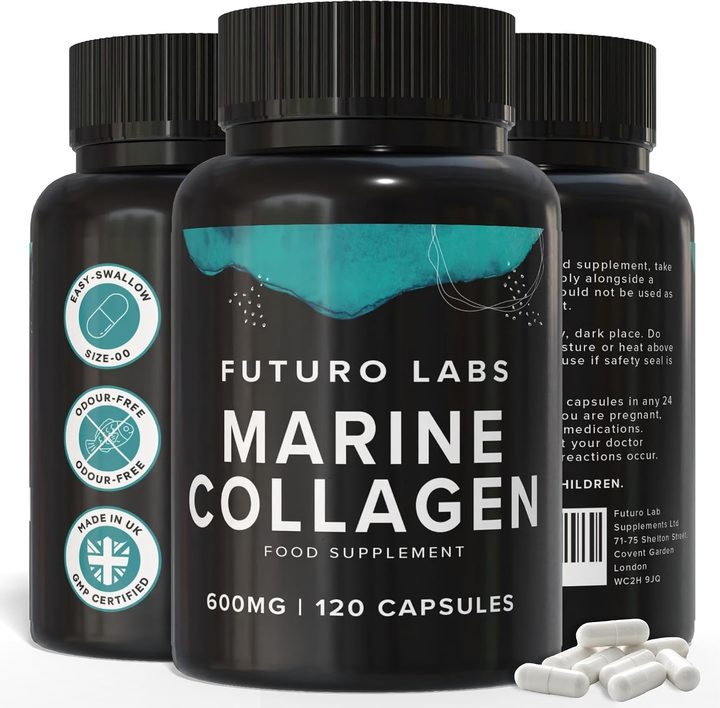
Our brand: the worked example on this page
Futuro Labs Marine Collagen
- 28p a day
- 120 capsules, 2 capsules daily
- Lab tested
- Made in the UK
The cofactor habit, sold without a gender: Futuro Labs Marine Collagen on Amazon UK, 1200mg hydrolysed type 1 with vitamin C and zinc at 15% NRV, £16.99 for 60 days at 28p. Full label breakdown. The deficit-specific version is on the women's weight-loss page; the two standing interviews on the two-jobs page.
The pitch deck's five reasons, routed one by one to where each lawfully lives
Collagen is the supplement aisle's most gendered product, so answer this question by taking the pitch deck women actually receive, five reasons deep, and routing each slide to where it lawfully lives. Reason one, skin: no collagen holds a skin claim at any dose or source, the modest instrument-read trials never reaching claim standard, and the lawful skin sentence on any collagen label belongs to vitamin C, normal collagen formation for normal skin function, riding as a cofactor at 15% NRV, while the levers that actually move skin, sunscreen first among them, live outside the aisle entirely per the face pages. Reason two, hair and nails: zinc's territory by register, maintenance of normal hair and normal nails at 15% NRV, source-indifferent, format-indifferent, and no collagen's own. Reason three, the gentler-for-women framing, the whisper that whey is somehow harsh or masculine: it means nothing, whey being a milk protein consumed identically by any adult gut, hard to train with only in the marketing sense, and the framing existing to make the weaker powder feel like the considerate choice. Reason four, bones: a real female concern, especially across the menopause transition, and precisely why it routes away from collagen, the bone programme being protein adequacy from complete sources, dietary calcium, vitamin D per UK guidance, and resistance and impact work, with protein's own bone-maintenance claim belonging to protein as a class, a class collagen technically joins and functionally fails. Reason five, the femininity of the tub itself: packaging, routed to the bin.
The one genuinely female-relevant nutrition fact, the honest hire, and collagen's ungendered lanes
What survives the routing is the one female-relevant nutrition fact the pitch deck never leads with because it sells the other tub: protein is commonly under-eaten relative to sensible targets, particularly by women managing calories, and particularly with age as appetite drifts and the anabolic-resistance pages' thresholds rise, the practical shortfall being real where the pink promises were not, and the service for it being exactly what the whole whey estate documents, complete protein toward 1.2-to-2.2g per kilogram across the day for anyone training, food first, whey or any complete powder as the convenient topper, casein, soy, pea-rice blends and egg white all serving the same need for the dairy-averse, every one of them better for every protein job than the tub with the softer font. The hire, therefore, is unchanged by the question's added word: whey, or a complete peer, for the protein need women actually have, with collagen's two honest lanes remaining open and entirely ungendered, the daily habit at 28p bought for the vitamin C and zinc sentences an honest label carries, and the 15g pre-loading protocol beside connective-tissue training with a physio in the loop, lanes this site prices identically for every adult because the peptides never asked. And the standing boundaries hold for every reader of any sex: pregnancy and nursing sit behind the label's own advice-first warning, medication questions go to a pharmacist, and nothing on this shelf is for under-18s.
| The reason women are sold collagen | Where it lawfully routes | The note |
|---|---|---|
| Skin | No collagen claim; vitamin C's cofactor sentence | Sunscreen outranks the entire aisle |
| Hair and nails | Zinc's register territory at 15% NRV | Source- and format-indifferent |
| Gentler for women | Nowhere: the phrase means nothing | Marketing that flatters the weaker powder |
| Bones | The bone programme: protein, calcium, D, resistance | Protein's claim belongs to the class collagen fails |
| The pink tub itself | Packaging | Routed to the bin |
| The surviving fact | Protein is often under-eaten | Whey and complete peers serve the actual need |
The verdict, with the deck closed
Collagen vs whey for women: route the five reasons the pink deck pitches and each leaves collagen's column, skin claimless, hair and nails zinc's, gentleness meaningless, bones a programme built on the protein class collagen fails, the tub itself just packaging, and the fact that survives, that protein is commonly under-eaten against sensible targets, is served by whey and its complete peers, the same hire as every ungendered page. Collagen keeps its two honest lanes for every adult equally, and the worked example prices them without a font change: Futuro Labs Marine Collagen, 1200mg hydrolysed type 1 with 12mg vitamin C and 1.5mg zinc at 15% NRV, lab tested, UK made, £16.99 for 60 days at 28p a day, the cofactor habit, sold to a person, not a demographic.
What to check on the label
- Route the pitch deck: five reasons, five lawful destinations.
- Skin, hair, nails resolve to cofactors: C's and zinc's sentences, not collagen's.
- Gentler means nothing: the flattery of the weaker powder.
- Bones are a programme: complete protein, calcium, D, resistance.
- The surviving need is protein itself: often under-eaten, served by whey.
Our brand
The worked example: Futuro Labs Marine Collagen
Futuro Labs Marine Collagen: 2 capsules daily, 1200mg hydrolysed type 1 marine collagen with 12mg vitamin C and 1.5mg zinc (15% NRV each), 120 capsules for £16.99, 60 days at 28p a day, lab-tested, UK GMP made. Slim veggie-shell capsules, odour free. Fish derived: pescatarian, not vegetarian or vegan.
- Collagen per serving
- 1200mg hydrolysed type 1 marine (fish)
- Co-factors
- vitamin C 12mg (15% NRV), zinc 1.5mg (15% NRV)
- Serving
- 2 capsules a day
- Bottle
- 120 capsules, 60 days
- Price
- £16.99 (28p a day)
- Capsule
- slim size 00, veggie shell, odour free
Questions people also ask
Is collagen or whey better for women?
Whey, for the protein need women actually have: complete, leucine-rich and claim-holding, against a pitch deck whose five reasons each route elsewhere, to cofactors, programmes or packaging.
But isn't collagen better for skin, hair and nails?
No claim supports it: the lawful sentences belong to vitamin C for skin and zinc for hair and nails, both riding honest labels as cofactors at 15% NRV.
Is whey too harsh or unsuitable for women?
The gentler framing means nothing: whey is a milk protein any adult gut handles identically, and the phrase exists to make the weaker powder feel considerate.
What actually protects women's bones?
The programme: protein adequacy from complete sources, dietary calcium, vitamin D per UK guidance, and resistance and impact training, sharpened across the menopause transition.
Where does collagen honestly fit for a woman?
The same two ungendered lanes as anyone: the 28p daily habit carrying C and zinc's sentences, or the 15g pre-loading protocol beside training, with the label's pregnancy warning respected.
Sources
- Review literature on protein intake and muscle mass in older adults: higher protein intakes support the maintenance of muscle in ageing, the evidence base behind the register's protein and muscle-mass claims mattering more with age. PubMed record
- The menopause and bone literature: the decline in oestrogen around menopause accelerates bone loss in the following years, the reason bone health guidance sharpens for post-menopausal women. PubMed record
- Comparative protein research: the leucine content of a protein drives its muscle protein synthesis response, with whey outperforming collagen in direct comparisons. PubMed record
- EFSA Panel on Dietetic Products, Nutrition and Allergies. Scientific Opinion on the substantiation of health claims related to magnesium. EFSA Journal 2010;8(10):1807. https://efsa.onlinelibrary.wiley.com/doi/10.2903/j.efsa.2010.1807