Ghost Fitness/Collagen/Collagen vs whey protein: which is better for weight loss female?
Collagen vs whey protein: which is better for weight loss female?
The short answer
The pink tub bundles beauty with dieting; the composition stays the family's weakest. A woman's deficit raises the guards' stakes, muscle and, post-menopause, bone, so protein quality matters more, not less. Whey again, and big plans see a GP.
- The pink-tub decodebeauty and dieting bundled in the marketing, not the powder
- The raised stakeslower baseline muscle and, post-menopause, faster bone loss
- The guardsprotein high and complete, resistance training kept: non-negotiable
- The hirewhey again: the deficit does the losing, quality guards what stays
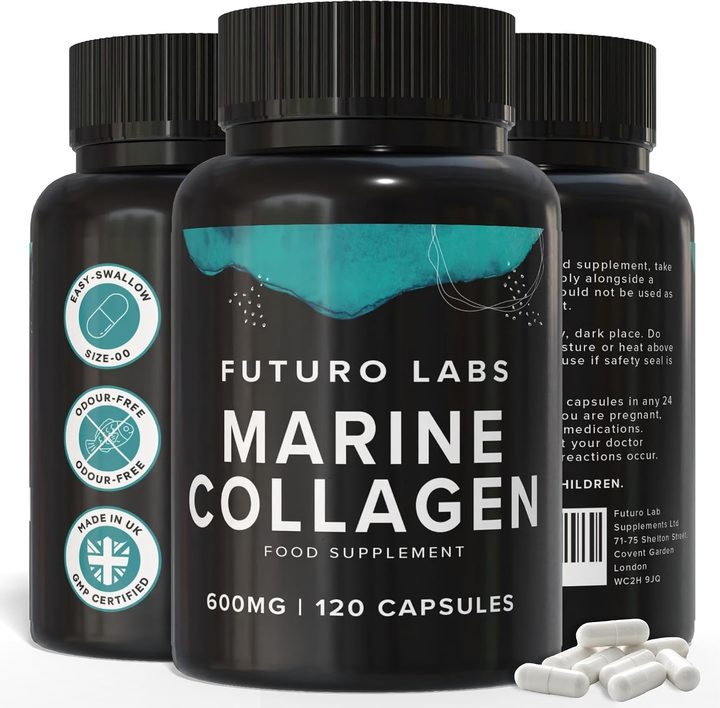
Our brand: the worked example on this page
Futuro Labs Marine Collagen
- 28p a day
- 120 capsules, 2 capsules daily
- Lab tested
- Made in the UK
Off the diet shelf by design: Futuro Labs Marine Collagen on Amazon UK, 1200mg hydrolysed type 1 with vitamin C and zinc at 15% NRV, £16.99 for 60 days at 28p, no loss claims in any direction. Full label breakdown. The deficit interview is on the weight-loss page; the 60s guard rails on the 60s deficit page.
The pink tub decoded, and the stakes audit that reverses its logic
Adding female to this query mostly adds marketing, so decode that first: collagen's weight-loss pitch is aimed at women almost exclusively, the pink-adjacent tubs bundling beauty vocabulary with diet vocabulary, skin and slim in one purchase, and the bundle is packaging rather than powder, because inside it sits the same composition every whey page has audited, tryptophan absent, leucine at a third of whey's, near zero on the quality scales, no weight-loss, satiety or metabolism claim existing for it in any decade of anyone's life, the family's weakest protein wearing the category's most targeted label. The honest female-specific content of this question runs in exactly the opposite direction to the marketing, and it is a stakes audit: a woman entering a calorie deficit typically does so with less absolute muscle mass than a male counterpart, meaning the same unguarded loss spends a larger share of her strength reserve, and from the menopause transition onward the audit adds bone, oestrogen's decline accelerating bone loss through the following years per the standing literature, an at-risk tissue a careless deficit stresses further, so the two guards every sensible deficit pairs, protein kept high and complete at around 1.2g-plus per kilogram spread across the day, and resistance training continued throughout, carry more weight for her, not less, the pink tub's implicit promise, that a beauty protein can stand in for a real one while dieting, being most wrong for exactly the buyer it courts.
The interview rerun with her stakes on the table, and the plan that honours them
Rerun the deficit interview with those stakes explicit and the hire does not change, it hardens. Whey, or any complete protein, is hired again on the same file, all nine essentials, the leucine to keep muscle's retention signal firing on reduced calories, the quality scores, the lawful muscle-maintenance claims, plus the deficit's practical virtues, cheap protein-dense servings that spare the calorie budget, and, for the post-menopausal reader, its place inside the bone programme the guard pages set out, protein adequacy alongside dietary calcium, vitamin D per UK guidance, and the resistance and impact work that signals bone to stay. Collagen is declined for the diet job with the same minutes as ever, no claims, weakest guard, its grams outside the target and its scoop, if displacing a complete one, actively weakening the defence, while its two honest lanes survive untouched and unpinked, the 28p daily habit carrying vitamin C and zinc's sentences, and the 15g pre-loading protocol beside training for the connective-tissue reader, neither of them a weight-loss lane and neither improved by the tub turning rose gold. The plan that honours the audit, stated as the site's standing boundaries: a modest, sustainable deficit rather than a crash, both guards non-negotiable, weight tracked less closely than strength and function, and the GP-or-dietitian gate opened first for significant planned loss, any medication in the picture, the menopause transition's own questions, or any history that makes dieting fraught, the professional conversation outranking every tub, every colour, and both contestants in this interview.
| The item | The marketing says | The audit says |
|---|---|---|
| The bundle | Beauty and slimming in one tub | Packaging: the powder is the family's weakest |
| Her muscle stakes | Unmentioned | Lower baseline reserve: unguarded loss costs her more |
| Her bone stakes | Unmentioned | Post-menopause acceleration: a deficit's second front |
| The guards | Implied optional | Protein high and complete, resistance kept: harder rules for her |
| The hire | Collagen, by colour | Whey again: quality guards what the deficit threatens |
| The gate | Absent | GP or dietitian first for big plans, medication, menopause questions |
The verdict, delivered past the packaging
Collagen vs whey for a woman's weight loss: the female half of the query is mostly the marketing's addition, a pink bundle of beauty and dieting wrapped around the family's weakest protein, and the honest female-specific analysis reverses it, her deficit raising the guards' stakes through muscle reserve and, post-menopause, bone, so protein quality matters more and the hire is whey again, with the deficit doing the losing, the guards deciding what is lost, and the GP gate framing any serious plan. The worked example keeps its colours honest: Futuro Labs Marine Collagen, 1200mg hydrolysed type 1 with 12mg vitamin C and 1.5mg zinc at 15% NRV, lab tested, UK made, £16.99 for 60 days at 28p a day, claiming nothing about scales for anyone, which is the only weight-loss position a collagen label can lawfully hold, in any packaging, for any buyer.
What to check on the label
- The pink tub is packaging: the powder inside stays the weakest.
- Her stakes run higher: muscle reserve, and post-menopause, bone.
- The guards harden, not soften: complete protein and resistance, kept.
- Whey is hired again: quality guards what the deficit threatens.
- Big plans open the gate first: GP or dietitian before any aisle.
Our brand
The worked example: Futuro Labs Marine Collagen
Futuro Labs Marine Collagen: 2 capsules daily, 1200mg hydrolysed type 1 marine collagen with 12mg vitamin C and 1.5mg zinc (15% NRV each), 120 capsules for £16.99, 60 days at 28p a day, lab-tested, UK GMP made. Slim veggie-shell capsules, odour free. Fish derived: pescatarian, not vegetarian or vegan.
- Collagen per serving
- 1200mg hydrolysed type 1 marine (fish)
- Co-factors
- vitamin C 12mg (15% NRV), zinc 1.5mg (15% NRV)
- Serving
- 2 capsules a day
- Bottle
- 120 capsules, 60 days
- Price
- £16.99 (28p a day)
- Capsule
- slim size 00, veggie shell, odour free
Questions people also ask
Is collagen or whey better for women's weight loss?
Whey: neither causes loss, the deficit does, and protein's deficit jobs, satiety and guarding lean mass, want completeness and leucine collagen lacks, stakes that run higher for women, not lower.
Why is collagen marketed to women for weight loss?
The bundle: beauty vocabulary stapled to diet vocabulary sells the same weakest-in-family powder, with no loss, satiety or metabolism claim existing behind any of it.
What changes about dieting after menopause?
Bone joins the at-risk list: oestrogen's decline accelerates bone loss, so a deficit's guards, complete protein, resistance and impact work, calcium and vitamin D per UK guidance, matter more.
Can collagen still fit somewhere in a woman's routine?
In its own two lanes: the 28p habit carrying vitamin C and zinc at 15% NRV, or the 15g pre-loading protocol beside training, neither of them a weight-loss lane.
When should a weight-loss plan involve a professional?
Significant planned loss, medication, menopause-transition questions, or any fraught dieting history: a GP or dietitian conversation first, the gate that outranks every tub.
Sources
- The protein and energy-restriction literature: higher protein intakes during a calorie deficit are studied for satiety and for preserving lean mass, the guard rails of sensible weight management. PubMed record
- The menopause and bone literature: the decline in oestrogen around menopause accelerates bone loss in the following years, the reason bone health guidance sharpens for post-menopausal women. PubMed record
- Comparative protein research: the leucine content of a protein drives its muscle protein synthesis response, with whey outperforming collagen in direct comparisons. PubMed record
- The protein quality literature: scoring systems such as PDCAAS and DIAAS rate proteins by essential amino acid completeness and digestibility, with collagen scoring at or near zero for lacking tryptophan. PubMed record