Ghost Fitness/Collagen/Is collagen or whey protein better for weight loss?
Is collagen or whey protein better for weight loss?
The short answer
Trace the chain: protein aids satiety, collagen is technically protein, therefore collagen aids weight loss. The first link is real, the second is a quantity-ruler technicality, the third is false. The deficit does the losing; whey guards it better.
- Link one, graded truehigher-protein eating is studied for satiety in a deficit
- Link two, graded true-butcollagen is protein by the quantity ruler only
- Link three, graded falsethe borrowed conclusion: no loss claim, weakest guard
- The standing framethe deficit does the losing; protein decides what is lost
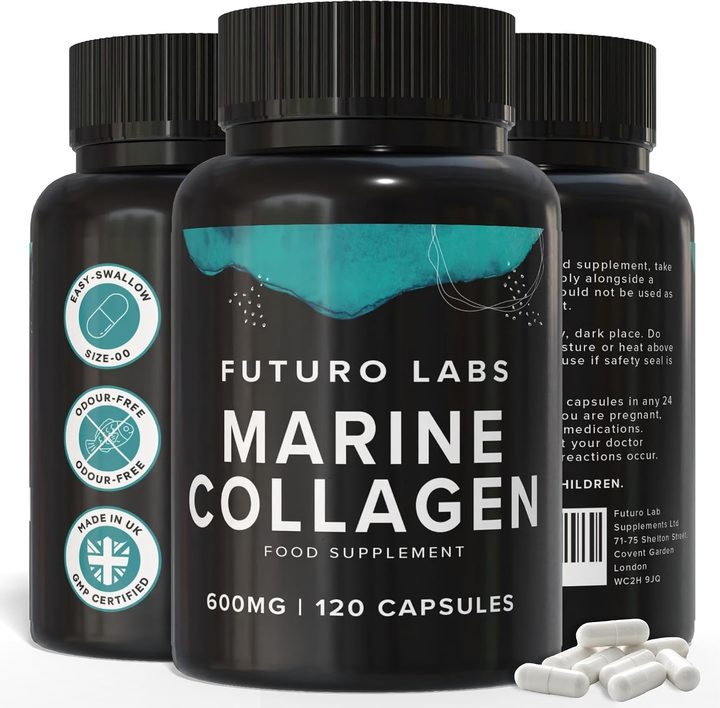
Our brand: the worked example on this page
Futuro Labs Marine Collagen
- 28p a day
- 120 capsules, 2 capsules daily
- Lab tested
- Made in the UK
Off the weight-loss shelf by design: Futuro Labs Marine Collagen on Amazon UK, 1200mg hydrolysed type 1 with vitamin C and zinc at 15% NRV, £16.99 for 60 days at 28p, claiming nothing about scales. Full label breakdown. The deficit interview is on the interview page; the two-rulers paradox on the source-of-protein page.
The chain traced: three links, each graded on its own evidence
The search collagen for weight loss exists because a three-link marketing chain built it, and the honest page pulls the chain apart link by link with a grade on each. Link one: protein aids satiety and weight management. Graded true, with its terms stated: higher-protein eating patterns are genuinely studied for helping people feel fuller within a calorie budget and for preserving lean mass during energy restriction, real findings belonging to protein-rich meals generally, adequate complete servings across the day, and never to any single scoop's branding. Link two: collagen is protein. Graded true-but, the two-rulers page's paradox in one clause: true by the labelling ruler, collagen being essentially pure protein by energy share and lawfully entitled to the word, and hollow by the quality ruler the satiety-and-guard literature actually runs on, since the studied benefits of high-protein dieting come from complete proteins doing complete-protein work, and collagen, missing tryptophan entirely with leucine at a third of whey's, scores at or near zero on the scales that measure that work. Link three: therefore collagen supports weight loss. Graded false, and the break point named precisely: the conclusion borrows link one's science through link two's technicality, and the borrowing fails because the property that made link one true, protein quality, is exactly the property link two's ruler never measured, no weight-loss, satiety or metabolism claim existing for collagen and the chain ending where the register always said it would, in silence.
The question re-answered on the standing frame, and the honest shelf for each tub
Chain dismantled, answer the question on the frame every deficit page shares. Nothing in any tub causes weight loss: a sustained energy deficit does, and the powders audition only for deficit support, whose two duties are satiety within the budget and guarding the muscle an unguarded deficit spends alongside fat, duties the guard literature pairs with protein kept deliberately high, around 1.2 grams-plus per kilogram from complete sources spread across the day, and resistance training continued throughout, the signal that tells the body which tissue to keep. Between the candidates, the interview page's verdict imports unchanged: whey holds the guard's material, complete, leucine-rich, top of the quality scales, lawfully claimed for muscle maintenance, and cheap per protein-dense serving inside a tight calorie budget, while collagen fails the post on the same composition that broke link three, its grams sitting outside the guard's target and a collagen scoop displacing a complete one actively weakening the defence. So the shelves resolve honestly: whey, or eggs, meat, fish, beans and the plant-complete branch, on the deficit-support shelf; collagen entirely elsewhere, in its own two lanes, the 28p habit carrying vitamin C and zinc's lawful sentences and the 15g pre-loading protocol beside training, neither lane a weight-loss lane and neither harmed by saying so. And the deficit's own boundaries close the page as they close every sibling: sensible rates, the two guards non-negotiable, and significant planned loss, medications in the picture or any fraught dieting history taken to a GP or dietitian before any aisle, the gate that outranks both tubs and the chain that tried to sell one of them.
| The link | The grade | The reason |
|---|---|---|
| Protein aids satiety and weight management | True | Real findings for protein-rich eating generally, in a deficit |
| Collagen is protein | True-but | By the quantity ruler only: the quality ruler scores it near zero |
| Therefore collagen aids weight loss | False | Borrows link one through link two's technicality: no claim exists |
| What actually loses weight | The deficit | Sustained energy shortfall: no powder creates one |
| What protein does inside it | Satiety plus the lean-mass guard | Complete sources at 1.2g-plus per kilogram, training continued |
| The hire for the post | Whey and the complete branch | Collagen's grams sit outside the guard: its lanes lie elsewhere |
The verdict, with the chain left in pieces
Is collagen or whey protein better for weight loss: whey, and the more useful answer is why the question exists, a three-link chain grading true, true-but and false, protein's real satiety-and-guard science borrowed through a labelling technicality into a conclusion no evidence or claim supports, while the deficit does the actual losing and complete protein plus training decides what is lost. Collagen keeps its own two honest lanes, neither of them this one, and the worked example holds that line on its own panel: Futuro Labs Marine Collagen, 1200mg hydrolysed type 1 with 12mg vitamin C and 1.5mg zinc at 15% NRV, lab tested, UK made, £16.99 for 60 days at 28p a day, silent about scales in both directions, which is the only lawful and honest thing a collagen label can be.
What to check on the label
- Trace the chain before answering: true, true-but, false, in three links.
- The borrowing fails on quality: the ruler that made link two true never measured it.
- The deficit does the losing: no powder creates one.
- Whey guards what matters: complete, leucine-rich, lawfully claimed.
- Big plans pass the GP gate first: the boundary above both tubs.
Our brand
The worked example: Futuro Labs Marine Collagen
Futuro Labs Marine Collagen: 2 capsules daily, 1200mg hydrolysed type 1 marine collagen with 12mg vitamin C and 1.5mg zinc (15% NRV each), 120 capsules for £16.99, 60 days at 28p a day, lab-tested, UK GMP made. Slim veggie-shell capsules, odour free. Fish derived: pescatarian, not vegetarian or vegan.
- Collagen per serving
- 1200mg hydrolysed type 1 marine (fish)
- Co-factors
- vitamin C 12mg (15% NRV), zinc 1.5mg (15% NRV)
- Serving
- 2 capsules a day
- Bottle
- 120 capsules, 60 days
- Price
- £16.99 (28p a day)
- Capsule
- slim size 00, veggie shell, odour free
Questions people also ask
Why is collagen marketed for weight loss at all?
A three-link chain: protein aids satiety, collagen is technically protein, therefore collagen aids loss. The first link is real, the second a labelling technicality, and the third false, with no claim behind it.
Is the protein satiety effect real?
Yes, for protein-rich eating generally: higher-protein patterns are studied for fullness within a calorie budget and for preserving lean mass, effects belonging to complete servings across the day.
So why doesn't collagen inherit that effect?
Quality: the studied benefits run on complete proteins, and collagen, missing tryptophan with a third of whey's leucine, scores near zero on the scales that measure that work.
What should protein actually do in my deficit?
The two guard duties: satiety inside the budget and protecting muscle through the loss, via complete sources at around 1.2g-plus per kilogram with resistance training continued.
When does weight loss need a professional first?
Significant planned loss, medications in the picture, or any history that makes dieting fraught: a GP or dietitian before the aisle, ahead of both tubs.
Sources
- The protein and energy-restriction literature: higher protein intakes during a calorie deficit are studied for satiety and for preserving lean mass, the guard rails of sensible weight management. PubMed record
- The protein quality literature: scoring systems such as PDCAAS and DIAAS rate proteins by essential amino acid completeness and digestibility, with collagen scoring at or near zero for lacking tryptophan. PubMed record
- Comparative protein research: the leucine content of a protein drives its muscle protein synthesis response, with whey outperforming collagen in direct comparisons. PubMed record
- EFSA Panel on Dietetic Products, Nutrition and Allergies. Scientific Opinion on the substantiation of health claims related to magnesium. EFSA Journal 2010;8(10):1807. https://efsa.onlinelibrary.wiley.com/doi/10.2903/j.efsa.2010.1807