Ghost Fitness/Collagen/Is collagen a good source of protein?
Is collagen a good source of protein?
The short answer
By the labelling ruler, yes: collagen is essentially all protein by energy. By the quality ruler, no: missing tryptophan, low leucine, near zero on the scoring scales. A source of protein, a poor source of protein quality.
- Ruler one: quantitylabelling law counts protein by energy share: collagen sails through
- Ruler two: qualityPDCAAS and DIAAS score completeness: collagen lands near zero
- The missing piecetryptophan absent entirely; leucine a third of whey's
- The goal testwhich ruler your goal uses decides the answer
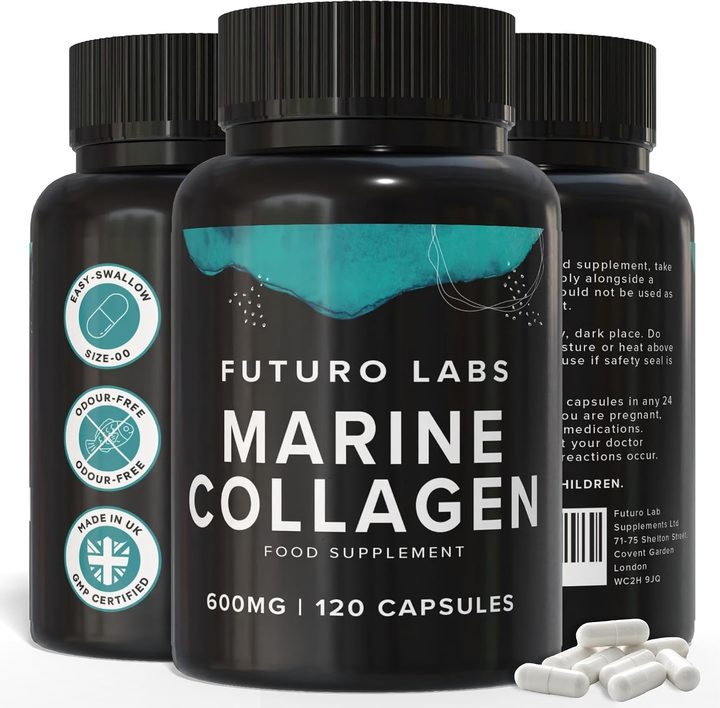
Our brand: the worked example on this page
Futuro Labs Marine Collagen
- 28p a day
- 120 capsules, 2 capsules daily
- Lab tested
- Made in the UK
Priced as what the quality ruler says, not the quantity one: Futuro Labs Marine Collagen on Amazon UK, 1200mg hydrolysed type 1 with vitamin C and zinc at 15% NRV, £16.99 for 60 days at 28p, never counted toward protein targets. Full label breakdown. The two panels side by side are on the whey comparison; the family tree on the protein powder page.
Ruler one, the labelling law: why collagen passes the quantity test with ease
The question hides a genuine paradox worth teaching properly, because collagen measures completely differently on the two rulers the word source can mean. Ruler one is the quantity ruler, the one food labelling law actually uses: under UK and EU rules, source of protein and high protein are defined claims earned by protein's share of a food's energy, thresholds a food clears by being sufficiently protein-dense, and collagen powder, being essentially pure protein by composition, nearly all of its calories arriving as protein, clears those thresholds as easily as anything on any shelf, which is why a collagen tub may lawfully wear protein vocabulary on its front, why the collagen protein phrase survives regulatory review, and why the literal answer to this page's question is, on this ruler, an untroubled yes: collagen is, by the law's own definition, a source of protein, and a concentrated one. The paradox begins because the labelling ruler measures how much and never asks how good, protein quantity being the whole of its jurisdiction, and the second ruler exists precisely to ask the question the first one cannot.
Ruler two, the quality scales, and the goal-by-goal answer the paradox resolves into
Ruler two is the quality ruler, the PDCAAS and DIAAS scoring systems nutrition science uses to rate proteins by what bodies can actually build from them, essential amino acid completeness weighted by digestibility, and on this ruler collagen delivers the aisle's starkest score: at or near zero, because it is missing tryptophan entirely, an absence rather than a shortfall that zeroes the completeness calculation by itself, with the supporting arithmetic no kinder, leucine at roughly a third of whey's per serving and the other essentials trailing, the scoring so decisive that in some regulatory contexts collagen alone cannot even be counted as contributing protein for certain labelling purposes, the quantity ruler's star pupil failing the quality ruler outright. The paradox resolves goal by goal, which is the answer worth keeping: for muscle building and maintenance, for hitting the 1.2-to-2.2g-per-kilogram targets the training pages set, for protecting lean mass in a deficit, your goals use the quality ruler, and collagen is a poor source, its grams honestly excluded from the target and the whey-eggs-meat-beans roster doing the real counting; for the collagen-specific purposes its own pages defend, the daily habit carrying vitamin C and zinc's sentences, the 15g pre-loading protocol, the quality score is beside the point because those uses never claimed the protein job; and for label reading, the lesson is permanent, a front-of-tub protein flash is a quantity statement, the back panel's amino profile is the quality one, and the absent tryptophan line is the two-second check that tells you which kind of protein you are holding. A source of protein, then, by the letter of one ruler, and a poor source of protein quality by the science of the other, with your goal deciding which ruler was ever the question.
| The ruler | What it measures | Collagen's score |
|---|---|---|
| Labelling law: source of protein | Protein's share of energy | Passes easily: essentially pure protein by calories |
| PDCAAS and DIAAS | Essential amino completeness times digestibility | At or near zero: tryptophan absent entirely |
| The leucine line | The synthesis trigger per serving | Roughly a third of whey's |
| Muscle and deficit goals | Use the quality ruler | Excluded from targets: complete sources do the counting |
| Collagen's own uses | The habit's claim-holders; the 15g protocol | Quality score beside the point: never the protein job |
| The two-second check | The amino profile on the back panel | No tryptophan line means quantity-ruler protein |
The verdict, measured honestly on both rulers
Is collagen a good source of protein: yes by the labelling ruler, which counts energy share and lets a near-pure protein wear the vocabulary lawfully, and no by the quality ruler, where absent tryptophan and a third of whey's leucine score it at the bottom of the scales your muscle and deficit goals actually use, the honest summary being a source of protein and a poor source of protein quality, with the goal in hand deciding which ruler was ever being asked. The worked example prices itself by the second ruler's honesty: Futuro Labs Marine Collagen, 1200mg hydrolysed type 1 with 12mg vitamin C and 1.5mg zinc at 15% NRV, lab tested, UK made, £16.99 for 60 days at 28p a day, sold for the sentences its cofactors hold and never counted toward a target its amino profile could not honestly serve.
What to check on the label
- Two rulers measure the word source: quantity by law, quality by science.
- Collagen passes the quantity ruler: essentially pure protein by energy.
- And fails the quality ruler: tryptophan absent, leucine a third of whey's.
- Your goal picks the ruler: muscle and deficits use quality, always.
- The two-second check: no tryptophan on the amino panel tells the story.
Our brand
The worked example: Futuro Labs Marine Collagen
Futuro Labs Marine Collagen: 2 capsules daily, 1200mg hydrolysed type 1 marine collagen with 12mg vitamin C and 1.5mg zinc (15% NRV each), 120 capsules for £16.99, 60 days at 28p a day, lab-tested, UK GMP made. Slim veggie-shell capsules, odour free. Fish derived: pescatarian, not vegetarian or vegan.
- Collagen per serving
- 1200mg hydrolysed type 1 marine (fish)
- Co-factors
- vitamin C 12mg (15% NRV), zinc 1.5mg (15% NRV)
- Serving
- 2 capsules a day
- Bottle
- 120 capsules, 60 days
- Price
- £16.99 (28p a day)
- Capsule
- slim size 00, veggie shell, odour free
Questions people also ask
Is collagen technically a source of protein?
Yes, by labelling law: the claim is defined by protein's share of energy, and collagen powder, being essentially pure protein by calories, clears it easily, which is why tubs may wear the word.
Then why do nutrition pages call it a poor protein?
The quality ruler: PDCAAS and DIAAS score essential amino completeness, and collagen's total lack of tryptophan lands it at or near zero, with leucine at a third of whey's.
Can collagen count toward my daily protein target?
Honestly, no: targets exist to build and keep tissue, a quality-ruler job, so complete sources, whey, eggs, meat, fish and beans, do the counting and collagen's grams sit outside it.
Does the low quality score make collagen pointless?
No, it makes it specific: its defensible uses, the vitamin C and zinc habit and the 15g pre-loading protocol, never claimed the protein job the score measures.
How can I tell which kind of protein a tub really is?
Turn it around: the amino acid profile is the quality statement, and a missing tryptophan line means the front label's protein flash was a quantity claim only.
Sources
- The protein quality literature: scoring systems such as PDCAAS and DIAAS rate proteins by essential amino acid completeness and digestibility, with collagen scoring at or near zero for lacking tryptophan. PubMed record
- Comparative protein research: the leucine content of a protein drives its muscle protein synthesis response, with whey outperforming collagen in direct comparisons. PubMed record
- Review literature on protein intake and muscle mass in older adults: higher protein intakes support the maintenance of muscle in ageing, the evidence base behind the register's protein and muscle-mass claims mattering more with age. PubMed record
- EFSA Panel on Dietetic Products, Nutrition and Allergies. Scientific Opinion on the substantiation of health claims related to magnesium. EFSA Journal 2010;8(10):1807. https://efsa.onlinelibrary.wiley.com/doi/10.2903/j.efsa.2010.1807