Ghost Fitness/Collagen/What is type 3 collagen good for?
What is type 3 collagen good for?
The short answer
Type 3 is the companion collagen: it lives alongside type 1 in skin and vessels, features early in healing tissue, and is never sold alone, riding bovine extracts because hide naturally yields the pair. No claims attach to it.
- Where it livesalongside type 1 in skin, vessels and organs: the companion
- Its healing cameoearly granulation tissue is rich in type 3, remodelled toward 1
- Why it rides bovine labelshide naturally yields the 1-and-3 pair: extraction, not formulation
- Claims heldzero: like every numeral, at any dose
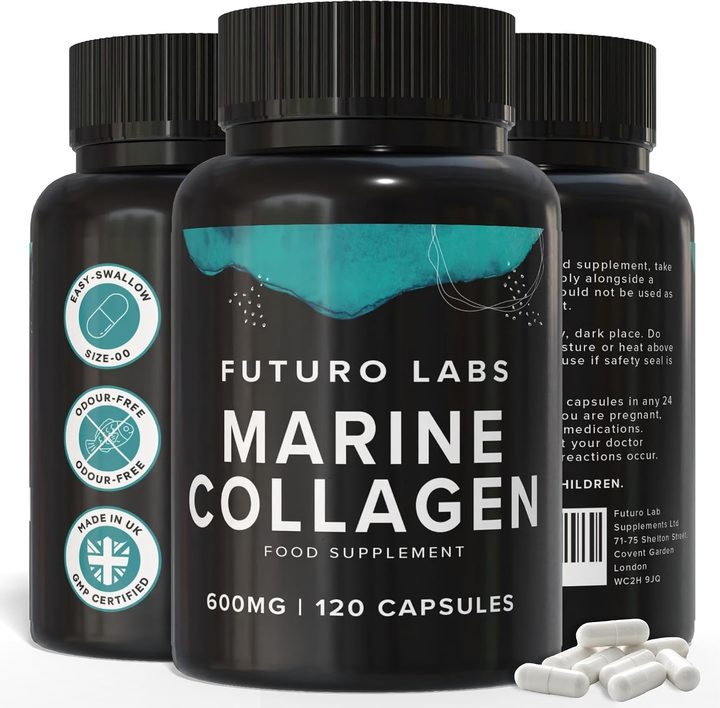
Our brand: the worked example on this page
Futuro Labs Marine Collagen
- 28p a day
- 120 capsules, 2 capsules daily
- Lab tested
- Made in the UK
The marine alternative, one numeral and honest about it: Futuro Labs Marine Collagen on Amazon UK, 1200mg hydrolysed type 1 with vitamin C and zinc at 15% NRV, £16.99 for 60 days at 28p. Full label breakdown. The type tournament is on the 1-2-3 page; the 1-and-3 pairing decode on the pair page.
The biography: where type 3 lives, and its one genuinely interesting chapter
Of the three numerals on supplement labels, type 3 is the one nobody can describe, so give it the biography it never gets. Type 3 collagen is the body's companion fibre: a fine, reticular collagen that lives alongside type 1 in the tissues that need both strength and suppleness, the skin's dermis, blood vessel walls, the supporting frameworks of internal organs, rarely the headline structural material anywhere but present through much of the type 1 estate as the flexible partner in the weave. Its one genuinely interesting chapter, and the kernel behind whatever reputation it has, is healing: when the body repairs a wound, the early scaffold it throws across the damage, granulation tissue, is notably rich in type 3, a quick, provisional collagen laid fast and then, over the remodelling weeks and months, progressively replaced and reorganised toward the stronger type 1, which is real, textbook tissue biology and also the exact kind of fact marketing loves to launder, the leap from type 3 features in healing tissue to eating type 3 helps healing being the routing myth this section has demolished from every angle, digestion pooling every swallowed numeral into unaddressed peptides before any wound, vessel or dermis is consulted. A companion fibre with a healing cameo: that is the honest biography, and none of it survives the stomach as a delivery instruction.
Why it is on your label anyway, and the good-for question answered straight
Which raises the practical puzzle the query is really circling: if type 3 targets nothing, why is it printed on so many tubs, and the answer is extraction rather than intention. Bovine collagen is made from hide, hide's dermis naturally contains the 1-and-3 pair, and industrial hydrolysis takes what the raw material gives, so bovine products honestly list types 1 and 3 because that is what came out of the process, not because a formulator chose a ratio, the pairing being geology rather than strategy per its own page, while marine collagen from fish skin runs overwhelmingly type 1, which is why marine labels print one numeral and bovine labels print two, a raw-material signature the premium shelf then dresses as a feature. So, what is type 3 collagen good for, answered straight down the site's standing lines: for the body, it is good for exactly what it does in situ, partnering type 1 in supple tissues and scaffolding early repair, functions your own synthesis runs from the pooled amino acid supply any protein provides; for the shopper, it is good for identifying a bovine product at a glance and for nothing else, holding no authorised claim at any dose, appearing in no outcome trial as a separate actor, and never being sold alone because no extraction yields it alone and no evidence would reward the effort; and for the label, its honest reading is disclosure, this came from hide, rather than promise. The variant questions take their one-line pointers: type 1 is the structural workhorse and effectively the whole shelf, per the tournament page, and type 2 is cartilage's separate 40mg undenatured story, per its own inspection page, with the purchase decision, as ever, ignoring every numeral for the checks, stated dose, vitamin C at 15% NRV, single source, testing, honest pence.
| The question | The honest answer | The note |
|---|---|---|
| Where does type 3 live? | Alongside type 1 in skin, vessels, organ frameworks | The flexible partner in the weave |
| Its claim to fame? | Early healing tissue is rich in it | Remodelled toward type 1 with maturity: real biology, not a delivery route |
| Why is it on bovine labels? | Hide naturally yields the 1-and-3 pair | Extraction signature, not formulation strategy |
| Can I buy type 3 alone? | No product exists: no extraction yields it alone | And no evidence would reward one |
| What claims does it hold? | None, at any dose | Like every numeral on the shelf |
| What decides the purchase? | The checks, numeral-blind | Dose, C at 15% NRV, source, testing, pence |
The verdict, and the numeral filed where it belongs
What is type 3 collagen good for: in the body, for partnering type 1 in supple tissues and scaffolding the early weeks of repair, honest and interesting biology that no swallowed peptide inherits as an address; on a label, for telling you the tub is bovine, hide yielding the 1-and-3 pair as a signature of extraction rather than a feature of design; and in a buying decision, for nothing, no claim attaching to it and no product existing without its type 1 chaperone. The purchase ignores the biography as it ignores every numeral: Futuro Labs Marine Collagen states its single type 1 plainly, 1200mg hydrolysed with 12mg vitamin C and 1.5mg zinc at 15% NRV, lab tested, UK made, £16.99 for 60 days at 28p a day, a label whose one numeral is disclosure, which is all any numeral ever honestly was.
What to check on the label
- Type 3 is the companion fibre: alongside type 1 in supple tissues.
- Its healing cameo is real biology: and not a delivery instruction.
- Bovine labels print it by extraction: hide yields the pair naturally.
- No solo product exists: and no claim attaches at any dose.
- Buy numeral-blind: the checks decide, as everywhere.
Our brand
The worked example: Futuro Labs Marine Collagen
Futuro Labs Marine Collagen: 2 capsules daily, 1200mg hydrolysed type 1 marine collagen with 12mg vitamin C and 1.5mg zinc (15% NRV each), 120 capsules for £16.99, 60 days at 28p a day, lab-tested, UK GMP made. Slim veggie-shell capsules, odour free. Fish derived: pescatarian, not vegetarian or vegan.
- Collagen per serving
- 1200mg hydrolysed type 1 marine (fish)
- Co-factors
- vitamin C 12mg (15% NRV), zinc 1.5mg (15% NRV)
- Serving
- 2 capsules a day
- Bottle
- 120 capsules, 60 days
- Price
- £16.99 (28p a day)
- Capsule
- slim size 00, veggie shell, odour free
Questions people also ask
What does type 3 collagen actually do?
In the body, it partners type 1 in skin, vessels and organ frameworks and features early in healing tissue before remodelling toward type 1: real biology that no swallowed peptide inherits as a target.
Should I look for a type 3 supplement?
None exists alone: type 3 rides bovine extracts because hide naturally yields the 1-and-3 pair, and no evidence rewards seeking the numeral separately.
Does type 3 help wound healing or skin repair?
The leap from features-in-healing-tissue to eating-it-helps is the routing myth: digestion pools every type into one supply, and no type 3 trial or claim exists.
What is type 1 collagen good for, briefly?
It is the structural workhorse of tendon, bone, skin and effectively the entire supplement shelf: the tournament page holds the full adjudication.
And type 2, briefly?
Cartilage's collagen, sold as a separate 40mg undenatured story with its own inspection page: never a hydrolysate contest entrant.
Sources
- The type III collagen literature: type III co-occurs with type I in skin and vessels and features prominently in early granulation tissue during healing, remodelling toward type I with maturity. PubMed record
- The collagen peptide trial literature: randomised controlled studies of hydrolysed collagen supplementation across skin, joint and connective-tissue outcomes, typically at 2.5g to 15g daily, with small effects and frequent industry funding. PubMed record
- EFSA Panel on Dietetic Products, Nutrition and Allergies. Scientific Opinion on the substantiation of health claims related to magnesium. EFSA Journal 2010;8(10):1807. https://efsa.onlinelibrary.wiley.com/doi/10.2903/j.efsa.2010.1807
- Futuro Labs Marine Collagen listing and label: 1200mg hydrolysed type 1 marine collagen per 2-capsule serving with 12mg vitamin C and 1.5mg zinc at 15% NRV each, 120 capsules, independently lab tested, UK made. https://www.amazon.co.uk/dp/B0C2J7N364