Ghost Fitness/Collagen/Collagen type 1 2 3 difference: which is better?
Collagen type 1 2 3 difference: which is better?
The short answer
The differences are real anatomy: type 1 is the structural workhorse, type 2 is cartilage's collagen, type 3 the supple companion. Better dissolves in digestion, which pools every numeral, so the reference card informs and the checks decide.
- Type 1the structural workhorse: tendon, bone, skin, and the whole shelf
- Type 2cartilage's collagen: sold as a separate 40mg undenatured story
- Type 3the supple companion: rides bovine labels, never sold alone
- Betterdissolved by digestion: one pooled supply, no addresses
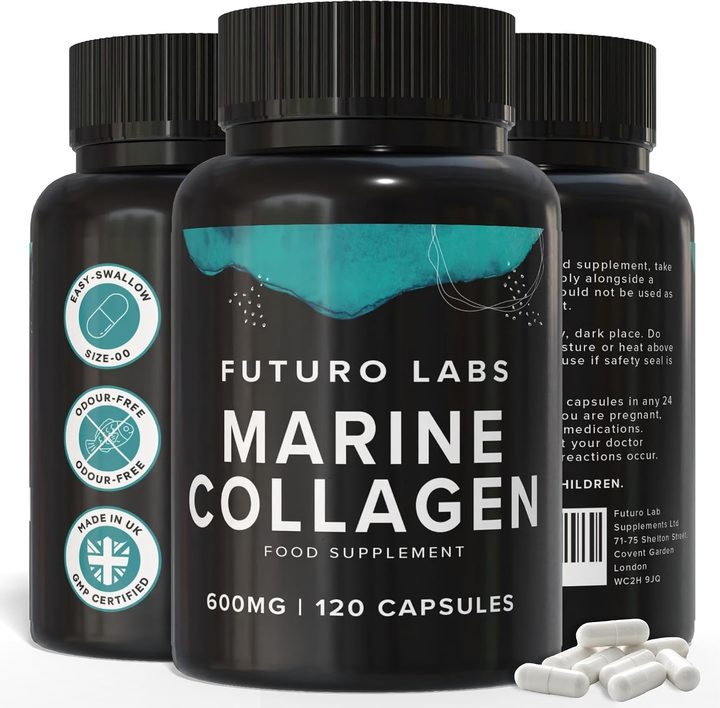
Our brand: the worked example on this page
Futuro Labs Marine Collagen
- 28p a day
- 120 capsules, 2 capsules daily
- Lab tested
- Made in the UK
The shelf's standard numeral, honestly carried: Futuro Labs Marine Collagen on Amazon UK, 1200mg hydrolysed type 1 with vitamin C and zinc at 15% NRV, £16.99 for 60 days at 28p. Full label breakdown. The tournament verdict is on the 1-2-3 page; type 3's biography on the type 3 page.
The reference card: the three numerals, actually differentiated
The difference half of this query deserves a straight answer before the better half gets its one-line dismissal, because the differences are real anatomy worth owning. Type 1 is the body's structural workhorse and its most abundant collagen by far, the dense, high-tensile fibre of tendon, ligament, bone matrix, skin dermis and fascia, thick fibrils built for load, and, on the supplement side, effectively the entire market, bovine hide and fish skin both yielding it at industrial scale. Type 2 is cartilage's own collagen, a different architecture for a different job, finer fibrils forming the meshwork that holds cartilage's water-swollen ground substance under compression rather than tension, found almost nowhere else, and, on the supplement side, a separate product entirely, the 40mg undenatured story with its oral-tolerance mechanism and its own inspection page, never honestly a hydrolysate contestant. Type 3 is the supple companion, fine reticular fibres woven through the type 1 estate wherever tissues need give as well as strength, skin, vessel walls, organ frameworks, prominent in early healing tissue before remodelling toward type 1, and, on the supplement side, a passenger, riding bovine extracts because hide yields the pair and never sold alone because no extraction isolates it and no evidence would reward one. Three numerals, three genuine anatomies, one honest census of where each actually lives.
The better question, answered in its one line, and the card's practical margin notes
Which is better, answered at the length it deserves: none, because digestion pools every swallowed numeral into one unaddressed supply of peptides and amino acids before any tissue is consulted, the standing mechanism no trial has ever contradicted, so the anatomical differences above, real as they are, describe where collagens live in a body, never where eaten peptides go, and the tournament page's void fixtures cover every bracket the question could convene. The card's margin notes then earn their keep, because knowing the differences properly makes three shelf patterns legible at a glance. Pattern one: a label saying types 1 and 3 is announcing bovine, the pair being hide's natural yield, extraction rather than formulation, never worth a premium. Pattern two: a label featuring type 2 splits by the inspection card's five tells, the genuine 40mg undenatured article versus hydrolysed peptides in cartilage costume, and hydrolysed multi-type blends self-defeat the type 2 story by process. Pattern three: a marine label's single type 1 is the fish announcing itself, the same disclosure logic in one numeral. Which returns every reader, informed rather than demolished, to the purchase the numerals never decide: a stated dose at its true scale, vitamin C at 15% NRV carrying the territory's only lawful sentences, a single declared source, per-batch testing, honest dates, and the pence divided, on a shelf where type 1 arrives by default because it simply is the market.
| The numeral | The anatomy | The supplement reality |
|---|---|---|
| Type 1 | Dense high-tensile fibre: tendon, bone, dermis, fascia | Effectively the whole shelf: hide and fish skin both yield it |
| Type 2 | Cartilage's compression meshwork, found almost nowhere else | A separate 40mg undenatured story: never a hydrolysate contest |
| Type 3 | Fine supple companion in skin, vessels, healing tissue | A bovine passenger: never sold alone, no claims |
| The better question | Digestion pools every numeral: no addresses survive | The tournament's void fixtures: one line, settled |
| The shelf patterns | 1 and 3 means bovine; lone 1 often marine | Disclosure, not formulation: never a premium |
| The purchase | Numeral-blind by mechanism | Dose, C at 15% NRV, testing, dates, pence |
The verdict, informed first and settled second
Collagen types 1, 2 and 3, the difference and the better: the differences are genuine anatomy, the workhorse, the cartilage meshwork and the supple companion, worth knowing because they make every label's numeral pattern instantly legible, and the better dissolves in a line, digestion pooling all three into one supply so that no numeral was ever a buying criterion. The worked example carries the market's default numeral with the honest cargo that actually matters: Futuro Labs Marine Collagen, 1200mg hydrolysed type 1 with 12mg vitamin C and 1.5mg zinc at 15% NRV, lab tested, UK made, £16.99 for 60 days at 28p a day, a reference-card purchase, informed by the anatomy and decided by the checks.
What to check on the label
- The differences are real anatomy: workhorse, cartilage mesh, supple companion.
- Better dissolves in one line: digestion pools every numeral.
- 1 and 3 announces bovine: extraction's pair, never a premium.
- Type 2 splits by the five tells: the 40mg article versus the costume.
- The checks decide, numeral-blind: dose, C at threshold, testing, pence.
Our brand
The worked example: Futuro Labs Marine Collagen
Futuro Labs Marine Collagen: 2 capsules daily, 1200mg hydrolysed type 1 marine collagen with 12mg vitamin C and 1.5mg zinc (15% NRV each), 120 capsules for £16.99, 60 days at 28p a day, lab-tested, UK GMP made. Slim veggie-shell capsules, odour free. Fish derived: pescatarian, not vegetarian or vegan.
- Collagen per serving
- 1200mg hydrolysed type 1 marine (fish)
- Co-factors
- vitamin C 12mg (15% NRV), zinc 1.5mg (15% NRV)
- Serving
- 2 capsules a day
- Bottle
- 120 capsules, 60 days
- Price
- £16.99 (28p a day)
- Capsule
- slim size 00, veggie shell, odour free
Questions people also ask
What is the actual difference between collagen types 1, 2 and 3?
Real anatomy: type 1 is the dense structural fibre of tendon, bone and skin, type 2 is cartilage's compression meshwork, and type 3 is the fine supple companion woven through skin and vessels.
So which type is better to take?
None: digestion pools every swallowed numeral into one unaddressed peptide supply, so the anatomical differences describe the body, not the destination of a capsule.
Why do labels list different type combinations?
Disclosure: types 1 and 3 together means bovine hide's natural pair, a lone type 1 is usually marine, and a featured type 2 splits into the genuine 40mg undenatured article or peptides in costume.
Is a product with all three types more complete?
No: the blend buys menu length, the hydrolysed process self-defeats the type 2 story, and no trial credits three numerals over one.
What should actually decide the purchase?
The numeral-blind checks: a stated dose at true scale, vitamin C at 15% NRV, single declared source, per-batch testing, honest dates and fair pence.
Sources
- The type III collagen literature: type III co-occurs with type I in skin and vessels and features prominently in early granulation tissue during healing, remodelling toward type I with maturity. PubMed record
- The undenatured type II collagen (UC-II) trial literature: small randomised studies at 40mg daily against joint outcomes, a different mechanism and dose to hydrolysed collagen, with no authorised claim resulting. PubMed record
- The collagen peptide trial literature: randomised controlled studies of hydrolysed collagen supplementation across skin, joint and connective-tissue outcomes, typically at 2.5g to 15g daily, with small effects and frequent industry funding. PubMed record
- Futuro Labs Marine Collagen listing and label: 1200mg hydrolysed type 1 marine collagen per 2-capsule serving with 12mg vitamin C and 1.5mg zinc at 15% NRV each, 120 capsules, independently lab tested, UK made. https://www.amazon.co.uk/dp/B0C2J7N364