Ghost Fitness/Collagen/Should I take type 1 or type 2 collagen?
Should I take type 1 or type 2 collagen?
The short answer
You are choosing between two shops, not two numerals: type 1 is the whole hydrolysate aisle for the habit or the 15g protocol, type 2 is a separate 40mg undenatured tolerance bet. Pick the story, not the number.
- Shop onethe hydrolysate aisle: type 1, gram scale, the pooled-supply story
- Shop twothe 40mg niche: undenatured type 2, the oral-tolerance story
- The scale gapgram doses versus milligram doses: different physics entirely
- The variant's linetype 1 vs 3: travel companions, never rivals
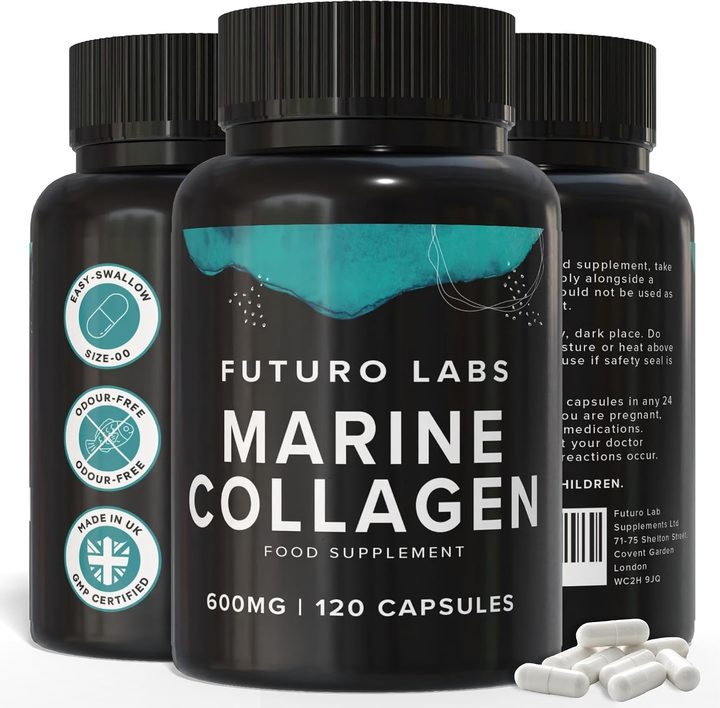
Our brand: the worked example on this page
Futuro Labs Marine Collagen
- 28p a day
- 120 capsules, 2 capsules daily
- Lab tested
- Made in the UK
Shop one's honest shelf: Futuro Labs Marine Collagen on Amazon UK, 1200mg hydrolysed type 1 with vitamin C and zinc at 15% NRV, £16.99 for 60 days at 28p. Full label breakdown. Shop two's inspection card is on the type 2 tells page; the worth ledger on the type 2 worth page.
The map: two shops that share a word and nothing else
The question sounds like choosing between two similar products, and the reframe that answers it is that you are standing between two different shops that happen to share a word. Shop one is the hydrolysate aisle, and it is nearly the whole collagen market: type 1 peptides from hide or fish skin, sold at gram scale, running on the pooled-supply story this section grades everywhere, digestion breaking the material into amino acids and small peptides the body uses as general stock, with its two honest purchases being the daily habit at 1-to-2g carrying the vitamin C and zinc claim-holders, and the 15g-with-C pre-loading protocol beside connective-tissue training, stop-two research, physio informed, expectations flat. Shop two is a niche with different physics entirely: undenatured type 2, sold at 40 milligrams, a dose four hundred times smaller than the protocol scoop, because its story is not supply at all but signalling, the oral-tolerance hypothesis in which tiny regular exposures of intact collagen at the gut's immune tissue are proposed to calm joint-directed responses, a mechanism that requires the material undenatured, which is why hydrolysing it, shop one's defining process, destroys shop two's entire product, the self-defeat the blend pages document. Same word on both doors, different stories, different doses, different shelves, and no meaningful sense in which the two compete.
Picking a shop by the story you are buying, and the variant retired in a line
So the decision resolves not by numeral but by which story, if either, you are buying. Enter shop one if your interest is the section's standing lanes: a modest daily habit whose real cargo is the cofactor sentences, or the pre-loading protocol a physiotherapist is happy to see beside a loading programme, purchases judged by the standing checks, true dose, C at 15% NRV, source, testing, pence, and stocked, in practice, entirely with type 1 because that is what the raw materials are. Enter shop two only with the inspection card in hand: if your interest is specifically the joint-comfort tolerance bet, its small, largely sponsor-funded trials moving symptom scores, then the five tells decide whether a product is the genuine article, the undenatured adjective, the 40mg dose, a named standardised form, no hydrolysed blend around it, lawful wording, and the worth page prices the bet honestly, a flat-expectations experiment at modest money, never a treatment, always behind the strengthening and the claims tier in any joint hierarchy. Buying both is coherent for the rare reader wanting both stories, as two separate products, never as a blend, the blend being shop one's process applied to shop two's product, which un-makes it. And the variant question, type 1 versus type 3, takes its single deserved line: not rivals but travel companions, type 3 riding every bovine type 1 by extraction, so there was never a choice to make. Pick the story, check the tells, and let the numerals go back to being anatomy.
| The feature | Shop one: the hydrolysate aisle | Shop two: the 40mg niche |
|---|---|---|
| The material | Type 1 peptides, hide or fish skin | Undenatured type 2, structure intact |
| The dose | Grams: 1-2g habit, 15g protocol | 40 milligrams: tiny on purpose |
| The story | Pooled supply: general stock | Oral tolerance: gut-level signalling |
| The honest buys | The cofactor habit; the physio-side protocol | The inspection-card article as a flat-odds bet |
| The fatal mix | Hydrolysis is the aisle's process | Hydrolysis destroys this shop's product |
| The hierarchy | Behind the checks, as ever | Behind strengthening and the claims tier, always |
The verdict, delivered at both doors
Should I take type 1 or type 2 collagen: choose a shop, not a numeral, type 1 being the entire hydrolysate aisle and its two honest lanes, the cofactor habit and the 15g protocol, type 2 being a separate 40mg undenatured niche running an oral-tolerance story graded on its own worth and inspection pages, the two never competing because they share only a word, and combining them in a hydrolysed blend un-making the second entirely. The worked example stands in shop one's doorway with its story stated plainly: Futuro Labs Marine Collagen, 1200mg hydrolysed type 1 with 12mg vitamin C and 1.5mg zinc at 15% NRV, lab tested, UK made, £16.99 for 60 days at 28p a day, a shop-one purchase for shop-one reasons, which is the only way either shop honestly sells.
What to check on the label
- Two shops, one shared word: the numerals never actually compete.
- Shop one is gram scale: the habit and the protocol, pooled-supply story.
- Shop two is 40mg: the undenatured tolerance bet, five tells checked.
- Hydrolysed blends un-make shop two: the process is fatal to the story.
- Type 1 vs 3 was never a choice: travel companions by extraction.
Our brand
The worked example: Futuro Labs Marine Collagen
Futuro Labs Marine Collagen: 2 capsules daily, 1200mg hydrolysed type 1 marine collagen with 12mg vitamin C and 1.5mg zinc (15% NRV each), 120 capsules for £16.99, 60 days at 28p a day, lab-tested, UK GMP made. Slim veggie-shell capsules, odour free. Fish derived: pescatarian, not vegetarian or vegan.
- Collagen per serving
- 1200mg hydrolysed type 1 marine (fish)
- Co-factors
- vitamin C 12mg (15% NRV), zinc 1.5mg (15% NRV)
- Serving
- 2 capsules a day
- Bottle
- 120 capsules, 60 days
- Price
- £16.99 (28p a day)
- Capsule
- slim size 00, veggie shell, odour free
Questions people also ask
Which is better, type 1 or type 2 collagen?
They are different shops, not rivals: type 1 is the whole hydrolysate aisle at gram scale, type 2 a separate 40mg undenatured niche running an oral-tolerance story. Pick by story, not numeral.
Can I take type 1 and type 2 together?
As two separate products, coherently: never as a hydrolysed blend, since hydrolysis destroys the undenatured structure the type 2 story requires.
Why is the type 2 dose only 40mg?
Its proposed mechanism is signalling rather than supply: tiny regular exposures at the gut's immune tissue, which is why big-milligram type 2 lines indicate ordinary peptides in costume.
Should I choose type 1 or type 3?
There was never a choice: type 3 rides every bovine type 1 by extraction as its travel companion, and no product or evidence separates them.
What decides a purchase in either shop?
Shop one: the standing checks, dose, C at 15% NRV, testing, pence. Shop two: the five tells, undenatured, 40mg, named form, unblended, lawful wording, priced as a flat-odds bet.
Sources
- The undenatured type II collagen (UC-II) trial literature: small randomised studies at 40mg daily against joint outcomes, a different mechanism and dose to hydrolysed collagen, with no authorised claim resulting. PubMed record
- The gelatin and vitamin C pre-exercise research (Shaw, Baar and colleagues): 15g gelatin with vitamin C taken about an hour before loading, studied for markers of collagen synthesis, the protocol behind the tendon-training conversation. PubMed record
- The collagen peptide trial literature: randomised controlled studies of hydrolysed collagen supplementation across skin, joint and connective-tissue outcomes, typically at 2.5g to 15g daily, with small effects and frequent industry funding. PubMed record
- Futuro Labs Marine Collagen listing and label: 1200mg hydrolysed type 1 marine collagen per 2-capsule serving with 12mg vitamin C and 1.5mg zinc at 15% NRV each, 120 capsules, independently lab tested, UK made. https://www.amazon.co.uk/dp/B0C2J7N364